Longevity
Longevity and Mitochondrial Compounds — United States
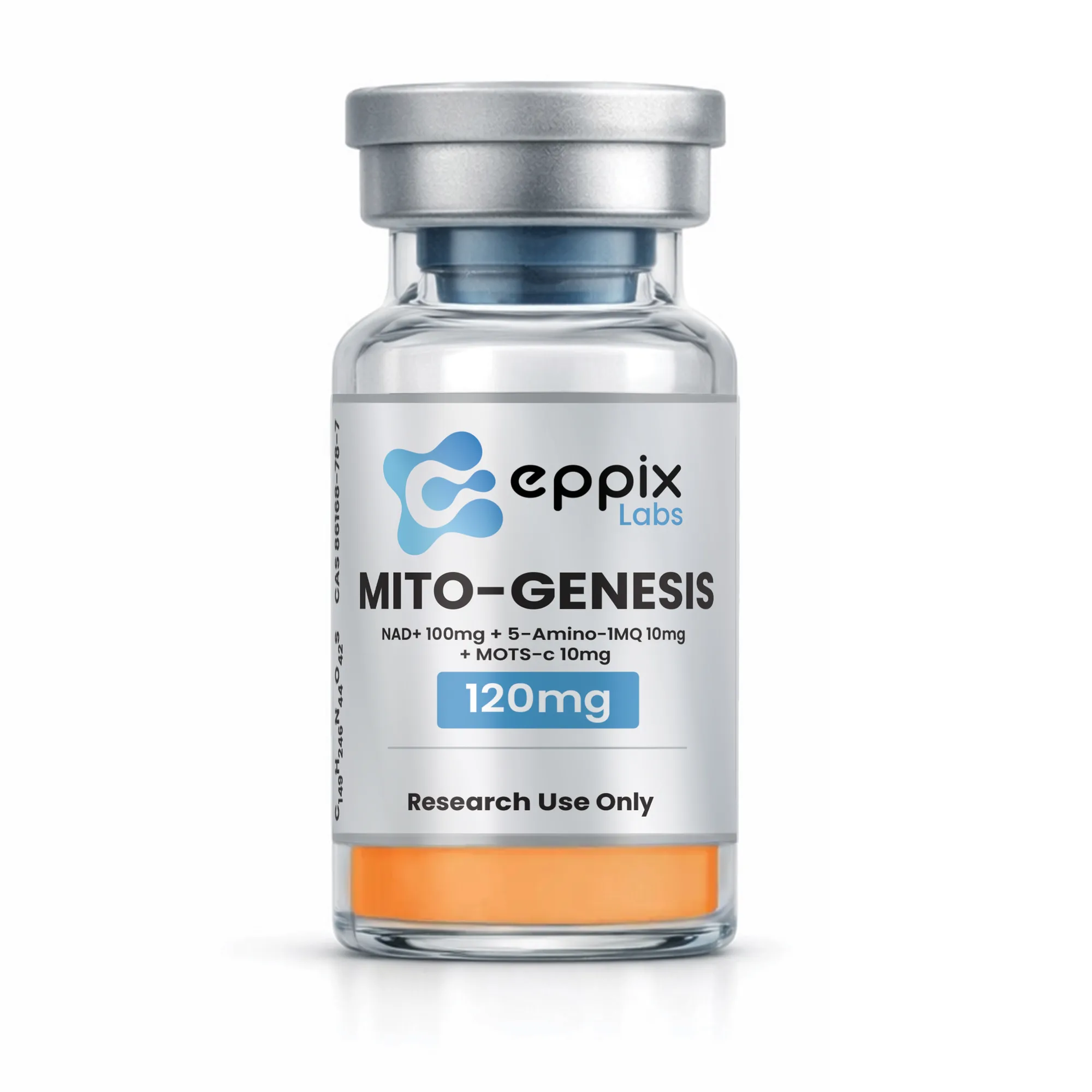
This category is organised around a shared question rather than a shared pathway, and the compounds in it are genuinely unrelated to one another. MOTS-c and humanin are mitochondrial-derived peptides encoded in mitochondrial rather than nuclear DNA. SS-31 is a tetrapeptide that targets mitochondria through cardiolipin binding. Epitalon and the Khavinson bioregulator series come from a separate research tradition centred on telomerase and pineal signalling. FOXO4-DRI is studied as a senolytic and shares nothing mechanistically with any of them.
Evidence depth varies more sharply here than in any other category on the site. Some entries cite a well-developed body of work; several of the bioregulator peptides rest on a handful of papers, occasionally from a single group. Each product page states which situation applies to that compound, with the citation count and year span shown on the page itself.
That disclosure is the point. A supplier that presents a three-paper literature the same way it presents a thirty-paper one has told you nothing useful about either.
Every lot is independently assayed before release, purity and measured content both published per batch. Supplied strictly for in-vitro laboratory research, shipped domestically within the United States.
In this category: Epitalon · NAD+ · MOTS-c · SS-31 · FOXO4-DRI
What to check before buying longevity compounds
Purity is half the number. A purity figure tells you what fraction of the powder in the vial is the compound on the label — it tells you nothing about how much powder is in the vial. A lot can assay at 99.8% purity and still be short against its labelled content.
Both numbers are published for every batch here: purity from HPLC, and measured mass against expected content. Match the batch code printed on the vial to the certificate before you rely on either.
Longevity research peptides — common questions
- Is NAD+ a peptide?
- No. Nicotinamide adenine dinucleotide is a coenzyme built from nicotinamide and adenine nucleotides — no amino acids, no peptide bonds. It is listed here because the research questions overlap with the peptide compounds in this category. Calling it a peptide is a widespread error in this market and the product page corrects it explicitly.
- What are peptide bioregulators?
- A group of very short peptides — Epitalon, Pinealon, Livagen, Vesugen and related compounds — most of which come out of one line of Russian research. Their literature is thinner and less independently replicated than that behind the better-studied compounds on this site, and the product pages state that rather than presenting a sparse record as a developed one.
- What does mitochondrial-derived mean for MOTS-c and humanin?
- That the peptide is encoded in mitochondrial DNA rather than in the nucleus. That small group is studied in a different context from the nuclear-encoded peptides elsewhere in the catalogue, which is why the two are grouped together on this page.
- Can I see how consistent the lots have been?
- Yes — each certificate page lists every previous lot of the same compound with its measured figures alongside. Consistency across lots is a property of the set, not of any one report, so it is shown rather than claimed.