✦FedEx Delivery1–3 day delivery across the U.S.Free on orders over $200

Regulatory

FDA's April 2026 Category 2 Removals Explained: 12 Peptides, Zero Approvals

Twelve peptides left the FDA's "do not compound" category because their nominations were withdrawn, which is a procedural change rather than a safety finding or a permission

·By Adam Reeves · Research Editor, Eppix Labs

In April 2026 twelve of the most discussed research peptides, BPC-157 and TB-500 among them, came off the FDA's Category 2 list, the interim category that had kept many of them out of US compounding pharmacies since 2023. The change was widely read as the agency relenting. What actually happened was narrower, and the reason it happened matters as much as the list itself.

This is general information about pharmacy compounding policy, not legal advice. Eppix Labs supplies peptides for laboratory research use only, and nothing below is dosing or medical guidance.

Key takeaways

  • ·On April 15, 2026, the FDA announced that twelve peptides would be removed from Category 2 of its interim list of bulk drug substances nominated for 503A compounding, the category titled "Bulk Drug Substances that Raise Significant Safety Concerns".[1]
  • ·The removals followed the withdrawal of the original nominations, not a new FDA safety finding.[1]
  • ·Removal from Category 2 does not place a substance in Category 1 and does not make it eligible for 503A compounding.[1]
  • ·Seven of the twelve went to the Pharmacy Compounding Advisory Committee (PCAC) in July 2026. The other five are due for review before the end of February 2027.[1][2]
Background: the interim categories

The FDA began collecting nominations for the 503A bulks list in 2015. While it evaluates them, it sorts the nominated substances into three interim categories under its interim policy on compounding with bulk drug substances:[5]

  • ·Category 1: substances nominated with enough information to evaluate and not flagged for safety. The FDA does not intend to take action against a pharmacy compounding with them while the evaluation runs, provided the other conditions of its guidance are met.[5]
  • ·Category 2: substances the FDA could evaluate but for which it has identified significant safety risks in compounding. Category 1's enforcement discretion does not extend to them, so compounding with them invites enforcement.[5]
  • ·Category 3: substances nominated without enough supporting information to evaluate.[5]
Research Material
General Image
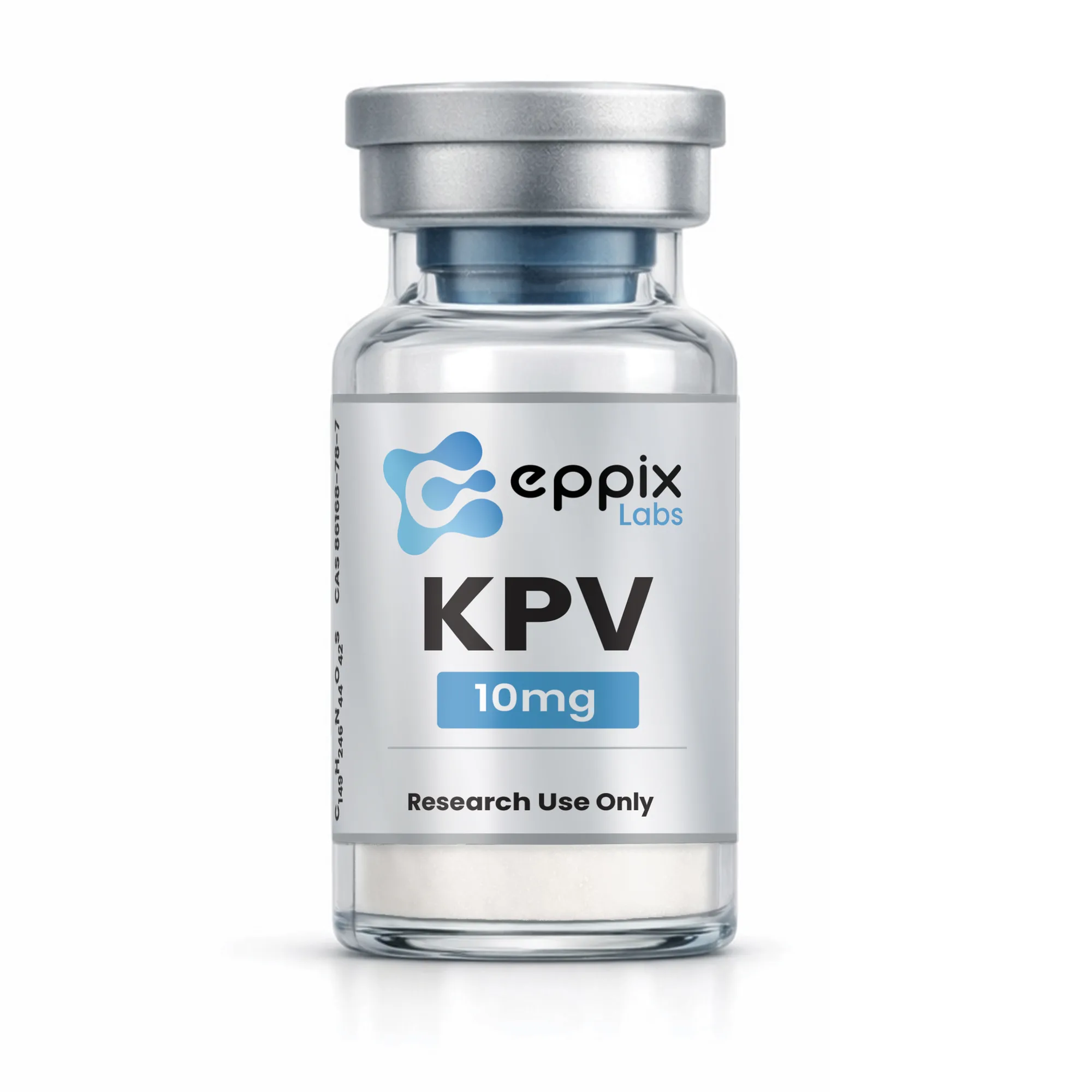
KPV lyophilized research material as supplied by Eppix Labs. Labeled and measured content are stated on the certificate further down this page.

The twelve peptides removed

In September 2023 the FDA placed more than a dozen peptides in Category 2, a designation that effectively shut most US compounding pharmacies out of them.[2] That placement is what changed in April 2026. On April 15 the agency republished its interim list and announced that twelve peptide bulk drug substances would come out of Category 2 within seven calendar days, because their nominators had withdrawn the nominations.[1]

According to Frier Levitt's summary of the FDA announcement, the twelve substances were:[1]

  • ·BPC-157
  • ·Cathelicidin LL-37
  • ·Dihexa acetate
  • ·Emideltide (DSIP)
  • ·Epitalon
  • ·GHK-Cu (injectable routes of administration)
  • ·KPV
  • ·Mechano growth factor, pegylated (PEG-MGF)
  • ·Melanotan II
  • ·MOTS-c
  • ·Semax (heptapeptide)
  • ·Thymosin beta-4 fragment LKKTETQ (TB-500)
Amino Acid Sequence
Amino Acid Sequence diagram
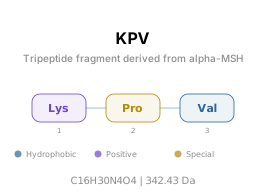
Amino-acid sequence of KPV, Lys-Pro-Val, one of the twelve substances on the list.
Chemical Structure
Chemical Structure diagram
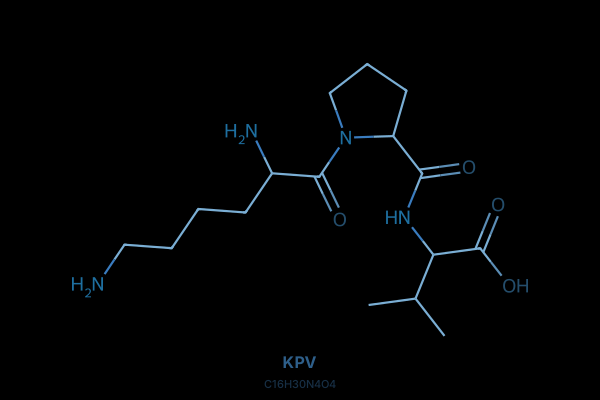
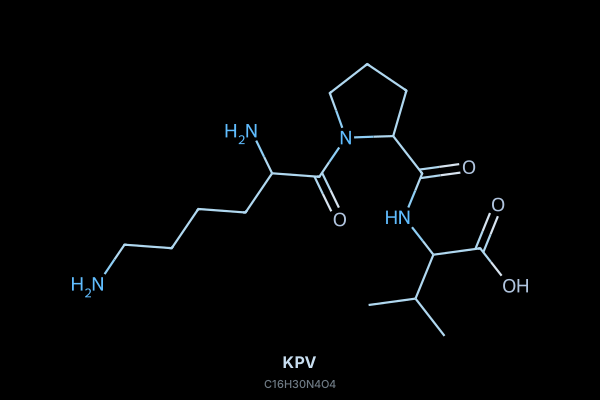
Chemical structure of the KPV tripeptide, C₁₆H₃₀N₄O₄.

Why removal is not a green light

The common misreading is that "off Category 2" means "allowed". It does not. As Frier Levitt put it in its summary of the announcement, removal "does not render these bulk drug substances eligible for compounding under section 503A", and the substances also sit outside the FDA's interim enforcement discretion, which extends only to Category 1.[1]

What removal did was move the substances out of a category that signaled active safety concern and into an uncertain middle ground. Law firms advising pharmacies have stressed a practical question that sits over everything else: whether the FDA will extend enforcement discretion to these substances while rulemaking is pending.[1][3] Until it says so, compounding pharmacies are working in what one firm called "regulatory limbo".[3] Beyond that question, the substances' eventual status depends on two further steps:

  • ·PCAC review. For seven of the twelve this took place on July 23 and 24, 2026. FDA staff recommended against inclusion for every one of them. The committee recommended six for inclusion on the 503A bulks list anyway, and did not recommend emideltide (DSIP).[2][6] See our breakdown of the July 2026 PCAC vote.
  • ·FDA rulemaking. Notice-and-comment rulemaking is required before any substance is formally added to the list, and as of publication none of the seven appears in 21 CFR 216.23.[1][7]

Where research reagents fit

None of the interim categories govern research reagents. They concern which bulk ingredients a pharmacy may use to compound a medicine for a patient. A laboratory buying lyophilized peptide for in vitro or animal research is buying a chemical reagent, and the regulatory questions for that purchase are different. The Category 2 change does not alter any of them:

  • ·Is the product labeled and marketed only for research?
  • ·Does the seller's website, packaging or customer communication suggest human use? The FDA's March 2026 warning letters to online peptide sellers turned on exactly this point.[4]
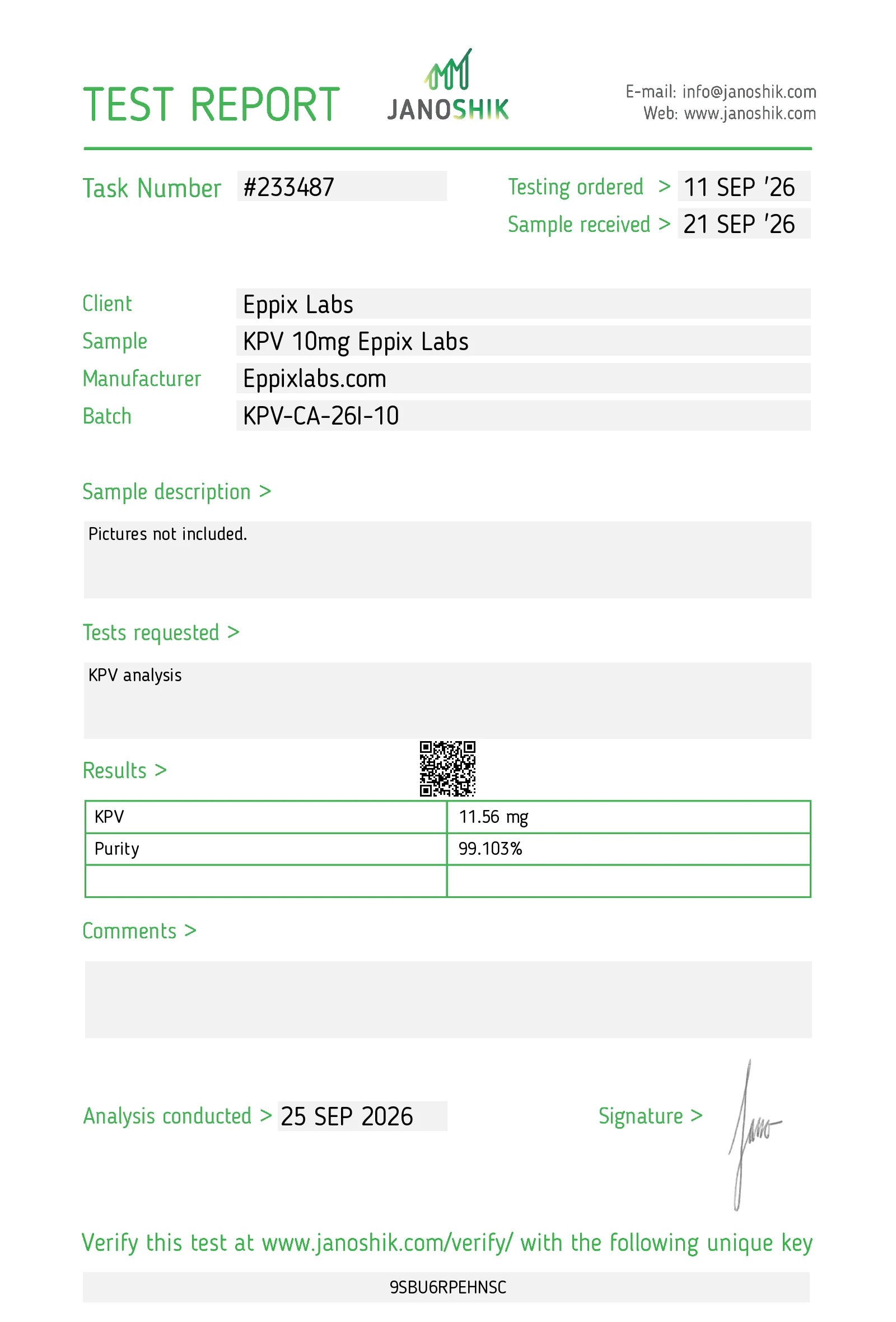
  • ·Is the material characterized well enough to support reproducible research? That is answered lot by lot, not by a regulatory category. The certificate for the current KPV lots is below, and every Eppix lot is listed on certificates of analysis.
Published Certificate
Certificate of analysis for KPV 10mg, batch KPV-CA-26I-10, 99.103% purity, 11.56 mg measured content

Select strength

Batch
KPV-CA-26I-10
Purity (HPLC)
99.103%
Measured content
11.56 mglabeled 10 mg
Laboratory
Janoshik
Published certificate of analysis for the current KPV lots. Batch, HPLC purity and measured content are read live from the batch record.

The five still waiting

The five removed peptides not reviewed in July (LL-37, dihexa, injectable GHK-Cu, PEG-MGF and Melanotan II) are slated for a separate PCAC consultation before the end of February 2027.[1][2] GHK-Cu has a second strand: the FDA also took GHK-Cu for non-injectable routes off Category 1, again because the nomination was withdrawn, and both forms are slated for that review.[1]
Labs tracking those compounds should watch the FDA's advisory committee calendar for meeting notices and briefing documents, which are usually posted in advance and include the agency's own literature review.

KPV, shown above, was one of the seven reviewed in July. Its research literature and supply picture are covered in KPV in the US.

Frequently Asked

Is BPC-157 legal in the US now?

BPC-157 is not an FDA-approved drug. Its removal from Category 2 did not authorize compounding. As a research chemical it may be sold for laboratory research, subject to the FDA's intended-use rules. This is not legal advice.

What is the "do not compound" list?

It is an informal name for Category 2 of the FDA's interim list of bulk drug substances nominated for 503A compounding.

Did the FDA say these peptides are safe?

No. The removals followed withdrawn nominations, and the FDA has not issued a safety determination for these substances.

References

  1. Frier Levitt (2026). FDA to Remove 12 Popular Peptides from the Category 2 "Do Not Compound" List. Published April 16, 2026. Frier Levitt. Source
  2. McDermott Will & Schulte (2026). Bulk-list bound? PCAC backs majority of peptides in two-day public meeting. Client alert, July 27, 2026. McDermott Will & Schulte. Source
  3. DJ Holt Law (2026). BPC-157 in 2026: Why Regulatory Limbo Is Not the Same as a Green Light. DJ Holt Law. Source
  4. US Food and Drug Administration, CDER (2026). Warning letter to Gram Peptides, MARCS-CMS 721806, March 31, 2026. One of the March 2026 letters finding that products labeled "Research Use Only" were intended as drugs for human use. FDA Warning Letters. Source
  5. US Food and Drug Administration (2026). Pharmacy Compounding Advisory Committee meeting, 23-24 July 2026: bulk drug substances nominated for inclusion on the Section 503A Bulks List. FDA Advisory Committee Calendar. Source
  6. US Food and Drug Administration (2026). FDA briefing document, Pharmacy Compounding Advisory Committee: BPC-157, KPV, TB-500, MOTS-c, Emideltide, Semax and Epitalon. Agency review recommended against inclusion for each substance. FDA. Source
  7. Office of the Federal Register (2026). 21 CFR 216.23: bulk drug substances that can be used to compound drug products under section 503A. None of the six peptides appear on the list as of publication. eCFR. Source

Research Use Only

This article summarizes published preclinical research literature. Compounds referenced are supplied by Eppix Labs strictly as research materials for laboratory investigation within the United States. They are not approved by the FDA for human or veterinary use, and nothing on this page should be interpreted as medical advice or guidance on human or animal administration.