FedEx Delivery1–3 day delivery across the U.S.Free on orders over $200

Sourcing Guide

KPV in the US: The α-MSH Fragment in Inflammation Research

A tripeptide with a real preclinical literature, a July 2026 regulatory moment, and a supply market that has not caught up

·Compiled by Eppix Labs

KPV has a growing US search footprint, mostly from researchers working on inflammation models. It is also new enough to the commercial market that quality varies widely between suppliers, and in July 2026 it became the subject of the most consequential regulatory hearing the peptide field has had. Here is the compound, the evidence, the regulatory picture, and the sourcing checklist.

KPV is supplied for laboratory research use only. Nothing below is dosing, medical or legal guidance.

Chemical Identity

Name
KPV (Lys-Pro-Val)
Also known as
KPV, α-MSH(11-13), Lysine-proline-valine
Molecular formula
C₁₆H₃₀N₄O₄
Molecular weight
342.44 Da
CAS number
67727-97-3
Sequence (1-letter)
KPV
Sequence (3-letter)
Lys-Pro-Val
Salt forms
Free base · Acetate

What KPV is

KPV is a tripeptide, lysine-proline-valine, corresponding to the C-terminal fragment (residues 11 to 13) of alpha-melanocyte-stimulating hormone.[3] Research interest follows from the observation that this terminal fragment retains anti-inflammatory activity in models while lacking the pigmentation-related activity of the full hormone.[3]

It is also smaller and more chemically stable than the parent hormone, which is part of why it has been studied across oral, topical and transdermal delivery routes.[5]

Research Material
General Image
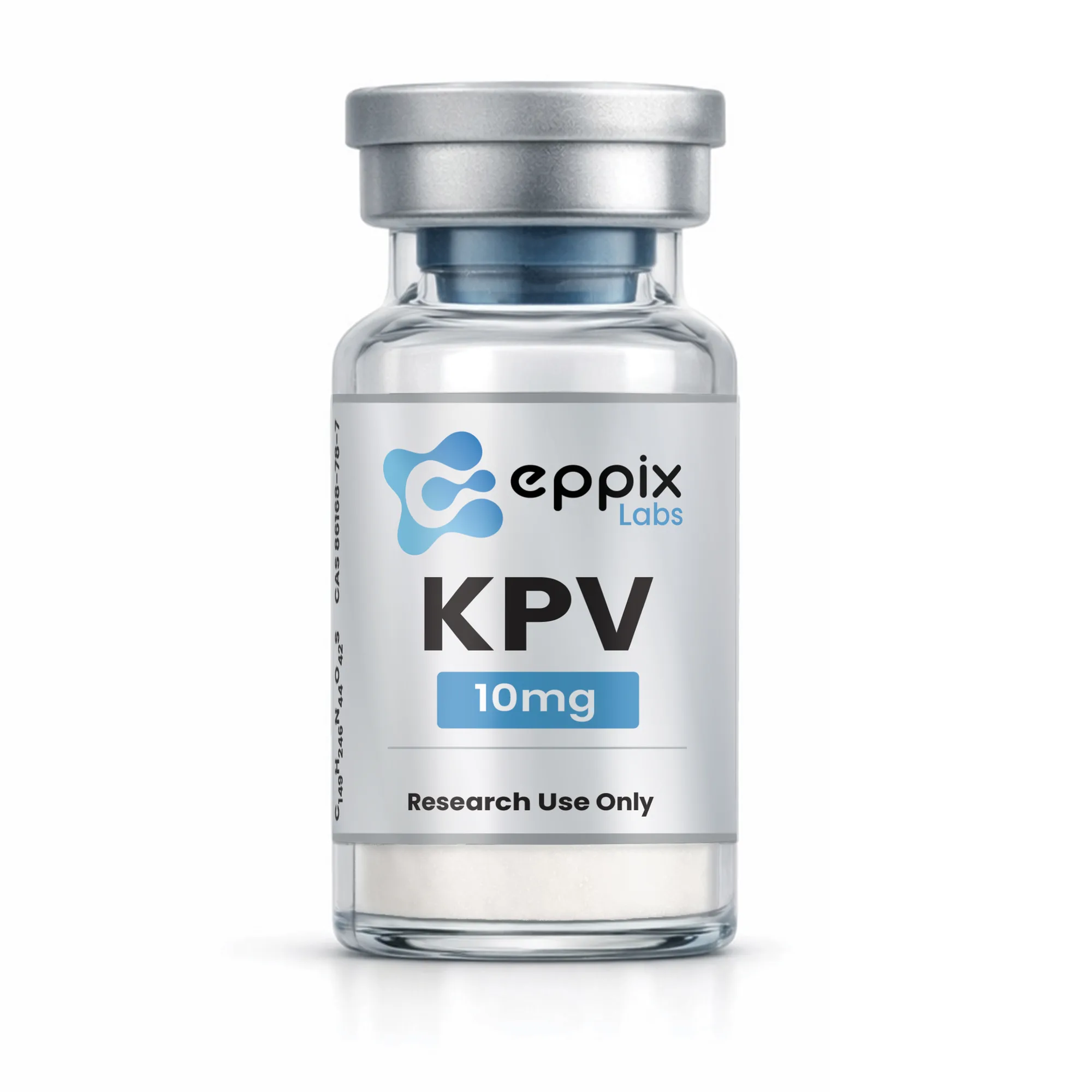
KPV lyophilized research material as supplied by Eppix Labs. Labelled and measured content are stated on the certificate below.

Sequence and structure

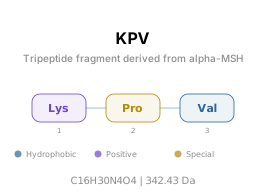
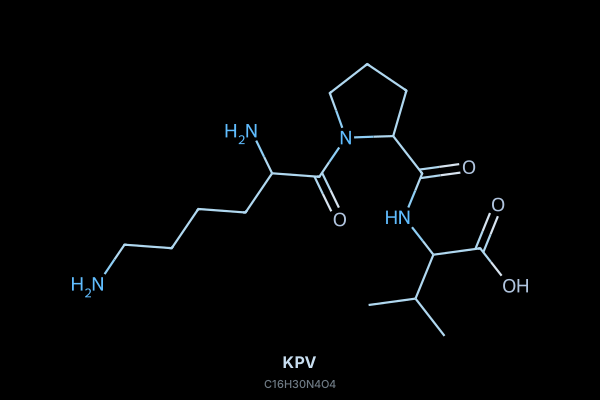
Three residues and a molecular weight of 342.44 Da. This is about as small as a peptide gets before it stops behaving like one, and the commercial consequence is direct: tripeptides are cheap to synthesize and cheaper to substitute, so identity confirmation carries more weight here than it does for a longer sequence.

Amino Acid Sequence
Amino Acid Sequence diagram
Amino-acid sequence of KPV, Lys-Pro-Val.
Chemical Structure
Chemical Structure diagram
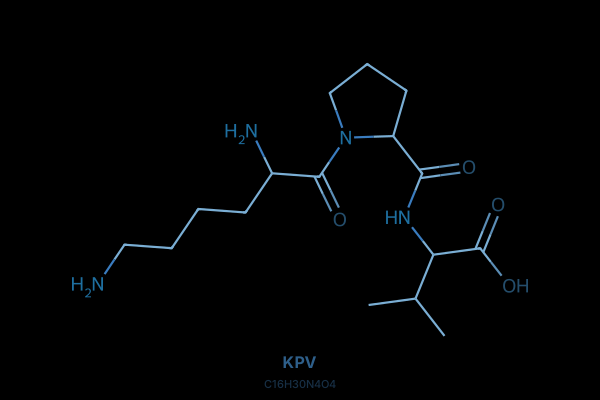
Chemical structure of the KPV tripeptide, C₁₆H₃₀N₄O₄.

What the research shows

The largest body of work is on gut and intestinal inflammation, and it is unusually mechanistically clean for a compound of this size.

  • ·The foundational paper is Dalmasso et al., Gastroenterology 2008.[1] Nanomolar concentrations of KPV inhibited NF-κB and MAP-kinase inflammatory signaling and reduced pro-inflammatory cytokine secretion in intestinal epithelial cells (Caco2-BBE, HT29-Cl.19A) and human T cells (Jurkat). Uptake was mediated by PepT1, a di- and tripeptide transporter upregulated in inflamed colonic tissue. Oral administration reduced the incidence of DSS- and TNBS-induced colitis in mice.
  • ·Independent murine IBD models. Kannengiesser et al. (2008) reported anti-inflammatory activity for the melanocortin-derived tripeptide in two distinct murine models of inflammatory bowel disease.[2]
  • ·Transporter dependence. Work in colitis-associated cancer models reported reduced colonic tumour number, size and burden in KPV-treated animals, an effect abolished in PepT1-knockout animals. That knockout result is the cleanest available confirmation that the transporter is doing the work.[4]
  • ·Targeted colonic delivery. Xiao et al. (2017) used hyaluronic-acid-functionalized nanoparticles for orally targeted colonic delivery in an ulcerative colitis model.[7]
  • ·Skin and transdermal work. KPV has been studied in transdermal iontophoretic delivery across microporated human skin, motivated by its stability and the absence of melanotropic effect.[5] Separate work has examined the tripeptide in brain injury models.[6]

The limit of the evidence, stated plainly

No human clinical trials of KPV exist. Every result above is from cell culture or animal models. There is no established human dose, no human safety record, and no approved indication in any jurisdiction. Any supplier presenting KPV as a proven treatment is misrepresenting the literature.

Regulatory status: what the July 2026 FDA vote did and did not do

On 23 and 24 July 2026 the FDA's Pharmacy Compounding Advisory Committee reviewed KPV (free base and acetate) for inclusion on the Section 503A Bulk Drug Substances List, alongside BPC-157, KPV, TB-500, MOTS-c, Epitalon and Semax. FDA staff had recommended against inclusion for every substance under review, citing insufficient characterization, little or no human effectiveness evidence, and inadequate human safety data. The committee voted in favor anyway. The vote was 8 in favor, 6 against, 1 abstention.

What that vote does not do:

The practical takeaway for a US research buyer is unchanged. Until a final determination issues, the compound is research-use-only, and sourcing quality is your responsibility rather than a regulator's.

  • ·It is non-binding. The committee advises, it does not decide. No final FDA determination has been issued and none of the six peptides appears in 21 CFR 216.23.
  • ·It requires a further step. Addition to the 503A Bulks List requires formal action by the Secretary of Health and Human Services, which had not occurred as of publication.
  • ·It does not make the compound an FDA-approved drug, and it establishes nothing about efficacy.
  • ·It does not legitimize research-chemical retail. A compounding-list decision concerns licensed pharmacists preparing patient-specific prescriptions under Section 503A, which is a different channel entirely from research material sold in vials.

Buying KPV in the US: what matters

Identity testing, not just purity. Tripeptides are cheap to substitute or underfill. A purity percentage alone tells you what fraction of what is in the vial is the stated compound. It does not tell you the compound is correct, and it does not tell you how much is there. Mass-spectrometry identity confirmation plus measured content against the labeled amount is the only combination that closes both gaps.

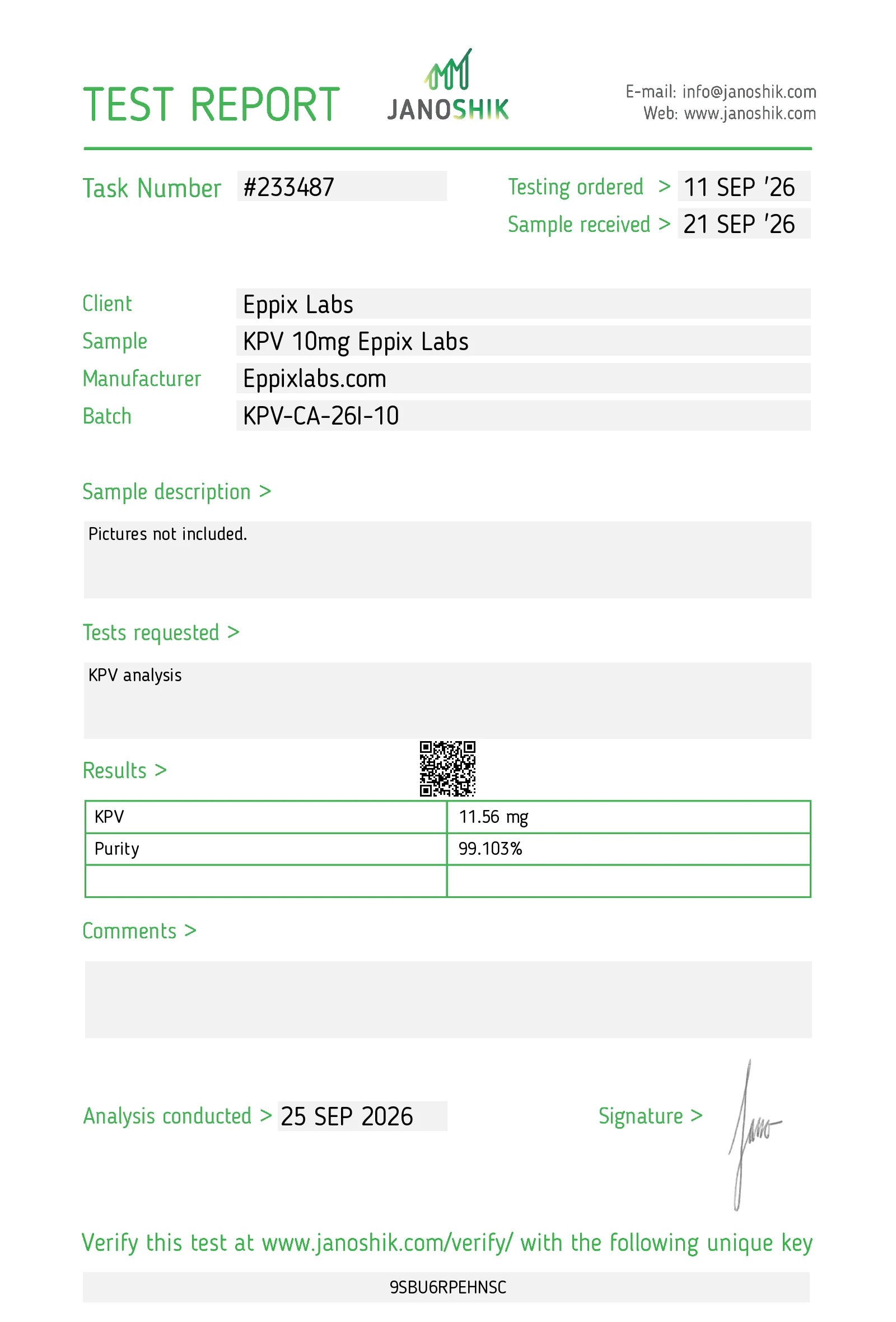
Published, verifiable certificates, with the numbers stated. Eppix publishes the Janoshik Analytical certificate for every KPV lot before sale, each verifiable directly on the laboratory's own database. The measured content figure is the one almost no supplier publishes, and that is precisely the reason to publish it: a buyer can confirm the vial is not underfilled before ordering rather than after.

Published Certificate
Certificate of analysis for KPV 10mg, batch KPV-CA-26F-10, 99.023% purity, 12.05 mg measured content

Select strength

Batch
KPV-CA-26F-10
Purity (HPLC)
99.023%
Measured content
12.05 mglabeled 10 mg
Laboratory
Janoshik
Published certificate of analysis for the current KPV lots. Purity and measured content are reported separately because they answer different questions.

US stock and fulfillment

Domestic shipping is by FedEx, typically one to three business days across the United States, free over $200 USD. Card and PayPal checkout are both available, and mix-and-match multi-vial pricing applies at 5 and 10 vials. Current availability per strength is shown on the card below and on the product page, which is the only place either of us should be reading stock from.

Researchers building tissue-repair models often pair KPV work with BPC-157; both compounds' certificates are public. The full tissue repair category is at /collections/tissue-repair.

Frequently Asked

Is KPV legal in the US?

It may be sold and held for laboratory research use. It is not approved by the FDA for human or veterinary use. This is not legal advice.

Did the FDA approve KPV in 2026?

No. An FDA advisory committee recommended in July 2026 that KPV be added to the Section 503A compounding bulks list, against FDA staff's own recommendation. That vote is non-binding, addition to the list still requires action by the Secretary of Health and Human Services, no final determination has been issued, and KPV does not appear in 21 CFR 216.23.

What is KPV derived from?

The C-terminal three amino acids (Lys-Pro-Val) of α-MSH, studied as the fragment carrying the parent hormone's anti-inflammatory signal without its melanotropic activity.

How does KPV enter cells?

In intestinal tissue, via the PepT1 di- and tripeptide transporter rather than a melanocortin receptor. PepT1 is upregulated in inflamed tissue, which is the basis of the targeting hypothesis in the colitis literature.

What should a KPV certificate show?

Batch number, named testing laboratory, MS identity confirmation, HPLC purity, and measured vial content, verifiable on the laboratory's own website rather than as a PDF hosted by the seller.

Are there human studies of KPV?

No. All published KPV findings are preclinical: cell culture and animal models.

How is KPV stored?

Lyophilized: cool, dry, dark, at -20 °C for long-term storage. Reconstituted: refrigerated, per your protocol.

References

  1. Dalmasso, G., Charrier-Hisamuddin, L., Nguyen, H.T.T. et al. (2008). PepT1-mediated tripeptide KPV uptake reduces intestinal inflammation. Gastroenterology 134(1):166-178. PMID 18061177
  2. Kannengiesser, K. et al. (2008). Melanocortin-derived tripeptide KPV has anti-inflammatory potential in murine models of inflammatory bowel disease. Inflamm Bowel Dis 14(3):324-331. PMID 18092346
  3. Brzoska, T., Luger, T.A., Maaser, C., Abels, C., Böhm, M. (2008). Alpha-melanocyte-stimulating hormone and related tripeptides: biochemistry, antiinflammatory and protective effects in vitro and in vivo, and future perspectives for the treatment of immune-mediated inflammatory diseases. Endocr Rev 29(5):581-602. PMID 18612139
  4. Viennois, E. et al. (2016). Critical role of PepT1 in promoting colitis-associated cancer and therapeutic benefits of the anti-inflammatory PepT1-mediated tripeptide KPV in a murine model. Cell Mol Gastroenterol Hepatol 2(3):340-357. PMID 27458604
  5. Pawar, K. et al. (2017). Transdermal iontophoretic delivery of lysine-proline-valine (KPV) peptide across microporated human skin. J Pharm Sci 106(7):1814-1820. PMID 28343991
  6. Schaible, E.V. et al. (2013). Single administration of tripeptide α-MSH(11-13) attenuates brain damage by reduced inflammation and apoptosis after experimental traumatic brain injury in mice. PLoS One 8(7):e69859. PMID 23940690
  7. Xiao, B. et al. (2017). Orally targeted delivery of tripeptide KPV via hyaluronic acid-functionalized nanoparticles efficiently alleviates ulcerative colitis. Mol Ther 25(7):1628-1640. PMID 28143741
  8. US Food and Drug Administration (2026). Pharmacy Compounding Advisory Committee meeting, 23-24 July 2026: bulk drug substances nominated for inclusion on the Section 503A Bulks List. FDA Advisory Committee Calendar. Source
  9. US Food and Drug Administration (2026). FDA briefing document, Pharmacy Compounding Advisory Committee: BPC-157, KPV, TB-500, MOTS-c, Emideltide, Semax and Epitalon. Agency review recommended against inclusion for each substance. FDA. Source
  10. Office of the Federal Register (2026). 21 CFR 216.23: bulk drug substances that can be used to compound drug products under section 503A. None of the six peptides appear on the list as of publication. eCFR. Source

Research Use Only

This article summarizes published preclinical research literature. Compounds referenced are supplied by Eppix Labs strictly as research materials for laboratory investigation within the United States. They are not approved by the FDA for human or veterinary use, and nothing on this page should be interpreted as medical advice or guidance on human or animal administration.