✦FedEx Delivery1–3 day delivery across the U.S.Free on orders over $200

Regulatory

503A vs 503B vs RUO: The Three US Peptide Supply Chains, Compared

Two channels make drugs for patients and one sells chemicals to laboratories, and the rules, the oversight and the quality obligations differ accordingly

·By Adam Reeves · Research Editor, Eppix Labs

The same peptide name can reach a US user through three channels that have almost nothing in common legally: a compounding pharmacy filling a prescription, an outsourcing facility supplying clinics, and a reagent supplier selling to laboratories. Most of the confusion about what the 2026 FDA actions changed comes from treating them as one market.

This is general information, not legal advice. Eppix Labs is a research reagent supplier: everything it sells is for laboratory research use only, and nothing below is dosing or medical guidance.

Key takeaways

  • ·Peptides reach US users through three legally distinct channels: 503A compounding pharmacies, 503B outsourcing facilities, and research-use-only (RUO) reagent suppliers.
  • ·503A and 503B produce drugs for patients. RUO suppliers sell chemical reagents for laboratory research and may not market them for human use.[1]
  • ·Each channel has different quality obligations. 503B facilities follow current good manufacturing practice (CGMP). RUO quality depends on the supplier, which is why independent batch testing matters.[2]
Channel 1: 503A compounding pharmacies

Section 503A of the Federal Food, Drug, and Cosmetic Act exempts drugs compounded by a licensed pharmacist or physician from the Act's requirements on FDA approval, CGMP and labeling with adequate directions for use, provided the drug is compounded for an individual patient on a valid patient-specific prescription.[2] Key constraints:

  • ·Ingredients. Bulk drug substances must have a USP or NF monograph, be a component of an FDA-approved drug, or appear on the 503A bulks list. This is why the July 2026 PCAC votes on BPC-157 and other peptides mattered to pharmacies.[3]
  • ·Oversight. Primarily state boards of pharmacy, with FDA authority for certain violations.[3]
  • ·Quality standard. USP compounding chapters (for example, USP <797> for sterile preparations) rather than full CGMP, from which 503A compounding is exempt.[2]
Research Material
General Image
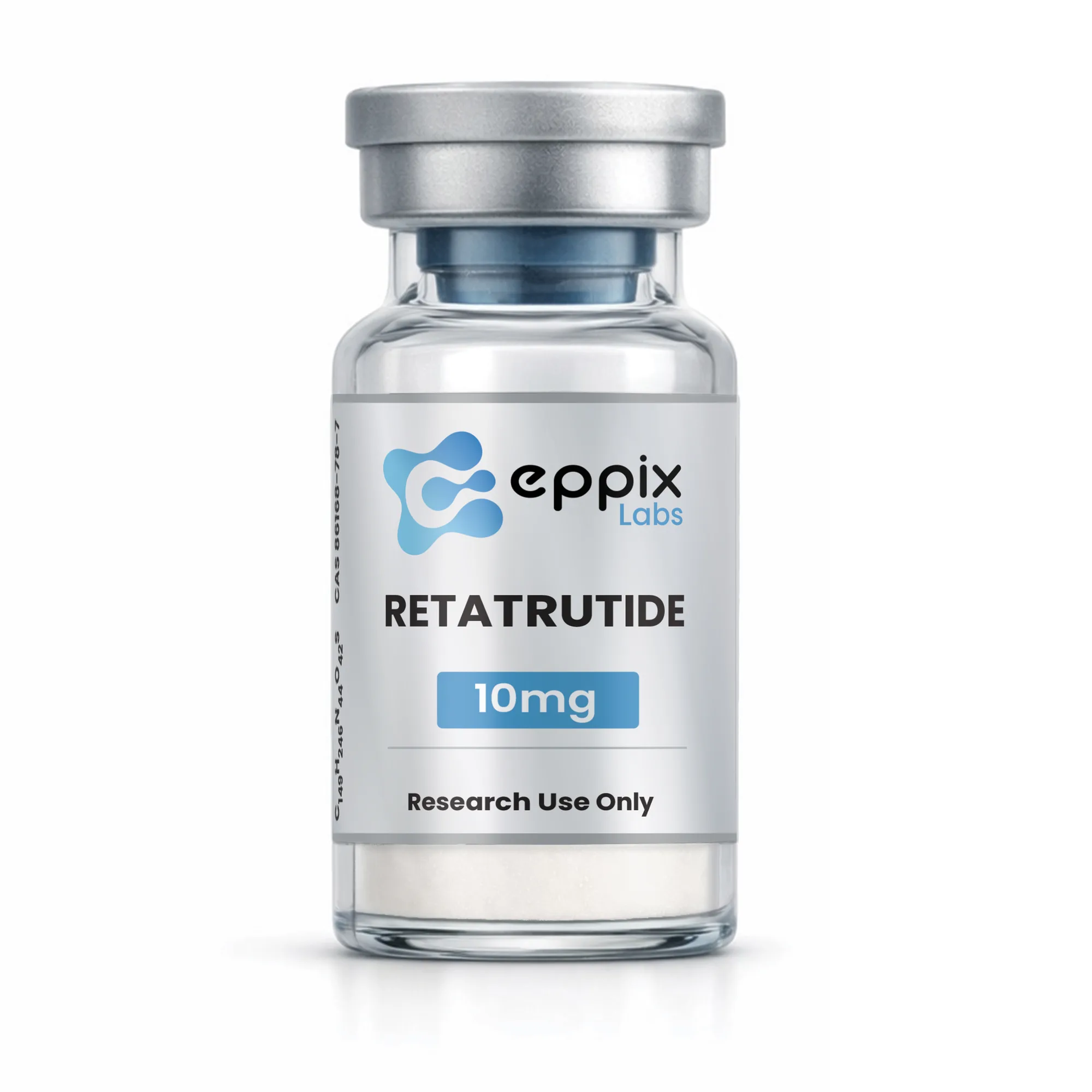
Retatrutide lyophilized research material as supplied by Eppix Labs. Labeled and measured content are stated on the certificate further down this page.

Channel 2: 503B outsourcing facilities

Section 503B, created by the Drug Quality and Security Act of 2013, lets a compounder register with the FDA as an outsourcing facility and compound in larger batches, distributing either on patient-specific prescriptions or on orders from health care providers such as hospitals.[2] Key constraints:

  • ·Ingredients. Bulk drug substances must be on the 503B bulks list, which covers substances with a clinical need, or the drug made from them must be on the FDA's drug shortage list at the time of compounding, distribution and dispensing.[4]
  • ·Oversight. Direct FDA registration, risk-based FDA inspection, and adverse-event reporting.[2]
  • ·Quality standard. CGMP, the same framework that applies to drug manufacturers.[2]
  • ·Why it mattered for the GLP-1 class. During the semaglutide and tirzepatide shortages, compounders, outsourcing facilities included, could make those drugs. The FDA declared the tirzepatide shortage resolved in December 2024 and the semaglutide shortage in February 2025, and the transition periods for outsourcing facilities ended in March and May 2025 respectively.[5]

Channel 3: RUO reagent suppliers

A research reagent supplier is not a pharmacy and not a drug manufacturer. It sells chemicals for in vitro and laboratory research. The governing question is intended use: if the product is marketed, labeled or distributed in a way that shows it is intended for human use, the FDA treats it as an unapproved drug.[1] Key features:

  • ·Ingredients. No bulks list applies, because the product is not a drug. Investigational compounds such as retatrutide can be supplied for research, provided nothing suggests human use.
  • ·Oversight. The FDA acts through warning letters, import alerts and enforcement when marketing crosses into drug claims. Our post on what research use only means after the 2026 warning letters covers what triggers action.
  • ·Quality standard. None is mandated. Quality is whatever the supplier can demonstrate.
Amino Acid Sequence
Amino Acid Sequence diagram
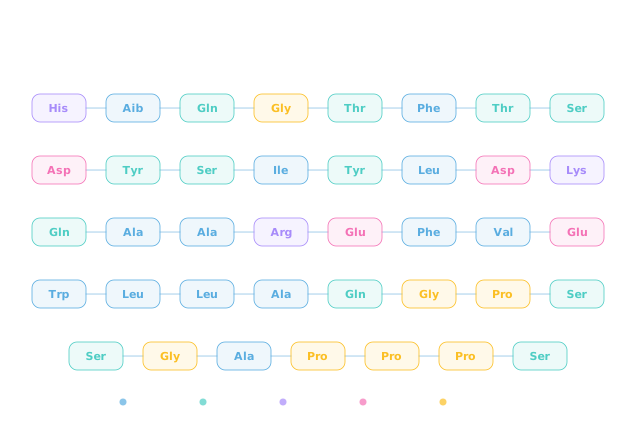
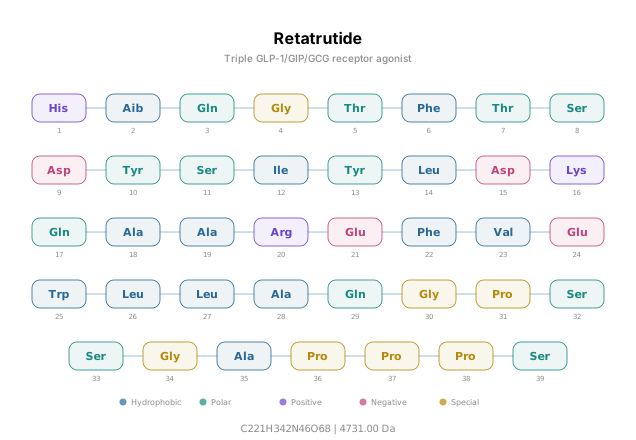
Amino-acid sequence of retatrutide, read N-terminus to C-terminus.
Chemical Structure
Chemical Structure diagram
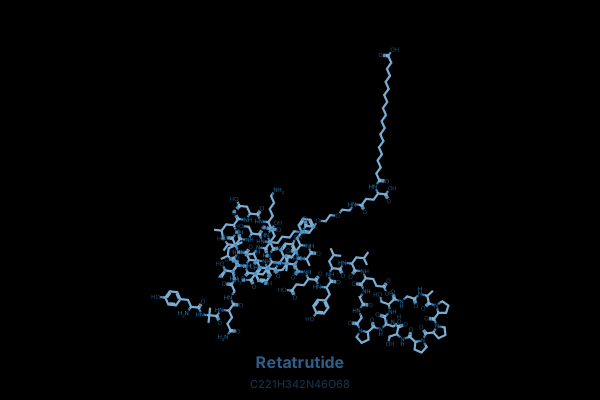
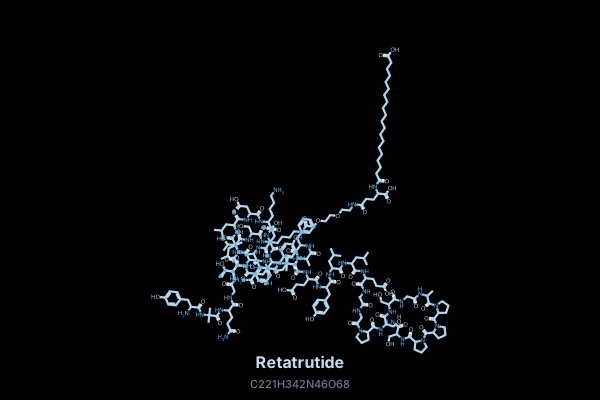
Chemical structure of retatrutide, C₂₂₁H₃₄₂N₄₄O₆₈.

Side-by-side comparison

  • ·What the product legally is. 503A pharmacy: a compounded drug. 503B outsourcing facility: a compounded drug. RUO supplier: a research reagent.
  • ·End user. 503A: an individual patient. 503B: patients, via providers. RUO: laboratories.
  • ·Prescription. 503A: required. 503B: not always. RUO: not applicable.
  • ·Federal registration. 503A: no (state-licensed). 503B: yes, with the FDA. RUO: no.
  • ·Quality framework. 503A: USP compounding chapters. 503B: CGMP. RUO: supplier-defined.
  • ·Ingredient rules. 503A: the 503A bulks list, a monograph, or an approved-drug component. 503B: the 503B bulks list or the shortage list. RUO: none, because the product is not a drug.
  • ·Human use. 503A: for the prescribed patient. 503B: for patients, via providers. RUO: not permitted, and marketing toward it is what turns a reagent into an unapproved drug.

Why the RUO quality gap matters

Because no federal standard defines RUO peptide quality, two vials with the same label can differ widely in identity, purity, peptide content and endotoxin load. For research, that is a reproducibility problem: an experiment run on a 92%-pure lot with an unknown impurity is not comparable to one run on a 99%-pure lot.

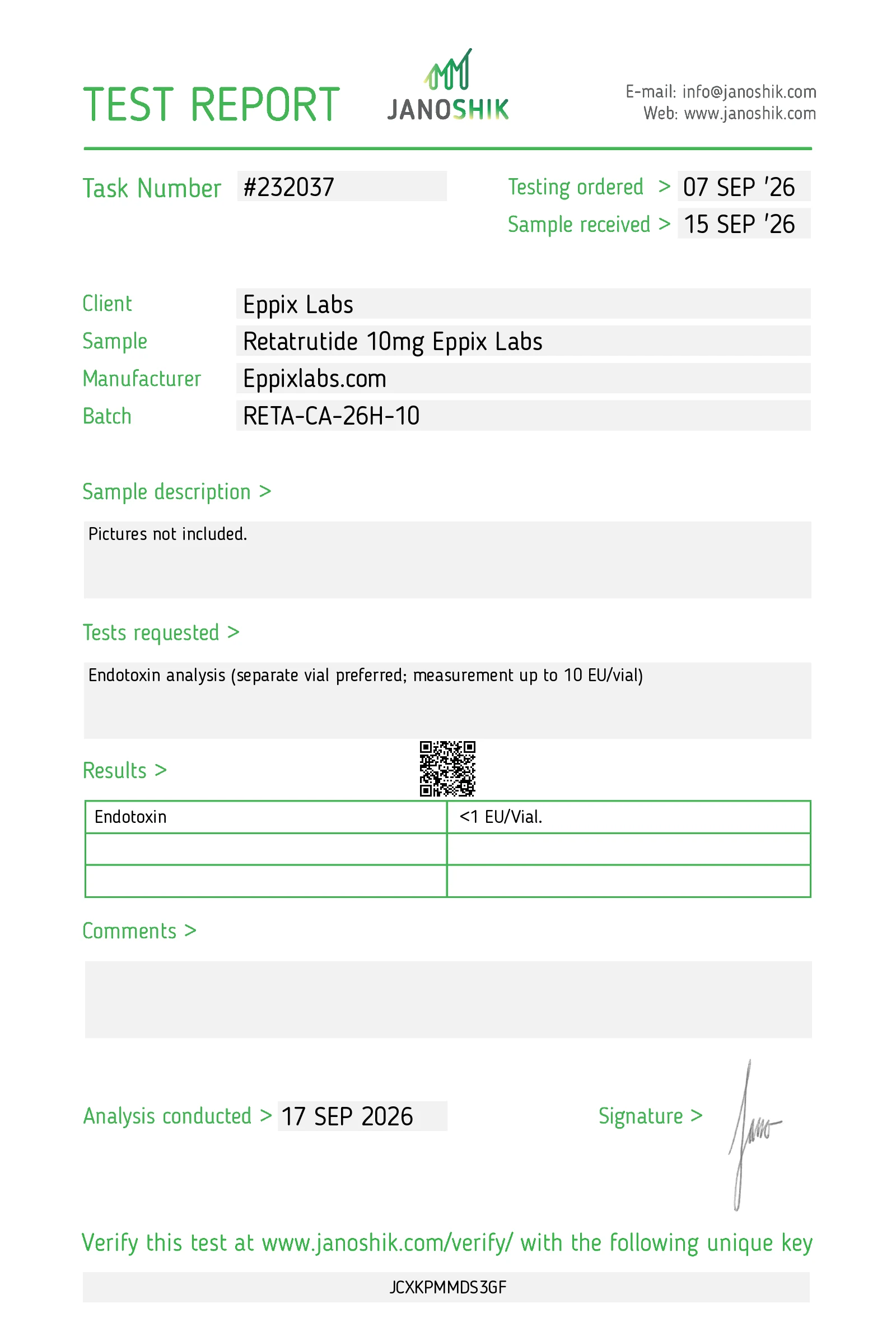
Labs can close that gap by requiring the four things below. Eppix Labs publishes a batch-specific third-party certificate for every lot on its certificates of analysis page, with purity and measured content as the laboratory reported them, and adds endotoxin results for the lots picked for random screening. The current retatrutide certificate is shown after the list.

Published Certificate
Certificate of analysis for Retatrutide (Triple Agonist) 10mg, batch RETA-CA-26E-01, 99.637% purity, 11.76 mg measured content

Select strength

Batch
RETA-CA-26E-01
Purity (HPLC)
99.637%
Measured content
11.76 mglabeled 10 mg
Laboratory
Janoshik
Published certificates for the current retatrutide lots, by strength. Batch, HPLC purity and measured content are read live from the batch record.

Frequently Asked

Can a 503B facility sell to a research lab?

503B facilities produce human drugs. Labs generally source research material from reagent suppliers instead.

Is RUO material lower quality than compounded material?

Not necessarily, but there is no mandated standard. Quality has to be shown batch by batch.

Does the PCAC process affect RUO suppliers?

No. The PCAC advises on the 503A bulks list for pharmacies.

References

  1. Office of the Federal Register (2026). 21 CFR 201.128: meaning of "intended uses". eCFR. Source
  2. US Food and Drug Administration (2026). Human drug compounding laws: sections 503A and 503B of the FD&C Act and the Drug Quality and Security Act. FDA. Source
  3. McDermott Will & Schulte (2026). Bulk-list bound? PCAC backs majority of peptides in two-day public meeting. Client alert, July 27, 2026. McDermott Will & Schulte. Source
  4. US Food and Drug Administration (2026). Bulk drug substances used in compounding under section 503B of the FD&C Act. FDA. Source
  5. US Food and Drug Administration (2026). FDA clarifies policies for compounders as national GLP-1 supply begins to stabilize (tirzepatide and semaglutide shortage resolutions and transition periods). FDA Drug Alerts and Statements. Source

Research Use Only

This article summarizes published preclinical research literature. Compounds referenced are supplied by Eppix Labs strictly as research materials for laboratory investigation within the United States. They are not approved by the FDA for human or veterinary use, and nothing on this page should be interpreted as medical advice or guidance on human or animal administration.