✦FedEx Delivery1–3 day delivery across the U.S.Free on orders over $200

Verification Guide

Endotoxin Testing for Research Peptides: LAL, rFC and What an EU/mg Result Means

A contaminant HPLC cannot see, an assay family built on horseshoe crab blood and its recombinant replacement, and how to read the number they return

·By Adam Reeves · Research Editor, Eppix Labs

A peptide lot can be the right molecule, at high purity and full content, and still wreck an inflammation experiment. Bacterial endotoxin is invisible to the tests most certificates report, active at very low levels, and capable of producing exactly the kind of readout a researcher is looking for.

This piece covers why endotoxin matters, how the two main assay families work, how to read a result, and which controls belong in the lab regardless. Every compound mentioned is supplied for laboratory research use only. Nothing below is dosing, medical or legal guidance.

Key takeaways

  • ·Endotoxins are lipopolysaccharides from the outer membrane of Gram-negative bacteria. They are potent immune activators and can confound cell-based and animal research at very low levels.
  • ·HPLC purity testing does not detect endotoxin. It takes a separate assay.
  • ·The two main assay families are Limulus amebocyte lysate (LAL) and recombinant factor C (rFC).[1][2]
  • ·Eppix commissions endotoxin screens on lots picked at random and publishes each result with the lot it was run on. Most lots are not screened, and a lot with no result was not tested.
Why endotoxin matters for research

Endotoxin activates Toll-like receptor 4 (TLR4) signaling in immune cells, triggering cytokine release.[3] In a research setting that is a confound: an inflammatory readout might reflect the peptide, the endotoxin riding along with it, or both.

It matters most for peptides studied in inflammation, tissue repair and immune models, such as KPV, BPC-157, TB-500 and thymosin-related compounds such as thymosin alpha-1. A contaminated lot can produce a strong "effect" that is really an endotoxin response.

Endotoxin is also heat-stable. It survives typical lyophilization and is not removed by sterile filtration, which removes bacteria but not the molecules they shed.

Research Material
General Image
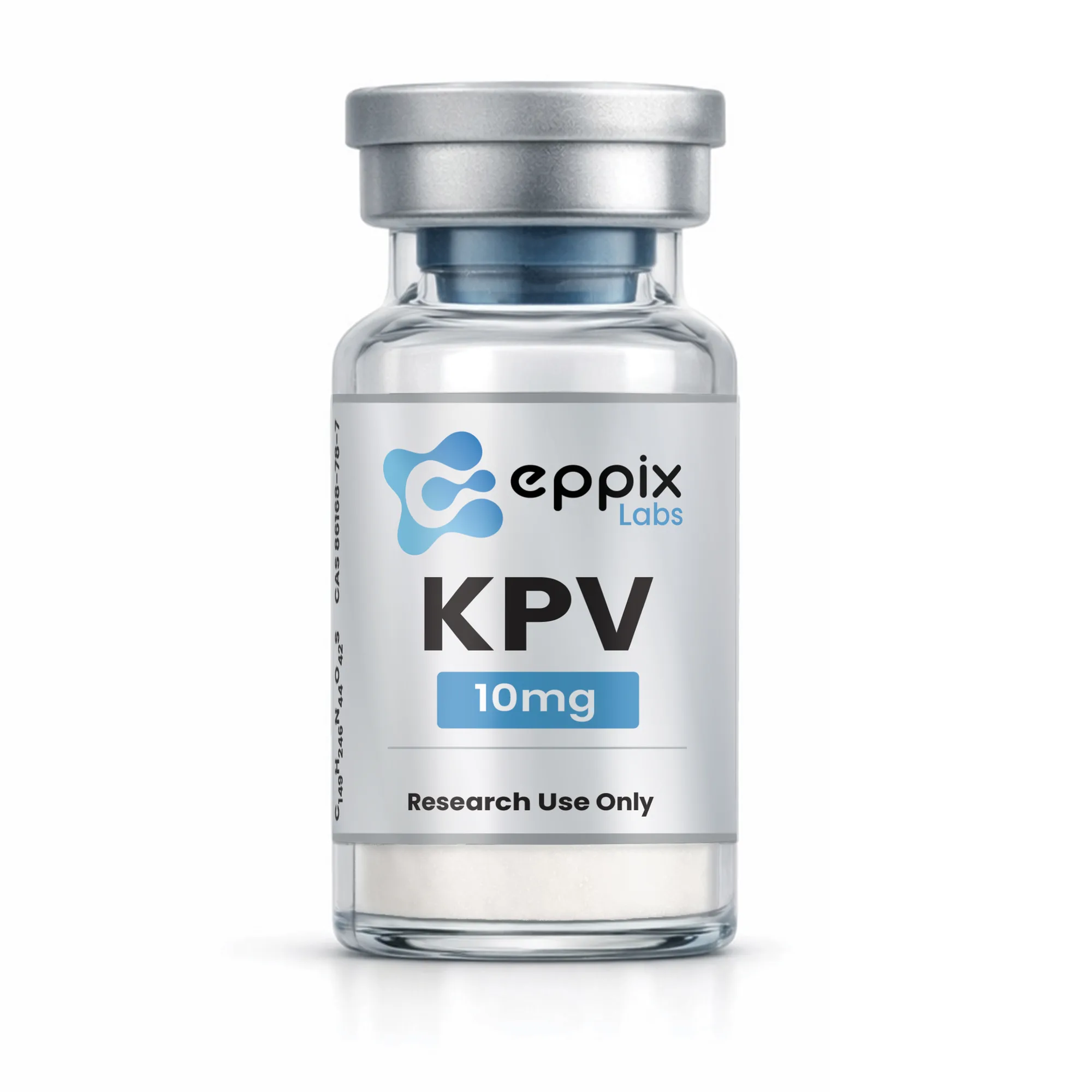
KPV lyophilized research material as supplied by Eppix Labs. Labeled and measured content are stated on the certificate further down.
Amino Acid Sequence
Amino Acid Sequence diagram
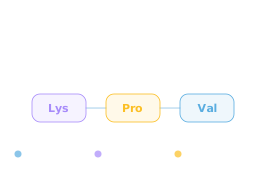
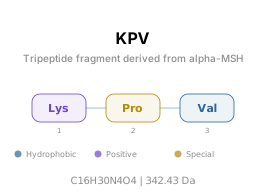
Amino-acid sequence of KPV, Lys-Pro-Val.
Chemical Structure
Chemical Structure diagram
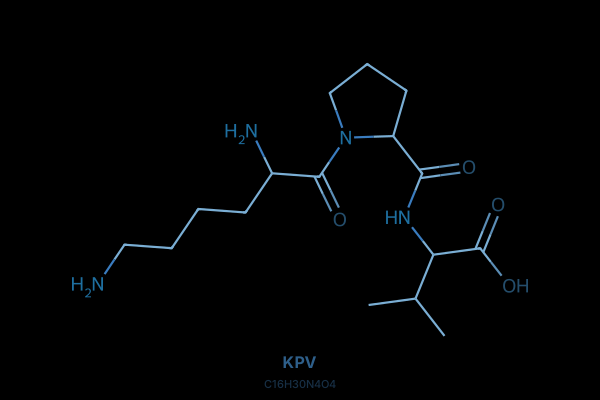
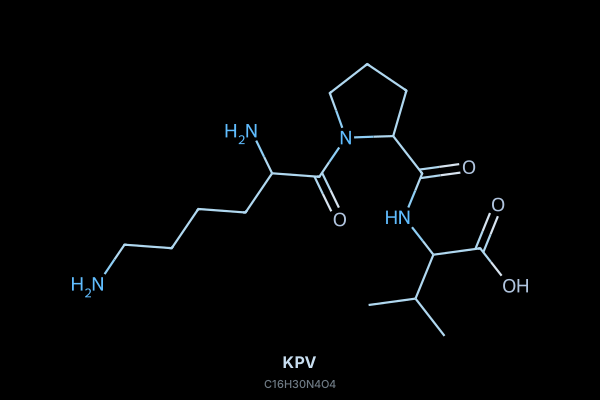
Chemical structure of the KPV tripeptide, C₁₆H₃₀N₄O₄.

How the assays work: LAL

LAL is an extract of blood cells from the horseshoe crab. Endotoxin triggers an enzymatic cascade in the lysate, and that cascade can be read out in three ways.[1] The kinetic turbidimetric and chromogenic versions are quantitative and report a numeric result:

  • ·Gel-clot: a pass/fail clot at a defined sensitivity.
  • ·Turbidimetric: measures the increase in turbidity over time.
  • ·Chromogenic: measures color released from a synthetic substrate.

How the assays work: recombinant factor C (rFC)

rFC assays use a recombinantly produced version of factor C, the first enzyme in the LAL cascade, linked to a fluorescent readout. They avoid animal-derived reagents, and because they lack the alternate factor G pathway that lysates carry, they are not triggered by (1→3)-β-D-glucans, a known source of false positives in LAL.[4] USP has added a general chapter, <86>, for bacterial endotoxin testing with recombinant reagents, alongside its long-standing LAL chapter, <85>.[2]

FDA's guidance Pyrogen and Endotoxins Testing: Questions and Answers describes the compendial gel-clot, photometric and kinetic methods, and allows alternative methods provided they are validated and shown to achieve equivalent or better results.[1]

Reading an endotoxin result

Results are reported in endotoxin units (EU), usually normalized to sample mass (EU/mg) or volume (EU/mL). Four things to read on the line:

  • ·"< X EU/mg" means the result was below the assay's limit of detection for that sample. A lower X means a more sensitive test.
  • ·A numeric value means endotoxin was detected and quantified.
  • ·Spike recovery, sometimes shown as a positive product control, confirms the sample did not inhibit the assay. Test articles, peptides included, can interfere with the assay chemistry, so a valid result includes an inhibition/enhancement check.[1]
  • ·What level is acceptable depends on the model. Primary immune cells and in vivo studies are far more sensitive than many biochemical assays. Define your threshold in the protocol before you look at the data.

Practical controls in the lab

  • ·Use endotoxin-free consumables: pyrogen-free tubes, tips and water.
  • ·Run a vehicle-only control prepared in the same solvent and consumables.
  • ·Consider a polymyxin B control in cell assays. It neutralizes LPS and helps separate endotoxin effects from peptide effects.
  • ·Record the batch ID, and keep the endotoxin result (where the lot has one) with the experimental record.

How Eppix Labs handles endotoxin

Every Eppix lot is tested for HPLC purity and measured content by an independent laboratory before it is sold (Janoshik Analytical for most lots), and the certificate is published. Most lots measure above 99% purity; an occasional lot comes back around 98% and is published as reported rather than left out.

Endotoxin works differently. It is one of three extra screens, with heavy metals and sterility, that Eppix orders on lots picked at random as quality control, so only a minority of lots carry one. When a lot was screened, the result appears on that lot's report page word for word as the laboratory printed it. When a lot shows no endotoxin result, it was not screened: the gap is a test that never ran, not a pass or a fail. All of it is on the certificates of analysis page.

A screen that a lot passed is a result about that lot. It is not a process control covering every lot, and it does not make research material suitable for use in people or animals.

Published Certificate
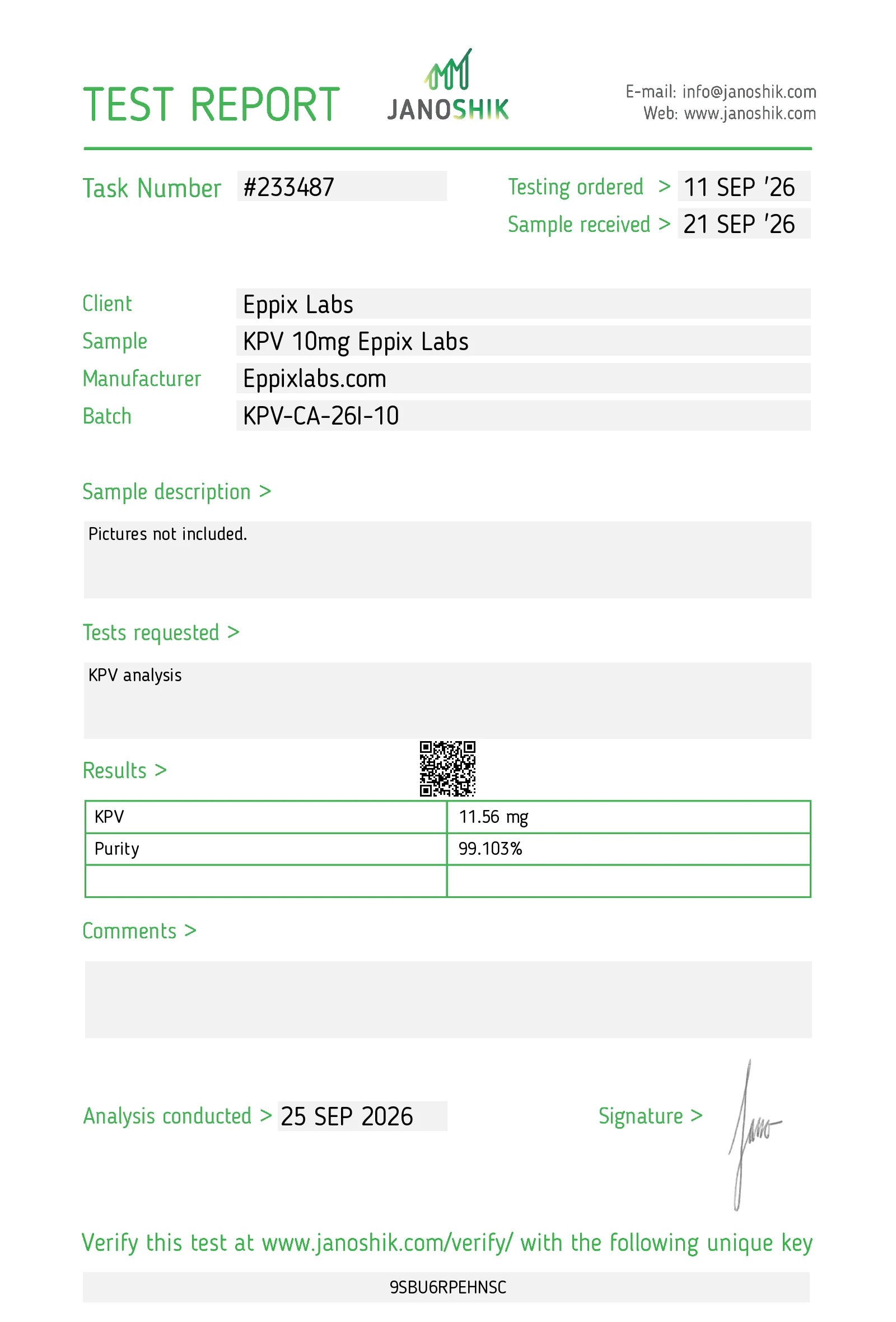
Certificate of analysis for KPV 10mg, batch KPV-CA-26I-10, 99.103% purity, 11.56 mg measured content

Select strength

Batch
KPV-CA-26I-10
Purity (HPLC)
99.103%
Measured content
11.56 mglabeled 10 mg
Laboratory
Janoshik
Published identity, purity and content certificate for the current KPV lots. Endotoxin results, where a lot was selected for screening, are listed on that lot's report page.

Frequently Asked

Does 99% HPLC purity mean low endotoxin?

No. They are independent measurements.

Can I remove endotoxin from a peptide solution?

Removal methods exist but can reduce peptide recovery. It is usually better to start with a tested lot.

Is rFC as reliable as LAL?

rFC is recognized by USP in its own general chapter, FDA guidance allows validated alternative methods, and comparative testing has found close agreement with LAL. Validation for the specific sample matrix is still required.

Is every Eppix lot endotoxin tested?

No. Endotoxin is screened on lots picked at random as quality control. Where a lot was screened, its result is published with that lot's report; a lot with no result was not screened.

References

  1. US Food and Drug Administration (2026). Guidance for Industry: Pyrogen and Endotoxins Testing: Questions and Answers (Edition 2). FDA Guidance Documents. Source
  2. United States Pharmacopeia (2024). General Chapter <86> Bacterial Endotoxins Test Using Recombinant Reagents, published for early adoption as a companion to General Chapter <85> Bacterial Endotoxins Test. USP. Source
  3. Poltorak, A., He, X., Smirnova, I. et al. (1998). Defective LPS signaling in C3H/HeJ and C57BL/10ScCr mice: mutations in Tlr4 gene. Science 282(5396):2085-2088. PMID 9851930
  4. Bolden, J., Knutsen, C., Levin, J. et al. (2020). Currently Available Recombinant Alternatives to Horseshoe Crab Blood Lysates: Are They Comparable for the Detection of Environmental Bacterial Endotoxins? A Review. PDA J Pharm Sci Technol 74(5):602-611. PMID 32817324

Research Use Only

This article summarizes published preclinical research literature. Compounds referenced are supplied by Eppix Labs strictly as research materials for laboratory investigation within the United States. They are not approved by the FDA for human or veterinary use, and nothing on this page should be interpreted as medical advice or guidance on human or animal administration.