Almost every research peptide sold in the US carries the same three words. In March 2026 the FDA signed warning letters to sellers whose vials carried them too, and concluded that the products were drugs anyway. Understanding why is the most useful thing a lab buyer can know about the US market this year.
This is general information, not legal advice. Eppix Labs supplies peptides for laboratory research use only, and nothing below is dosing or medical guidance.
Key takeaways
·"Research Use Only" (RUO) is a labeling statement, not a regulatory license. The FDA decides what a product is by its intended use, judged from the seller's whole marketing context.[1][5]
·In warning letters dated March 31, 2026, the FDA concluded that several online peptide sellers were selling unapproved new drugs despite RUO labels.[1][2][3]
·The evidence cited included therapeutic claims, human dosing schedules, injection supplies sold alongside peptides, and coded names for known drugs.[1][2][3]
·For a research lab, the practical takeaway is to buy from suppliers whose entire presentation is consistent with laboratory use, and who back it with batch-level analytical documentation.
Where the RUO label comes from
The phrase "For Research Use Only. Not for use in diagnostic procedures." has a specific origin in US regulation: it is the statement the FDA requires on the labeling of in vitro diagnostic products in the laboratory research phase of development.[4] Over time, chemical and reagent suppliers adopted similar language for materials sold to laboratories.
What matters legally is that a product's category under the Federal Food, Drug, and Cosmetic Act is set by its intended use. Under section 201(g)(1), an article is a drug if it is intended for use in diagnosing, curing, mitigating, treating or preventing disease, or to affect the structure or function of the body. FDA regulations allow intended use to be shown by labeling claims, advertising matter, oral or written statements, and the circumstances surrounding the distribution of the article.[5]
That means a disclaimer is one piece of evidence. It is not decisive.
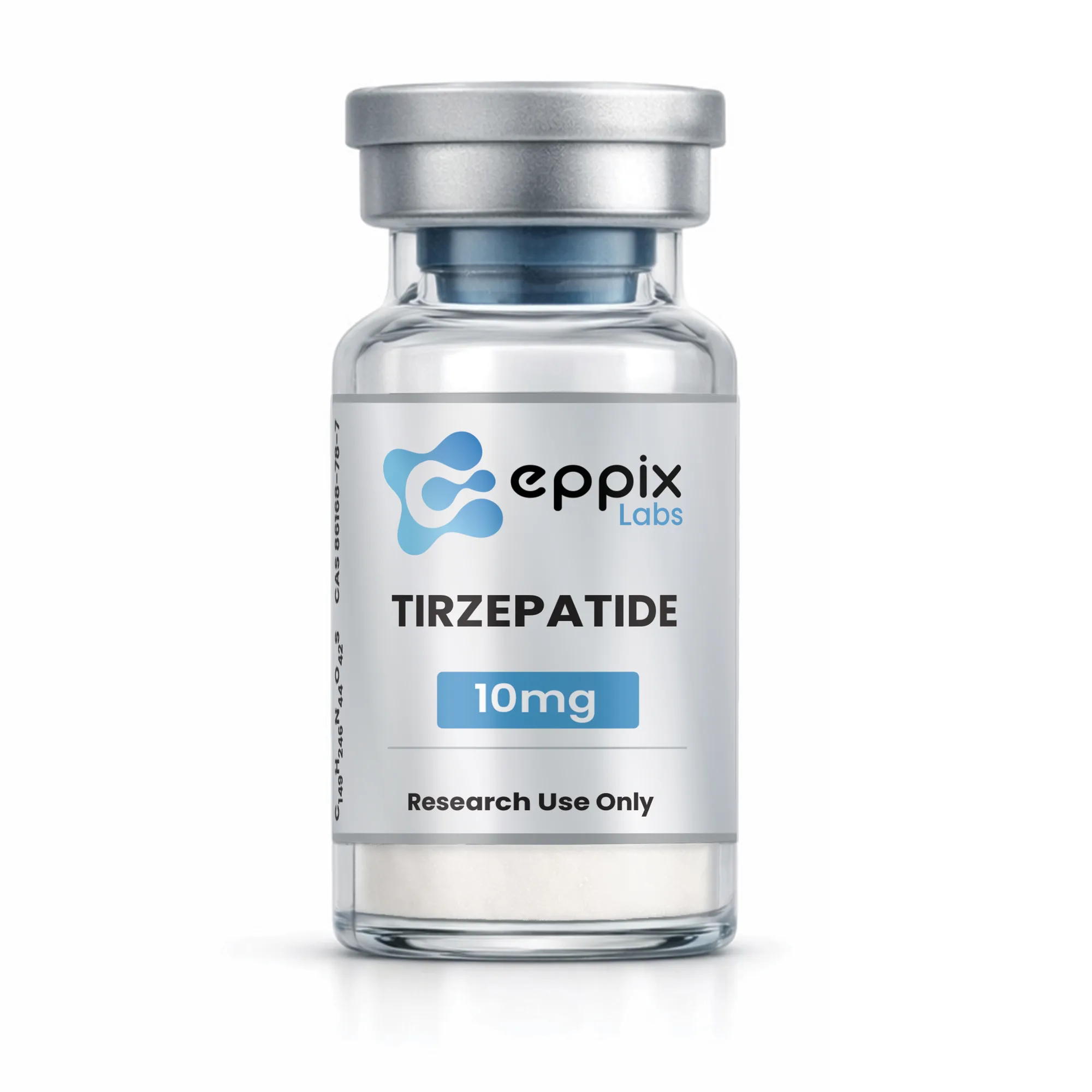
Research Material
Tirzepatide lyophilized research material as supplied by Eppix Labs. Labeled and measured content are stated on the certificate further down this page.
What the March 2026 warning letters said
On March 31, 2026, the FDA's Center for Drug Evaluation and Research signed seven warning letters to online sellers of GLP-1 products, posted on April 7. Five went to websites selling peptides labeled for research use, and the products named in them included semaglutide, tirzepatide and retatrutide, along with bacteriostatic water.[1][2][3]
Each of those letters found the products to be unapproved new drugs under section 505(a) of the FD&C Act, and their introduction into interstate commerce a violation of sections 301(d) and 505(a).[1][2][3] None of this was new: the FDA has published warning letters to RUO peptide sellers on the same reasoning since at least December 2024.[6]
The core finding is the same in all five. In the FDA's words to one seller: "Despite statements on your product labeling marketing your products for 'Research Use Only,' ... evidence obtained from your website establishes that your products are intended to be drugs for human use."[1] The agency pointed to:
·Therapeutic claims about weight loss, appetite and glucose control, often clinical-trial results restated as product benefits.[1][3]
·Human dosing schedules, in one case published as downloadable "cheat sheets" through the seller's online community.[2]
·Injection supplies offered alongside the peptides: bacteriostatic water, and in one case a reconstitution kit that included a syringe.[1][2][3]
·Coded or alternative names for known drug substances, such as "GLP-1-R peptide" for retatrutide and "GLP-2 peptide" for tirzepatide.[1]
What a compliant research presentation looks like
The warning letters effectively describe the opposite of a research supplier. Read in reverse they give a working standard, and it is the one Eppix Labs applies across eppixlabs.com, which is why this research hub discusses mechanisms and published studies rather than personal results. A presentation consistent with laboratory use generally:
·Describes compounds by their chemistry and the published literature, not by outcomes a buyer might expect in themselves.
·Avoids personal-use framing: no testimonials about how a compound made someone feel, no body images, no dosing schedules for people.
·Uses the compound's real name and identifiers: sequence, molecular weight, and CAS number where one applies.
·Sells reagents, not kits for self-administration.
·Documents identity and purity per batch, ideally through an independent laboratory.
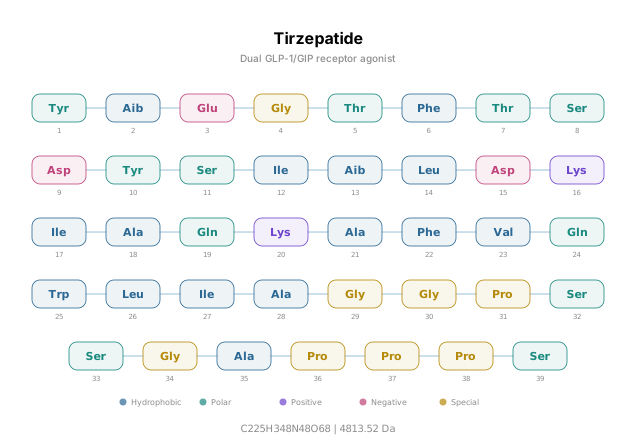
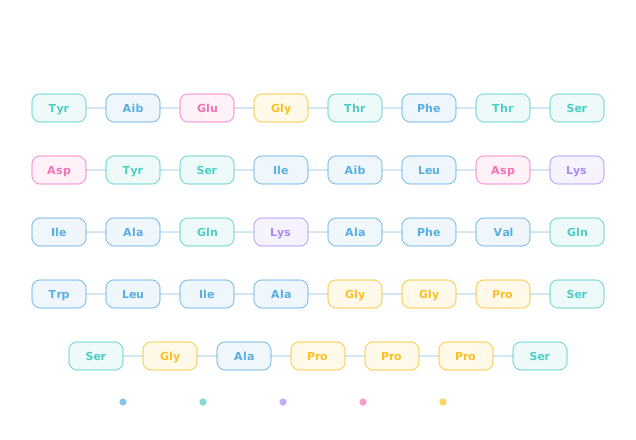
Amino Acid Sequence
Amino-acid sequence of tirzepatide, read N-terminus to C-terminus.Chemical Structure
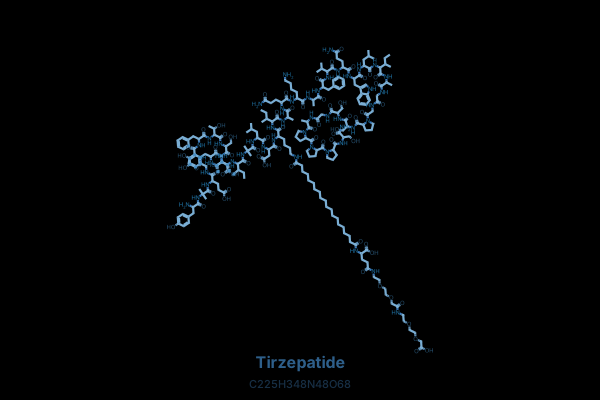
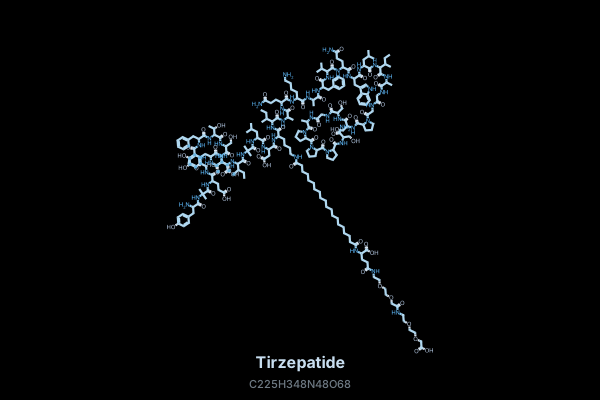
Chemical structure of tirzepatide, C₂₂₅H₃₄₈N₄₈O₆₈.
What this means for buyers
For a lab manager or principal investigator, the intended-use doctrine has two practical consequences.
Supplier risk. A supplier whose website drifts into human-use marketing is at risk of enforcement, and each letter warned that failing to correct the violations could lead to legal action including seizure and injunction.[1] That is a continuity problem for any research program that depends on consistent lots.
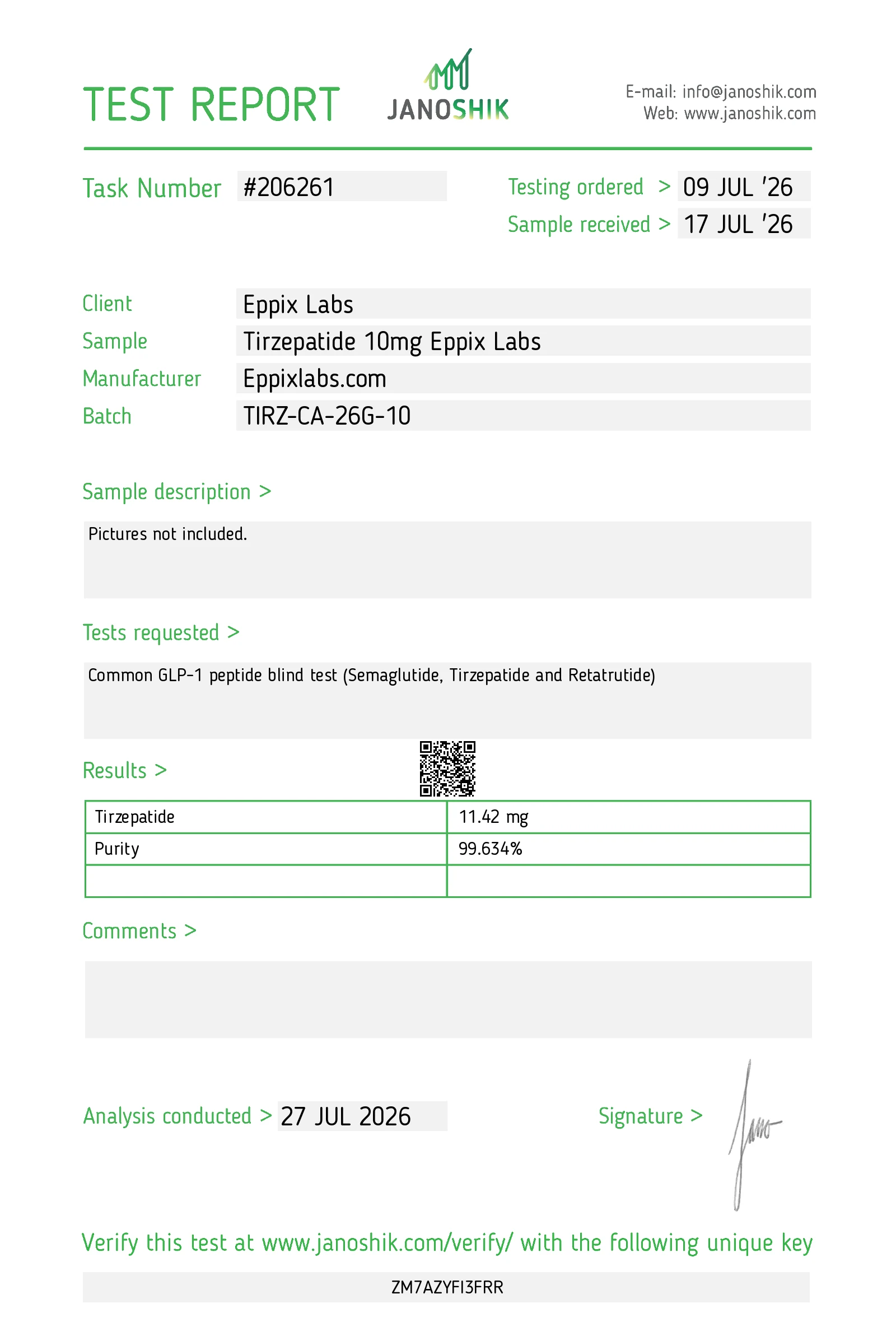
Documentation. Your own purchasing records, protocols and storage logs are what show the material is used as a reagent. Keep the batch certificate with each lot in your lab notebook or LIMS. Eppix publishes the certificate for every lot on certificates of analysis; the current tirzepatide certificates are below.
Selling and buying chemical reagents for laboratory research is lawful. What the FDA polices is the sale of unapproved drugs, and it decides whether a product is a drug from the seller's total marketing context. This is not legal advice.
Does "not for human consumption" protect a seller?
Not on its own. The March 2026 letters quoted sellers' own "not for human consumption" statements and concluded the products were drugs anyway, because other evidence on the websites pointed to human use.
US Food and Drug Administration, CDER (2026). Warning letter to Gram Peptides, MARCS-CMS 721806, March 31, 2026 (posted April 7, 2026). Retatrutide and tirzepatide sold as "GLP-1-R peptide" and "GLP-2 peptide" alongside bacteriostatic water. FDA Warning Letters. Source
US Food and Drug Administration, CDER (2026). Warning letter to Mile High Compounds LLC, MARCS-CMS 721600, March 31, 2026 (posted April 7, 2026). Dosing "cheat sheets" published through the seller's online community. FDA Warning Letters. Source
US Food and Drug Administration, CDER (2026). Warning letter to Prime Sciences, MARCS-CMS 721805, March 31, 2026 (posted April 7, 2026). Weight-loss trial results presented as product benefits; reconstitution kit with bacteriostatic water and a syringe. FDA Warning Letters. Source
Office of the Federal Register (2026). 21 CFR 809.10(c)(2)(i): labeling for in vitro diagnostic products in the laboratory research phase of development. eCFR. Source
Office of the Federal Register (2026). 21 CFR 201.128: meaning of "intended uses". eCFR. Source
US Food and Drug Administration, CDER (2024). Warning letter to Summit Research Peptides, MARCS-CMS 695607, December 10, 2024. Products labeled "RESEARCH USE ONLY" found to be intended as drugs for human use. FDA Warning Letters. Source
This article summarizes published preclinical research literature. Compounds referenced are supplied by Eppix Labs strictly as research materials for laboratory investigation within the United States. They are not approved by the FDA for human or veterinary use, and nothing on this page should be interpreted as medical advice or guidance on human or animal administration.