✦FedEx Delivery1–3 day delivery across the U.S.Free on orders over $200

Compound Overview

Retatrutide in 2026: The TRIUMPH Phase 3 Program and What "Investigational" Means

Three company-reported phase 3 readouts, no approval, and why a topline press release is not yet a published trial

·By Adam Reeves · Research Editor, Eppix Labs

In 2026 Eli Lilly began reporting topline results from TRIUMPH, the phase 3 program for its triple agonist retatrutide. Those readouts arrived as press releases rather than journal papers, and the difference matters to anyone citing them. This summary sets out the molecule, the published record that came before phase 3, what the company has reported so far, and what "investigational" means for the compound's US status.

Retatrutide is supplied for laboratory research use only. Nothing below is dosing, medical or legal guidance.

Chemical Identity

Name
Retatrutide (LY3437943)
Also known as
Retatrutide, LY3437943, GGG tri-agonist
Molecular formula
C₂₂₁H₃₄₂N₄₄O₆₈
Molecular weight
4731.4 g/mol
CAS number
2381089-83-2
Salt forms
Acetate (research supply)

Key takeaways

  • ·Retatrutide (LY3437943) is a single peptide that activates three receptors: GIP, GLP-1 and glucagon.[1]
  • ·Eli Lilly reported TRIUMPH-1 phase 3 results in May 2026 and TRIUMPH-2 and TRIUMPH-3 results in July 2026, and said all three met their primary endpoints.[3][4] These are company-reported topline data, not peer-reviewed publications.
  • ·Retatrutide is not FDA-approved. It is an investigational compound, and the FDA has named it in warning letters to sellers marketing it for human use.[5][6]
  • ·Research-grade retatrutide is a chemical reagent for in vitro and laboratory work. It is not Lilly's clinical product and is not for human use.
The molecule

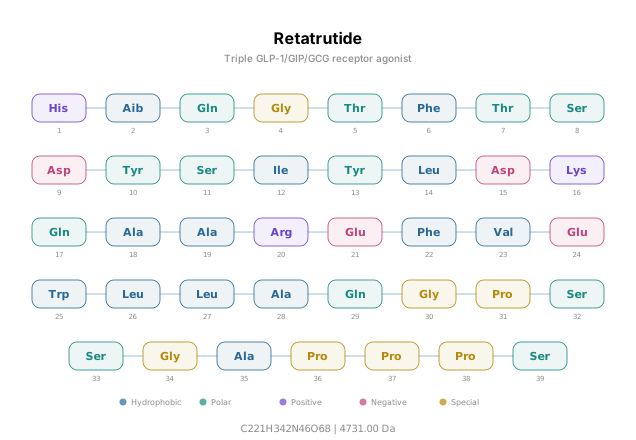
Retatrutide is a 39-amino-acid peptide built on a GIP backbone and modified with a C20 fatty diacid moiety that binds albumin and extends its half-life.[1] In receptor assays, Coskun and colleagues reported that it activates the human GIP receptor with greater potency than native GIP, and the GLP-1 and glucagon receptors with lower potency than their native ligands. The paper summarizes the result as balanced glucagon and GLP-1 receptor activity with more GIP receptor activity.[1]

That profile, weighted toward GIP with substantial GLP-1 and glucagon receptor activity alongside, is what distinguishes it from mono-agonists such as semaglutide and dual agonists such as tirzepatide. Our post on incretin receptor pharmacology compares the three classes, and retatrutide vs tirzepatide takes the dual-against-triple question on its own.

Research Material
General Image
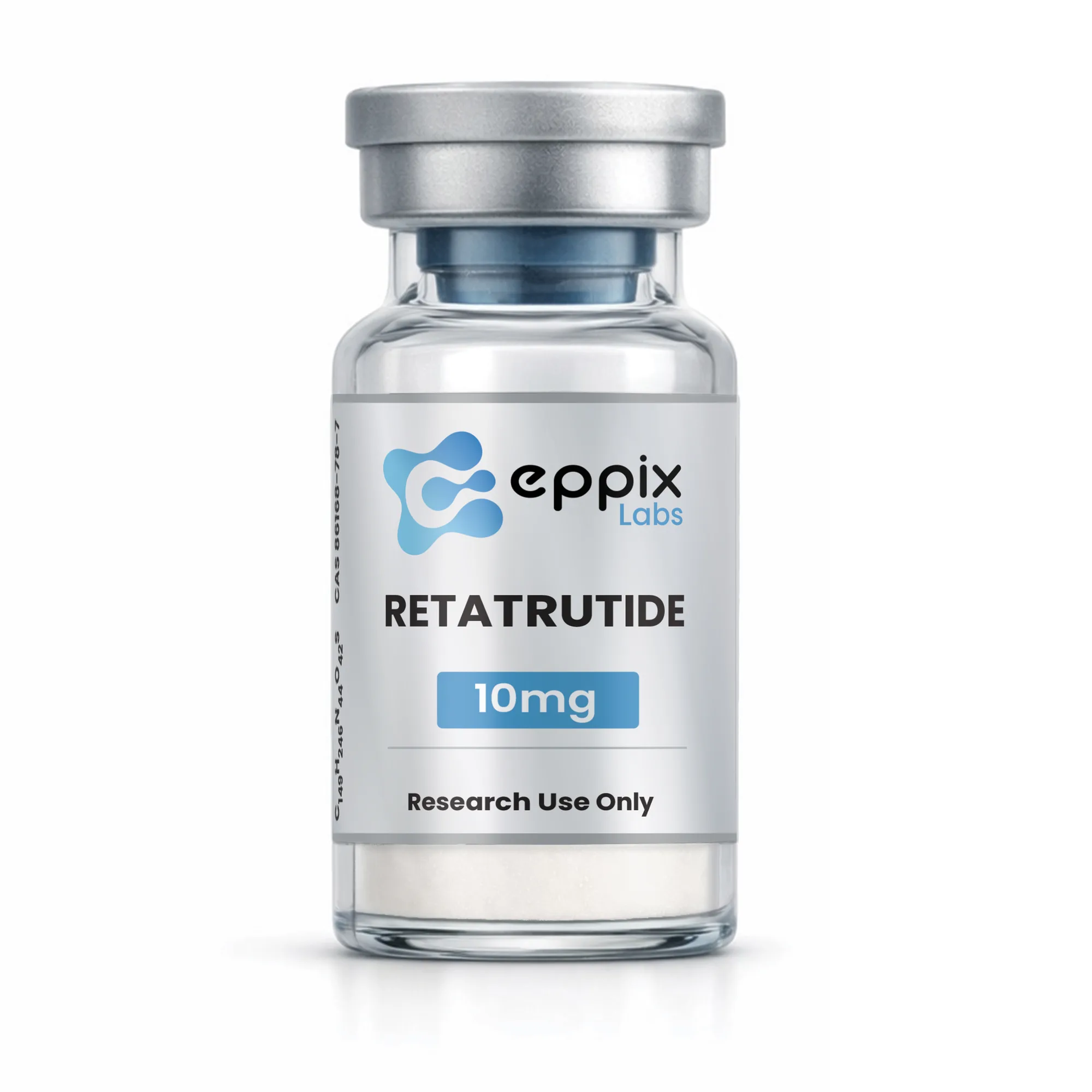
Retatrutide research vial as supplied by Eppix Labs, lyophilized. The certificate further down states labeled and measured content.
Amino Acid Sequence
Amino Acid Sequence diagram
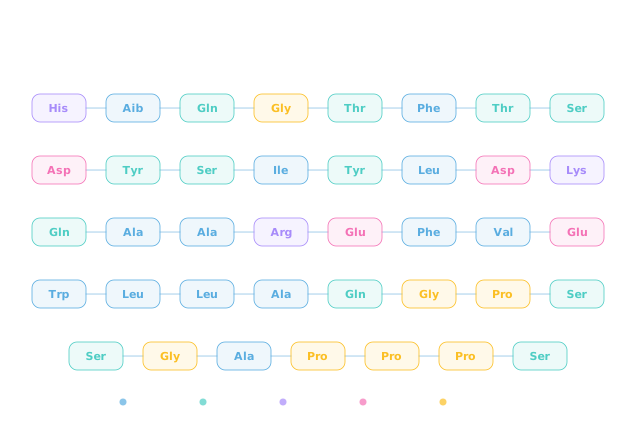
Amino-acid sequence of retatrutide, 39 residues, read N-terminus to C-terminus.
Chemical Structure
Chemical Structure diagram
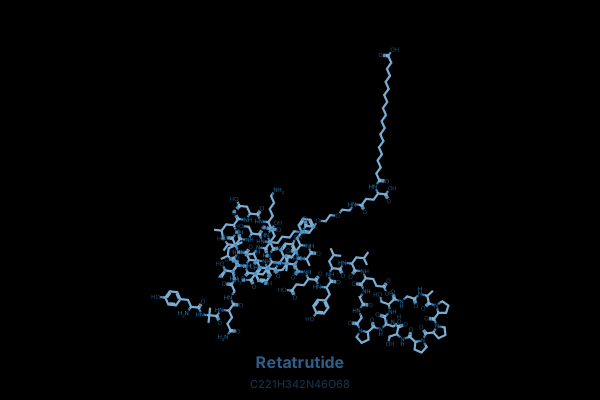
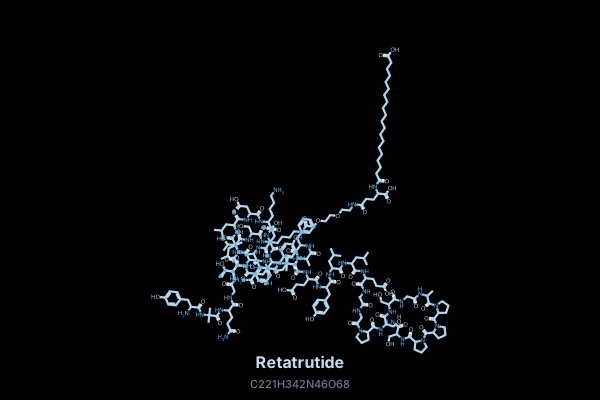
Chemical structure of retatrutide, C₂₂₁H₃₄₂N₄₄O₆₈.

Research timeline

  • ·2022. Discovery and preclinical pharmacology published in Cell Metabolism.[1]
  • ·2022. Phase 1b trial in type 2 diabetes published in The Lancet.[2]
  • ·2023. Phase 2 obesity trial (NCT04881760) published in the New England Journal of Medicine.[7]
  • ·2023. Phase 2 type 2 diabetes trial published in The Lancet.[8]
  • ·2025. Rationale and design of the TRIUMPH registrational trials published online in October (Diabetes, Obesity and Metabolism, January 2026 issue).[9]
  • ·May 2026. TRIUMPH-1 topline results announced (NCT05929066).[3]
  • ·July 2026. TRIUMPH-2 and TRIUMPH-3 topline results announced.[4]

What the TRIUMPH readouts reported

Lilly's press releases describe the phase 3 program as follows. Every figure in this section is company-reported topline data, not yet a peer-reviewed publication, and the weight-change percentages are the efficacy-estimand results Lilly led with.

  • ·TRIUMPH-1. Lilly reported randomizing 2,339 adults with obesity or overweight and at least one weight-related condition, without diabetes, for 80 weeks. Mean body-weight reductions were 19.0%, 25.9% and 28.3% in the 4 mg, 9 mg and 12 mg arms, against 2.2% on placebo (17.6%, 23.7% and 25.0% against 3.9% under the treatment-regimen estimand). Discontinuation due to adverse events was 4.1%, 6.9% and 11.3% in those arms, against 4.9% on placebo. The most common adverse events were gastrointestinal: nausea, diarrhea, constipation and vomiting.[3]
  • ·TRIUMPH-2 studied adults with type 2 diabetes and obesity or overweight. TRIUMPH-3 studied adults with severe obesity (BMI of 35 or more) and established cardiovascular disease. Lilly reported that both 80-week trials met their primary endpoints.[4]

Why the discontinuation figures matter

For researchers, the discontinuation pattern is as informative as the efficacy figures. In TRIUMPH-1, discontinuation due to adverse events rose with dose, from below the placebo rate in the 4 mg arm to more than twice it in the 12 mg arm.[3] That gives a clinical reference point for the tolerability limits of combined GLP-1 and glucagon receptor activation.

The pattern should be read trial by trial until full results are published: in the TRIUMPH-2 release the rates did not rise in step with dose.[4]

Open research questions

  • ·Glucagon receptor contribution. How much of retatrutide's effect on energy expenditure and liver fat comes from glucagon receptor agonism, and how does that interact with its glycemic effects?
  • ·Receptor bias and trafficking. Tirzepatide shows biased signaling at the GLP-1 receptor.[10] Whether retatrutide shows a comparable pattern is a live in vitro question.
  • ·Lean mass. Body-composition analyses across the TRIUMPH program will be of interest once they are peer-reviewed.

US regulatory status

Retatrutide is investigational. It has no approved indication, is not on any compounding list, and cannot lawfully be marketed for human use. In warning letters dated 31 March 2026, the FDA cited retatrutide among products online sellers were offering for human use despite "research use only" labeling, including under coded names: one seller listed it as "GLP-1-R peptide", another as "GLP-3 RT".[5][6]

Labs should expect a research supplier to identify the compound by its proper name and sequence, and to provide batch-specific analytical data.

Eppix Labs batch data

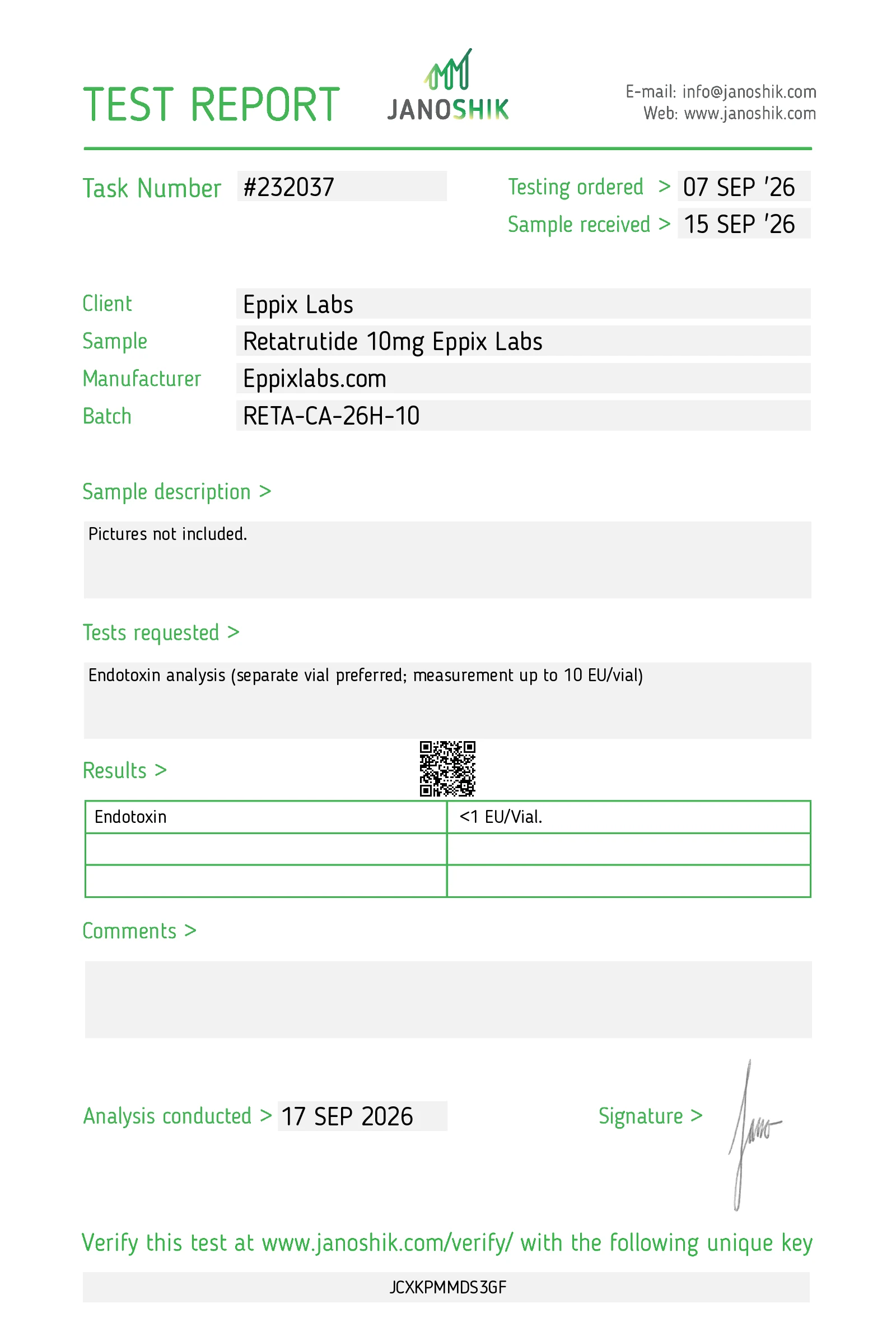
Each retatrutide lot is tested by Janoshik Analytical before sale, and the certificate is published as the laboratory reported it, verifiable on Janoshik's own site. The current certificates are below, with a switch for each strength. Full reports for every lot are on our certificates of analysis page.

Published Certificate
Certificate of analysis for Retatrutide (Triple Agonist) 10mg, batch RETA-CA-26E-01, 99.637% purity, 11.76 mg measured content

Select strength

Batch
RETA-CA-26E-01
Purity (HPLC)
99.637%
Measured content
11.76 mglabeled 10 mg
Laboratory
Janoshik
Published certificates of analysis for the current retatrutide lots, by strength, read live from the batch record.

Frequently Asked

Is retatrutide FDA-approved?

No. As of publication it is investigational. Lilly has reported topline phase 3 results, but approval requires an FDA review of a marketing application, which Lilly has said it plans to submit in the first quarter of 2027.

What is the difference between retatrutide and tirzepatide?

Tirzepatide activates the GIP and GLP-1 receptors. Retatrutide adds glucagon receptor activity.

Why is retatrutide called "GLP-3" online?

It is an informal nickname with no scientific basis; there is no GLP-3 hormone. Coded names of this kind have appeared in FDA warning letters to sellers. We use the compound's proper name.

References

  1. Coskun, T. et al. (2022). LY3437943, a novel triple glucagon, GIP, and GLP-1 receptor agonist for glycemic control and weight loss: from discovery to clinical proof of concept. Cell Metab 34(9):1234-1247. PMID 35985340
  2. Urva, S. et al. (2022). LY3437943, a novel triple GIP, GLP-1, and glucagon receptor agonist in people with type 2 diabetes: a phase 1b, multicentre, double-blind, placebo-controlled, randomised, multiple-ascending dose trial. Lancet 400(10366):1869-1881. PMID 36354040
  3. Eli Lilly and Company (2026). Lilly's triple agonist, retatrutide, delivered powerful weight loss in pivotal Phase 3 obesity trial. Press release, 21 May 2026 (company-reported topline data). PR Newswire. Source
  4. Eli Lilly and Company (2026). Lilly's triple agonist, retatrutide, successful in two additional Phase 3 obesity trials, delivering significant improvements in weight and A1C. Press release, 23 July 2026 (company-reported topline data). PR Newswire. Source
  5. US Food and Drug Administration (2026). Warning letter to Gram Peptides, MARCS-CMS 721806, 31 March 2026. Cites retatrutide (listed as "GLP-1-R peptide") and tirzepatide as unapproved new drugs despite "Research Use Only" labeling. FDA Warning Letters. Source
  6. US Food and Drug Administration (2026). Warning letter to Mile High Compounds LLC, MARCS-CMS 721600, 31 March 2026. Cites products including "GLP-3 RT" (retatrutide) as unapproved new drugs. FDA Warning Letters. Source
  7. Jastreboff, A.M., Kaplan, L.M., Frías, J.P. et al. (2023). Triple-hormone-receptor agonist retatrutide for obesity: a phase 2 trial. N Engl J Med 389(6):514-526. PMID 37366315
  8. Rosenstock, J. et al. (2023). Retatrutide, a GIP, GLP-1 and glucagon receptor agonist, for people with type 2 diabetes: a randomised, double-blind, placebo and active-controlled, parallel-group, phase 2 trial conducted in the USA. Lancet 402(10401):529-544. PMID 37385280
  9. Giblin, K. et al. (2026). Retatrutide for the treatment of obesity, obstructive sleep apnea and knee osteoarthritis: rationale and design of the TRIUMPH registrational clinical trials. Diabetes Obes Metab 28(1):83-93. PMID 41090431
  10. Willard, F.S. et al. (2020). Tirzepatide is an imbalanced and biased dual GIP and GLP-1 receptor agonist. JCI Insight 5(17):e140532. PMID 32730231

Research Use Only

This article summarizes published preclinical research literature. Compounds referenced are supplied by Eppix Labs strictly as research materials for laboratory investigation within the United States. They are not approved by the FDA for human or veterinary use, and nothing on this page should be interpreted as medical advice or guidance on human or animal administration.