FedEx Delivery1–3 day delivery across the U.S.Free on orders over $200

Compound Comparison

Retatrutide vs Tirzepatide: Triple Against Dual

One extra receptor, one approval, and a gap in trial depth that the receptor count does not close

·Compiled by Eppix Labs

The comparison usually gets made on receptor count, three against two, as though more receptors were straightforwardly better. Receptor count is the least interesting difference between these two molecules. The interesting differences are which receptor was added and why, and how far apart the two compounds are in published evidence.

Both are supplied for in-vitro laboratory research only. Individual guides are at buy retatrutide in the US and buy tirzepatide in the US.

The receptors, and what the third one adds

Tirzepatide agonizes the GIP and GLP-1 receptors from a single 39-residue lipidated molecule, with a potency profile deliberately weighted toward GIP.[3] Both receptors sit in the incretin axis: the effects reported in its trials run through appetite, gastric emptying and insulin secretion.

Retatrutide adds glucagon-receptor agonism to those two.[6] That addition is not more of the same. Glucagon-receptor engagement is associated with increased hepatic glucose output, which is the opposite of what a glycaemic agent normally wants, and with increased energy expenditure, which is a lever the incretin receptors do not provide. The design problem the molecule solves is balancing those two so the expenditure effect is available without the glycaemic penalty.

Framed that way, retatrutide is not "tirzepatide plus one". It is a different pharmacological bet.
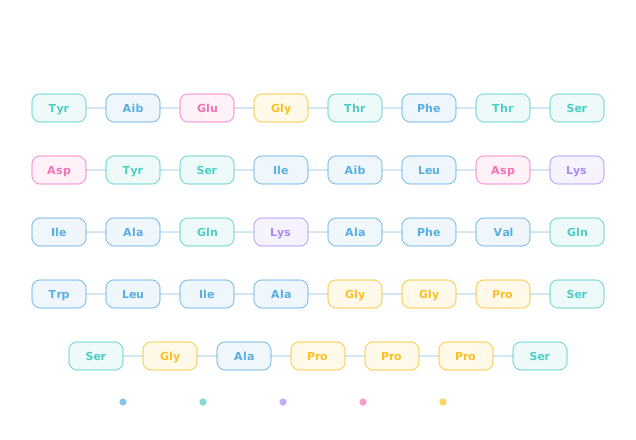
Amino Acid Sequence
Amino Acid Sequence diagram
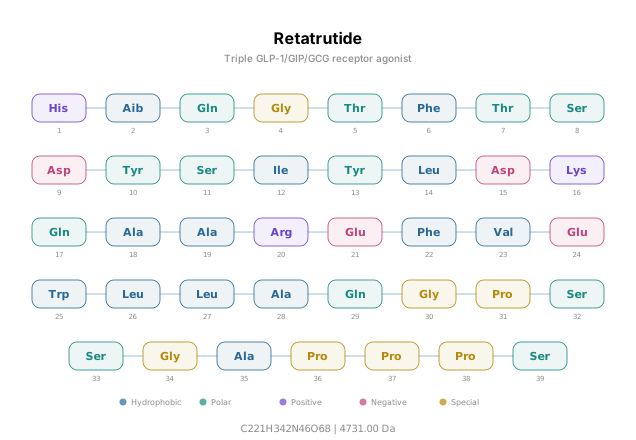
Retatrutide: 39 residues, lipidated, triple-receptor design.
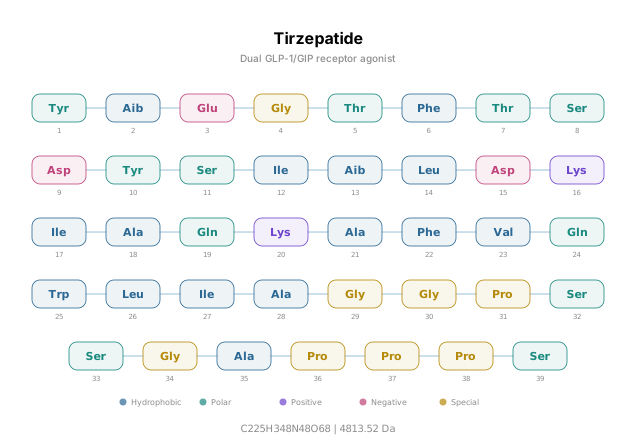
Amino Acid Sequence
Amino Acid Sequence diagram
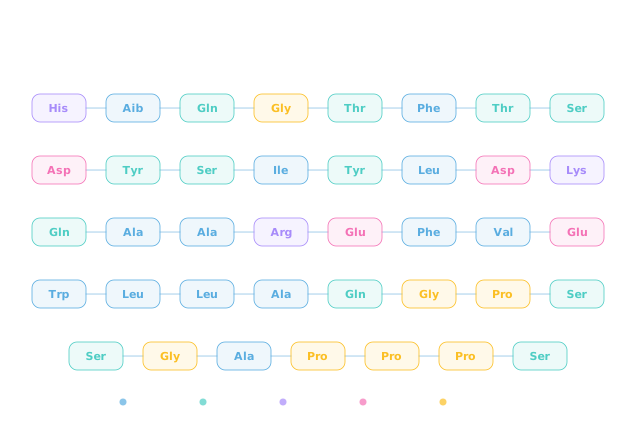
Tirzepatide: 39 residues, lipidated, dual GIP and GLP-1.

Published evidence, side by side

This is where the two compounds are furthest apart, and it is not close:

  • ·Tirzepatide. Multiple completed phase 3 programmes. SURPASS-2 compared it head to head against semaglutide in type 2 diabetes.[1] SURMOUNT-1 reported 72-week weight outcomes in obesity without diabetes.[2] SURMOUNT-4 used a randomized withdrawal design and reported substantial regain on switching to placebo.[4] SURMOUNT-OSA reported apnoea-hypopnoea index reduction in obstructive sleep apnoea.[5]
  • ·Retatrutide. Two published phase 2 trials: 48 weeks in obesity,[6] 36 weeks in type 2 diabetes.[7] Plus the discovery and pharmacology paper.[8] No published phase 3 dataset.
  • ·Approval. Tirzepatide holds marketing authorizations for defined human indications. Retatrutide holds none anywhere.

How to read the phase 2 numbers

Retatrutide's phase 2 weight-reduction figures are frequently quoted alongside tirzepatide's phase 3 figures as though the two were comparable. They are not, for reasons that have nothing to do with either molecule.

Phase 2 trials are smaller, shorter, run at specialist sites, and enrol populations selected to show a signal if one exists. Effect sizes routinely shrink between phase 2 and phase 3 across the whole of drug development. A phase 2 number is a reason to run phase 3, not a result of equivalent standing to one.

Practical differences that affect a purchase

  • ·Mass. Retatrutide is near 4731 Da, tirzepatide near 4813 Da. Both are 39-residue lipidated peptides, both are demanding syntheses, and both share the same dominant impurity class of deletion and truncation sequences.
  • ·Substitution risk. Similar for both, and it runs the same direction: a cheaper GLP-1 analog substituted for either is caught by mass-spectrometry identity and missed by a purity percentage. The masses are far enough apart to distinguish the two from each other unambiguously.
  • ·Price. Retatrutide typically carries a higher per-milligram price, reflecting synthesis difficulty and demand rather than any statement about potency.
  • ·Regulatory. Tirzepatide research material sits alongside an approved medicine of the same molecule, which makes the research-grade distinction more important to state clearly. Retatrutide has no approved counterpart to be confused with.

Verifying either one

Identity by mass spectrometry against the expected mass, HPLC purity, and measured content against the labeled amount. At this molecular size identity is the load-bearing check: purity alone tells you the vial is mostly one thing without telling you which thing.

Certificates for both are published before sale and verifiable on the testing laboratory's own database. Use the strength buttons to move between strengths.

Published Certificate
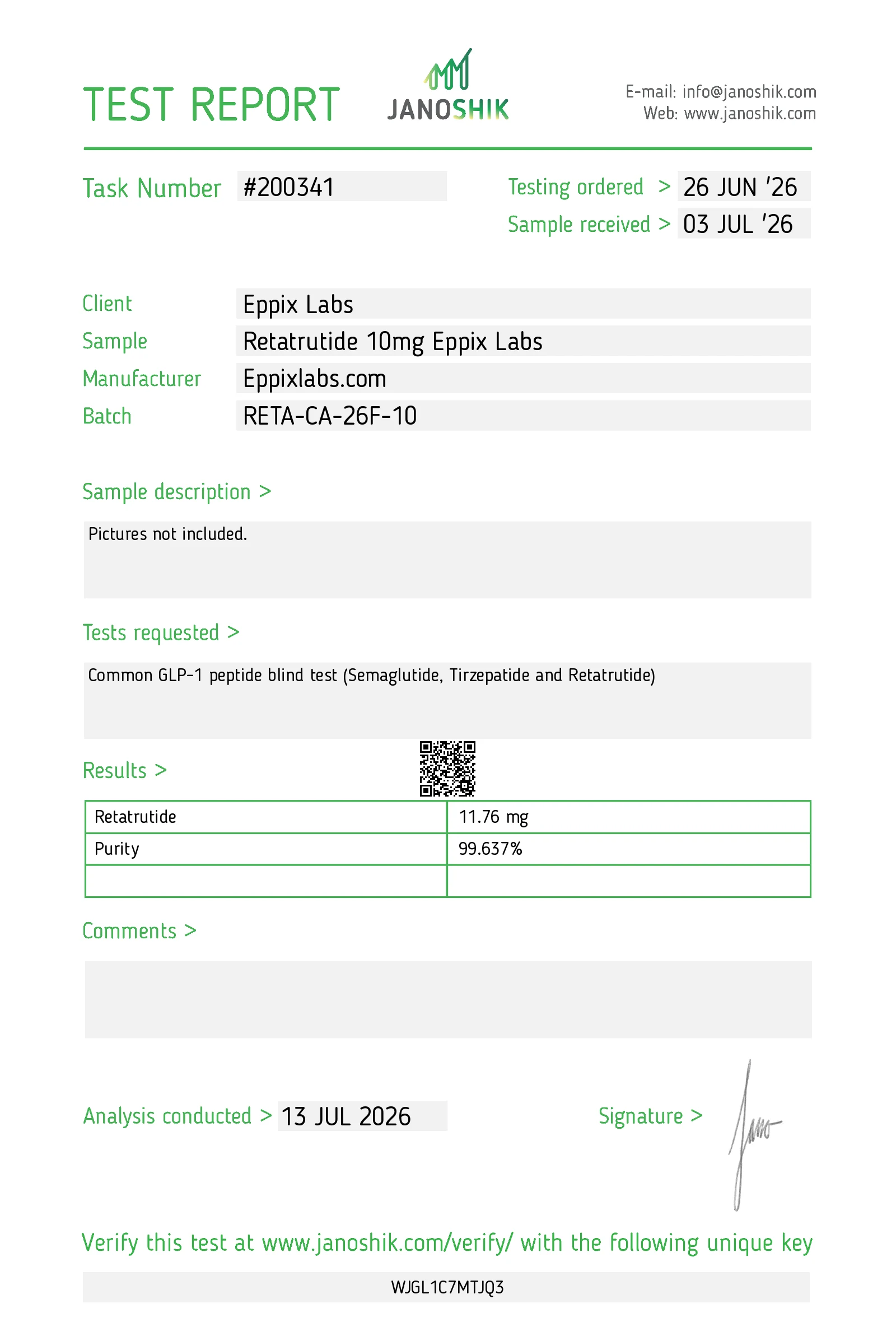
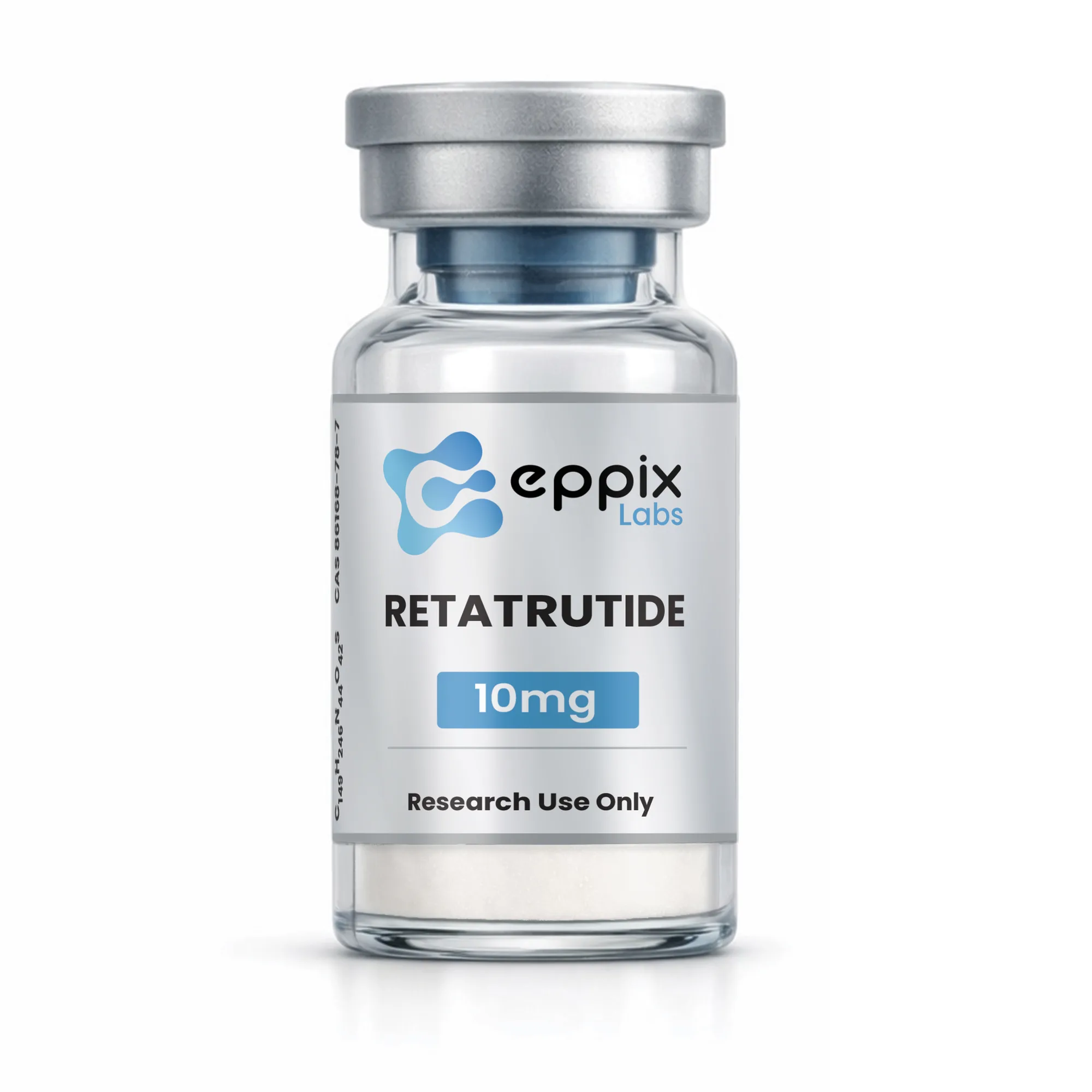
Certificate of analysis for Retatrutide (Triple Agonist) 10mg, batch RETA-CA-26E-01, 99.637% purity, 11.76 mg measured content

Select strength

Batch
RETA-CA-26E-01
Purity (HPLC)
99.637%
Measured content
11.76 mglabeled 10 mg
Laboratory
Janoshik
Current published retatrutide certificates, by strength.
Published Certificate
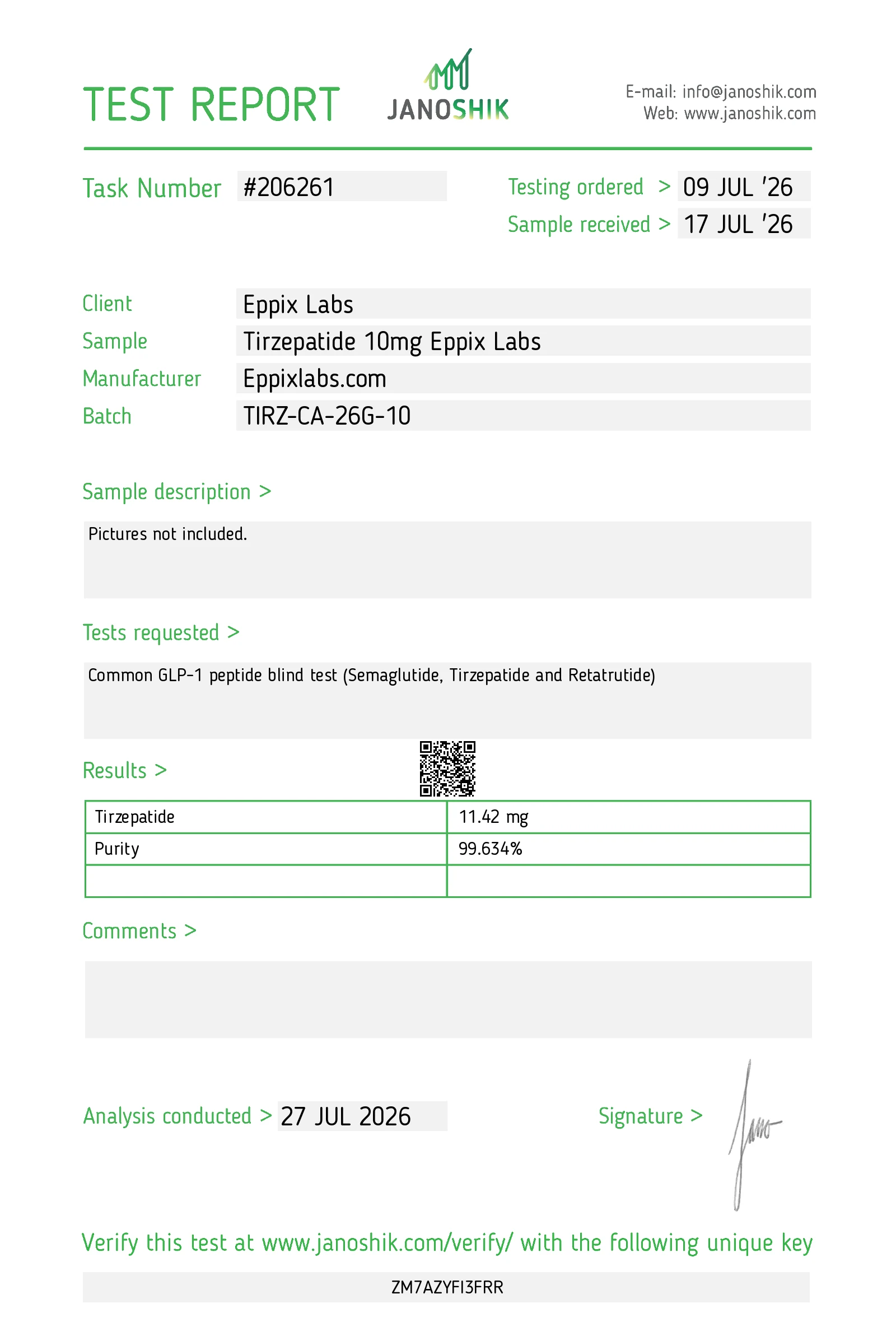
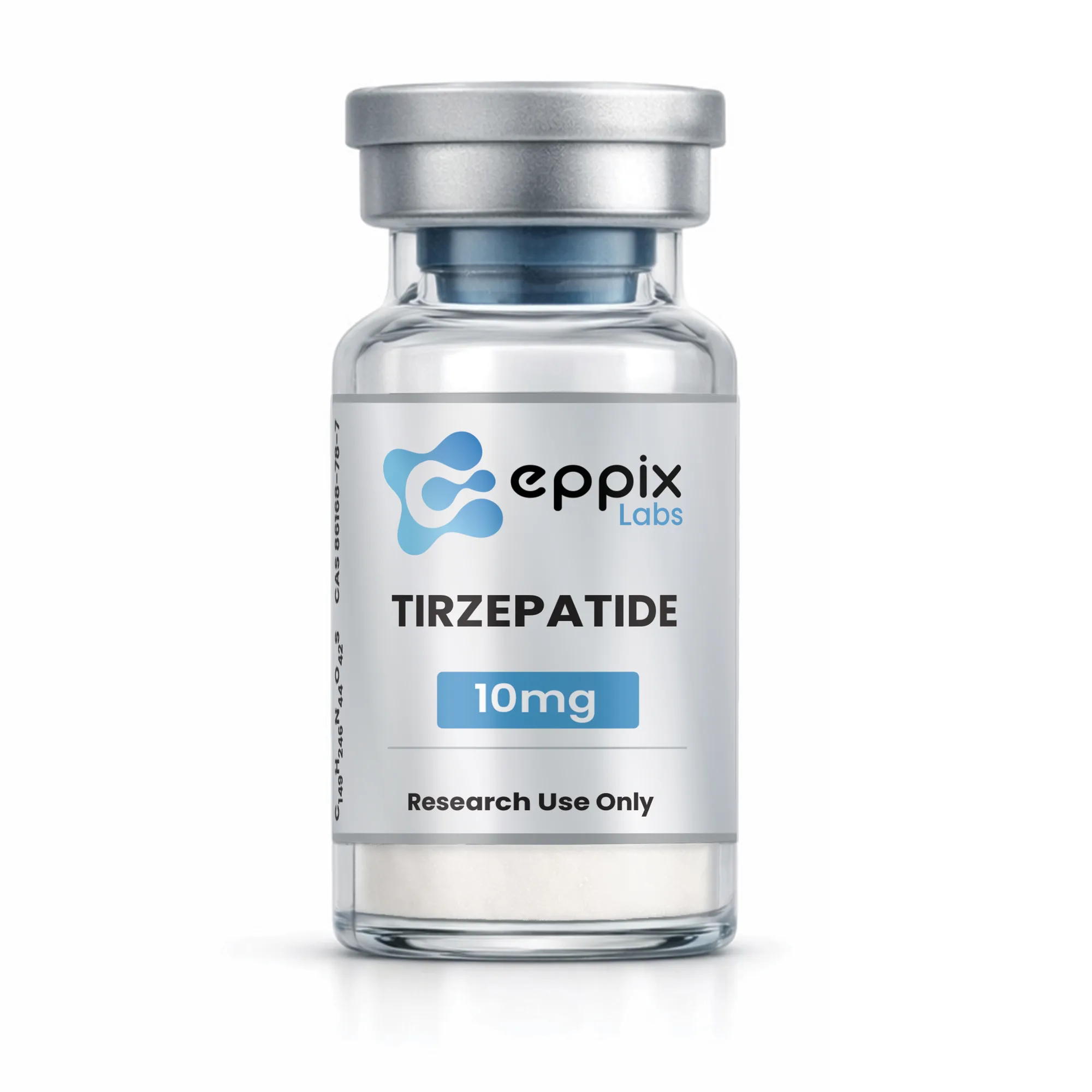
Certificate of analysis for Tirzepatide 10mg, batch TIRZ-CA-26A-01, 99.634% purity, 11.42 mg measured content

Select strength

Batch
TIRZ-CA-26A-01
Purity (HPLC)
99.634%
Measured content
11.42 mglabeled 10 mg
Laboratory
Janoshik
Current published tirzepatide certificates, by strength.

Which to work with

If the research question concerns incretin-receptor pharmacology with the deepest available published context, tirzepatide is the better-characterized tool. If the question specifically concerns glucagon-receptor contribution to metabolic phenotype, retatrutide is the only compound in the catalog that provides it, and the thinner literature is the price of asking a newer question.

Both are stocked with published certificates and supplied strictly as research materials.

Frequently Asked

Is retatrutide simply a stronger tirzepatide?

No. It adds glucagon-receptor agonism, which engages a different mechanism (energy expenditure) rather than amplifying the incretin effects. It is a different pharmacological approach, not a higher dose of the same one.

Why can phase 2 and phase 3 results not be compared directly?

Phase 2 trials are smaller, shorter, run at selected sites and enrol populations chosen to reveal a signal. Effect sizes commonly shrink in phase 3 across drug development generally. Comparing a phase 2 figure to a phase 3 figure compares two different kinds of evidence.

Is either approved in the US?

Tirzepatide medicines hold the FDA authorization for defined indications through the pharmacy channel. Retatrutide holds no authorization anywhere. Research-grade material of either compound is outside any such authorization.

Which is harder to verify?

Neither, materially. Both are 39-residue lipidated peptides of similar mass with the same dominant impurity classes, and both need MS identity, HPLC purity and measured content on the certificate.

Why is retatrutide more expensive per milligram?

Synthesis difficulty and demand. Yields on a triple-agonist design are lower than on the dual agonist, and supply is thinner.

References

  1. Frías, J.P. et al. (2021). Tirzepatide versus semaglutide once weekly in patients with type 2 diabetes. N Engl J Med 385(6):503-515. PMID 34170647
  2. Jastreboff, A.M. et al. (2022). Tirzepatide once weekly for the treatment of obesity. N Engl J Med 387(3):205-216. PMID 35658024
  3. Coskun, T. et al. (2018). LY3298176, a novel dual GIP and GLP-1 receptor agonist for the treatment of type 2 diabetes mellitus: from discovery to clinical proof of concept. Mol Metab 18:3-14. PMID 30473097
  4. Aronne, L.J. et al. (2024). Continued treatment with tirzepatide for maintenance of weight reduction in adults with obesity: the SURMOUNT-4 randomized clinical trial. JAMA 331(1):38-48. PMID 38078870
  5. Malhotra, A. et al. (2024). Tirzepatide for the treatment of obstructive sleep apnea and obesity. N Engl J Med 391(13):1193-1205. PMID 38912654
  6. Jastreboff, A.M. et al. (2023). Triple-hormone-receptor agonist retatrutide for obesity: a phase 2 trial. N Engl J Med 389(6):514-526. PMID 37366315
  7. Rosenstock, J. et al. (2023). Retatrutide, a GIP, GLP-1 and glucagon receptor agonist, for people with type 2 diabetes: a randomised, double-blind, placebo- and active-controlled, parallel-group, phase 2 trial. Lancet 402(10401):529-544. PMID 37385280
  8. Coskun, T. et al. (2022). LY3437943, a novel triple glucagon, GIP, and GLP-1 receptor agonist for glycemic control and weight loss: from discovery to clinical proof of concept. Cell Metab 34(9):1234-1247. PMID 35985340

Research Use Only

This article summarizes published preclinical research literature. Compounds referenced are supplied by Eppix Labs strictly as research materials for laboratory investigation within the United States. They are not approved by the FDA for human or veterinary use, and nothing on this page should be interpreted as medical advice or guidance on human or animal administration.