✦FedEx Delivery1–3 day delivery across the U.S.Free on orders over $200

Compound Overview

Epitalon and Telomerase Research: What the Studies Show and How to Verify Your Material

A four-residue peptide, one widely cited telomerase result, and a family of near-identical lookalikes that puts identity confirmation first

·By Adam Reeves · Research Editor, Eppix Labs

Epitalon is four amino acids long, and it is attached to one of the largest claims in the research-peptide field: that it can switch telomerase back on in human somatic cells. This review sets out what the telomerase studies reported, how to read them, where the compound stands in the US after the July 2026 advisory vote, and why a tetrapeptide with close chemical relatives needs its identity confirmed by mass before anything else.

Epitalon is supplied for laboratory research use only. Nothing below is dosing, medical or legal guidance.

Chemical Identity

Name
Epitalon (Ala-Glu-Asp-Gly)
Also known as
Epitalon, Epithalon, AEDG, Epithalamin tetrapeptide
Molecular formula
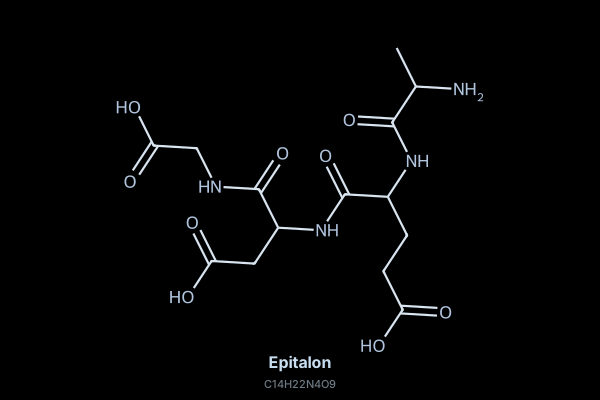
C₁₄H₂₂N₄O₉
Molecular weight
390.35 g/mol
CAS number
307297-39-8
Sequence (1-letter)
AEDG
Sequence (3-letter)
Ala-Glu-Asp-Gly
Salt forms
Free acid · Acetate

Key takeaways

  • ·Epitalon (also Epithalon) is the synthetic tetrapeptide Ala-Glu-Asp-Gly (AEDG), developed as an analog of epithalamin, a pineal gland extract.[5]
  • ·The best-known study, Khavinson et al. (2003), reported telomerase activation and telomere elongation in cultured human somatic cells.[1]
  • ·The evidence is largely from cell culture and animal studies, and much of it comes from one research school.
  • ·Epitalon received a PCAC recommendation in July 2026, 7 in favor, 4 against, 1 abstention; it is not FDA-approved.[2]
  • ·It belongs to a family of near-identical short peptides, so identity confirmation by mass is essential.

Structure

The identity data:

  • ·Sequence. Ala-Glu-Asp-Gly (AEDG).
  • ·Length. 4 residues.
  • ·Molecular weight. 390.35 g/mol (C₁₄H₂₂N₄O₉).
  • ·Origin. Synthetic analog of epithalamin, a bovine pineal extract.[5]
Research Material
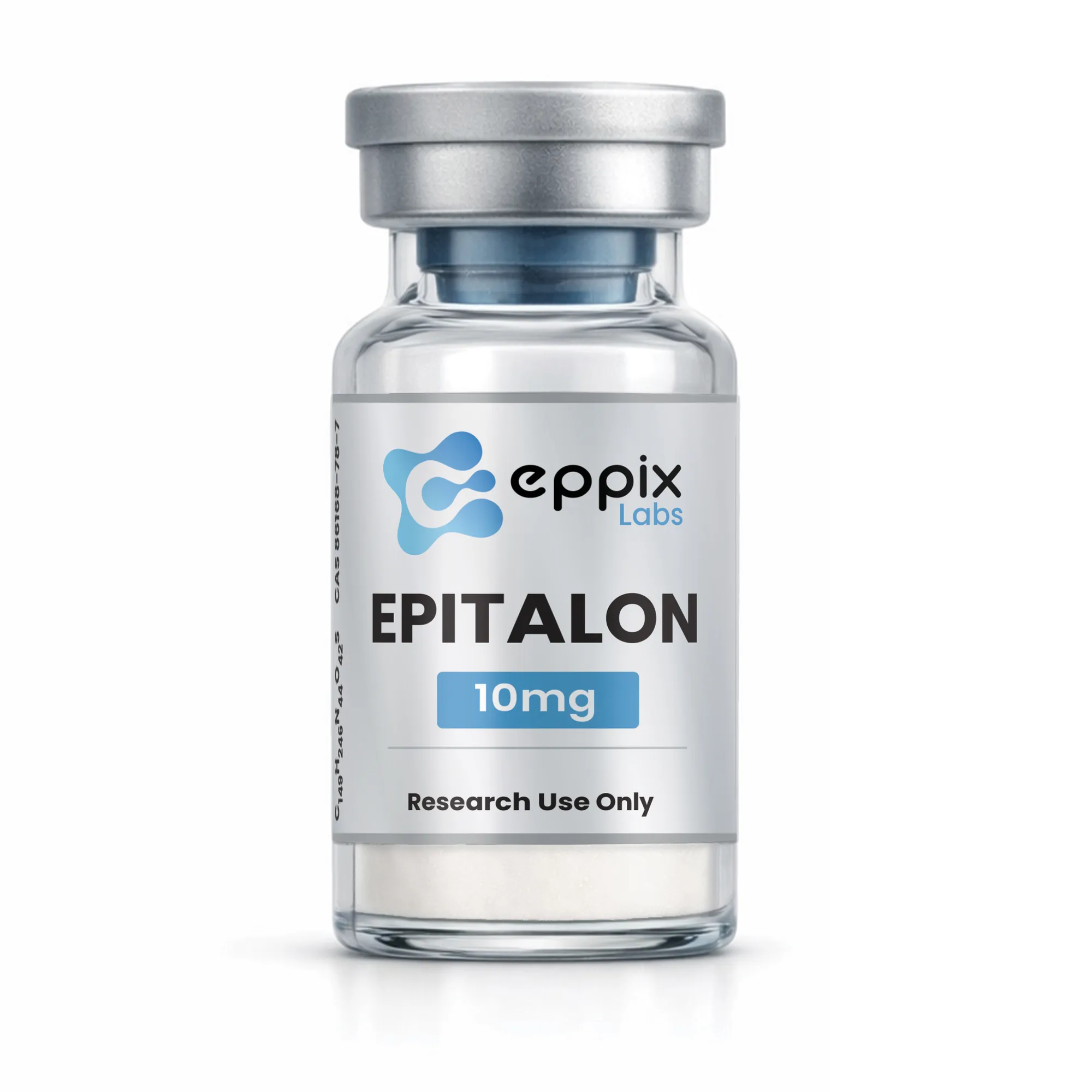
General Image
Epitalon lyophilized research material as supplied by Eppix Labs. Labeled and measured content are stated on the certificate further down this page.
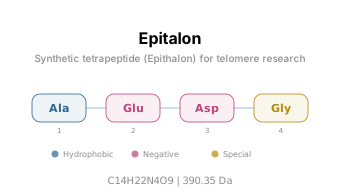
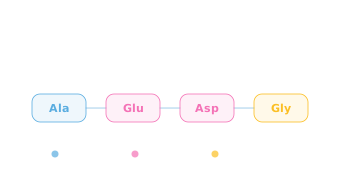
Amino Acid Sequence
Amino Acid Sequence diagram
Amino-acid sequence of epitalon, Ala-Glu-Asp-Gly (AEDG).
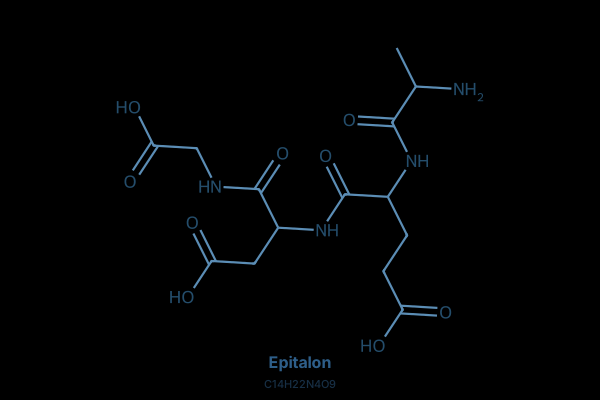
Chemical Structure
Chemical Structure diagram
Chemical structure of epitalon, C₁₄H₂₂N₄O₉.

The telomerase research

Telomeres are repetitive DNA sequences that cap chromosome ends and shorten with each cell division in most somatic cells. Telomerase, the enzyme that extends them, is largely inactive in adult somatic cells. Whether a molecule can reactivate it is a central question in cellular aging research.

Khavinson, Bondarev and Butyugov reported in the Bulletin of Experimental Biology and Medicine (2003) that adding Epitalon to telomerase-negative cultured human fetal fibroblasts induced expression of the telomerase catalytic subunit, telomerase activity and telomere elongation.[1] A follow-up from the same group in 2004 reported that treated cells continued dividing beyond the limit seen in controls, with 10 extra divisions.[6]

A 2025 study from a group at Brunel University London, outside the originating school, revisited the question in human cell lines. It reported telomere lengthening through hTERT and telomerase upregulation in normal epithelial and fibroblast cells, and through alternative lengthening of telomeres (ALT) activation in two breast cancer lines.[3] First posted as a preprint, it was published in the peer-reviewed journal Biogerontology in September 2025.

Reading this evidence carefully

  • ·Cell culture is not the organism. Telomere effects in fibroblast culture do not establish effects in tissue.
  • ·Telomerase activation carries its own questions. Telomerase is active in most cancers, so reactivation is studied with attention to proliferation markers.
  • ·Concentration of authorship. Much of the literature comes from the St. Petersburg Institute of Bioregulation and Gerontology and associated groups.
  • ·Peptide bioregulator framework. Some of this research proposes that short peptides act by binding DNA directly. That idea is not widely accepted outside the originating school and should be treated as a hypothesis.

The identity problem: a family of lookalikes

Epitalon belongs to a group of short "bioregulator" peptides that includes several di-, tri- and tetrapeptides with overlapping residues. Several share alanine, glutamate or aspartate, and their masses can be close. A labeling or manufacturing mix-up between them is a real risk.

How to verify:

  • ·Check the observed mass on the certificate against Epitalon's expected mass, 390.35 g/mol.
  • ·Check the sequence stated by the supplier: A-E-D-G.
  • ·Check HPLC retention consistency between lots, if your supplier publishes chromatograms.

US regulatory context

Epitalon was removed from FDA Category 2 in April 2026, after its nomination was withdrawn,[4] and on 24 July 2026 the PCAC recommended it for the 503A bulks list.[2]

On 23 and 24 July 2026 the FDA's Pharmacy Compounding Advisory Committee reviewed Epitalon for inclusion on the Section 503A Bulk Drug Substances List, alongside BPC-157, KPV, TB-500, MOTS-c, Epitalon and Semax. FDA staff had recommended against inclusion for every substance under review, citing insufficient characterization, little or no human effectiveness evidence, and inadequate human safety data. The committee voted in favor anyway. The vote was 7 in favor, 4 against, 1 abstention.

Rulemaking would be required before any change in compounding status. The full breakdown is in our July 2026 PCAC post. What the vote does not do, per the FDA's meeting materials and the current 503A list:[7][8][9]

  • ·It is non-binding. The committee advises, it does not decide. No final FDA determination has been issued and none of the six peptides appears in 21 CFR 216.23.
  • ·It requires a further step. Addition to the 503A Bulks List requires formal action by the Secretary of Health and Human Services, which had not occurred as of publication.
  • ·It does not make the compound an FDA-approved drug, and it establishes nothing about efficacy.
  • ·It does not legitimize research-chemical retail. A compounding-list decision concerns licensed pharmacists preparing patient-specific prescriptions under Section 503A, which is a different channel entirely from research material sold in vials.

Eppix Labs batch data

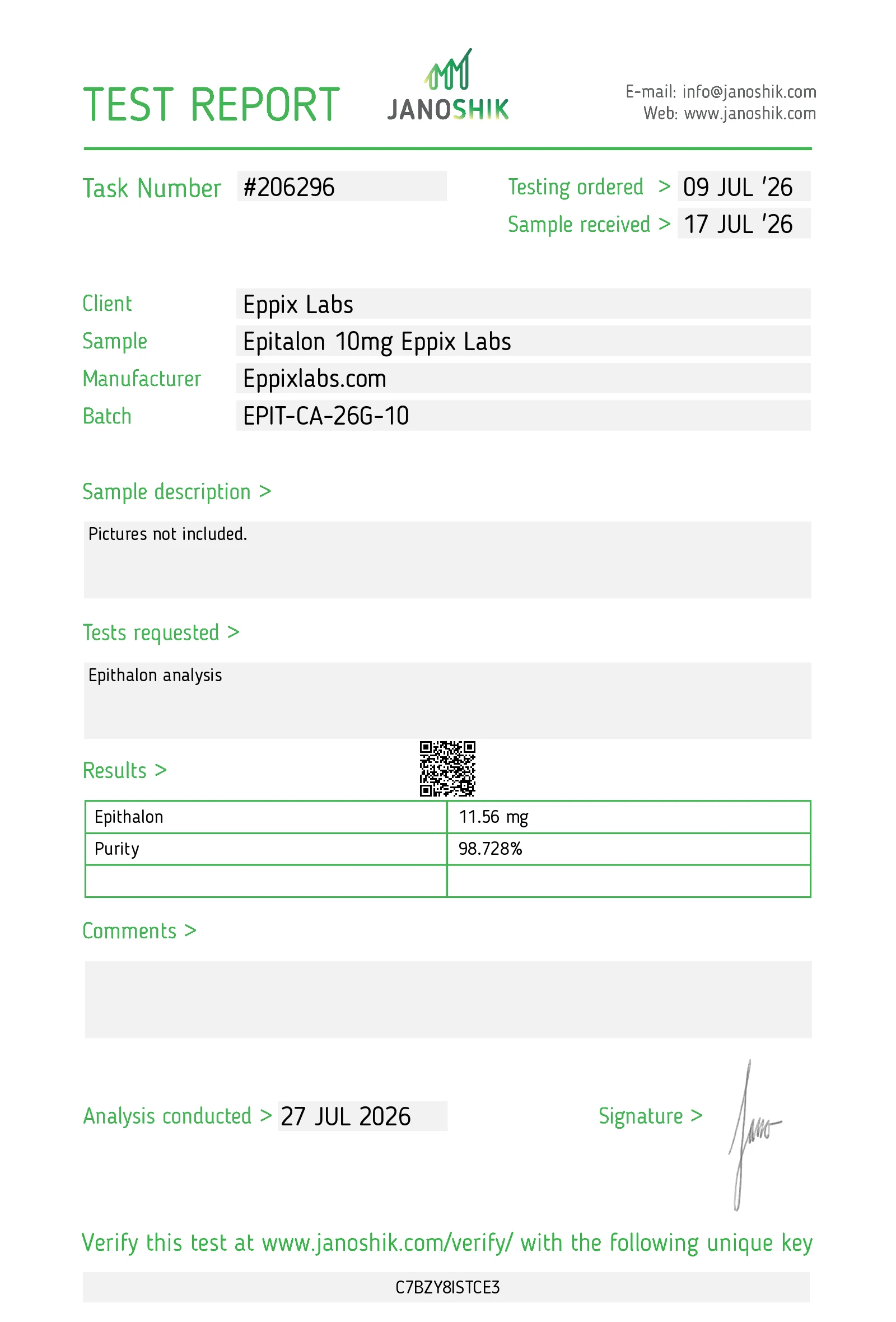
Each Epitalon lot is tested by Janoshik Analytical before sale, and the certificate is published as the laboratory reported it, verifiable on Janoshik's own site. The identity line should match the expected 390.35 g/mol; batch, HPLC purity and measured content are read live from the batch record below. Every lot is listed on the certificates of analysis page.

Published Certificate
Certificate of analysis for Epitalon 10mg, batch EPI-CA-26A-01, 98.728% purity, 11.56 mg measured content
Batch
EPI-CA-26A-01
Purity (HPLC)
98.728%
Measured content
11.56 mglabeled 10 mg
Laboratory
Janoshik
Published certificate of analysis for the current Epitalon lot.

Frequently Asked

Does Epitalon lengthen telomeres?

Cell-culture studies have reported telomere elongation. That has not been established in humans.

What is epithalamin?

A peptide extract from bovine pineal gland. Epitalon was designed as a defined synthetic analog.

Is Epitalon FDA-approved?

No.

References

  1. Khavinson, V.Kh., Bondarev, I.E., Butyugov, A.A. (2003). Epithalon peptide induces telomerase activity and telomere elongation in human somatic cells. Bull Exp Biol Med 135(6):590-592. PMID 12937682
  2. McDermott Will & Schulte (2026). Bulk-list bound? PCAC backs majority of peptides in two-day public meeting. Published 27 July 2026. McDermott Will & Schulte, Insights. Source
  3. Al-Dulaimi, S., Thomas, R., Matta, S., Roberts, T. (2025). Epitalon increases telomere length in human cell lines through telomerase upregulation or ALT activity. Biogerontology 26(5):178. PMID 40908429
  4. Frier Levitt (2026). FDA to Remove 12 Popular Peptides from the Category 2 "Do Not Compound" List. Published 16 April 2026. Frier Levitt, Articles. Source
  5. Araj, S.K., Brzezik, J., Mądra-Gackowska, K., Szeleszczuk, Ł. (2025). Overview of Epitalon-Highly Bioactive Pineal Tetrapeptide with Promising Properties. Int J Mol Sci 26(6):2691. PMID 40141333
  6. Khavinson, V.Kh., Bondarev, I.E., Butyugov, A.A., Smirnova, T.D. (2004). Peptide promotes overcoming of the division limit in human somatic cell. Bull Exp Biol Med 137(5):503-506. PMID 15455129
  7. US Food and Drug Administration (2026). Pharmacy Compounding Advisory Committee meeting, 23-24 July 2026: bulk drug substances nominated for inclusion on the Section 503A Bulks List. FDA Advisory Committee Calendar. Source
  8. US Food and Drug Administration (2026). FDA briefing document, Pharmacy Compounding Advisory Committee: BPC-157, KPV, TB-500, MOTS-c, Emideltide, Semax and Epitalon. Agency review recommended against inclusion for each substance. FDA. Source
  9. Office of the Federal Register (2026). 21 CFR 216.23: bulk drug substances that can be used to compound drug products under section 503A. None of the six peptides appear on the list as of publication. eCFR. Source

Research Use Only

This article summarizes published preclinical research literature. Compounds referenced are supplied by Eppix Labs strictly as research materials for laboratory investigation within the United States. They are not approved by the FDA for human or veterinary use, and nothing on this page should be interpreted as medical advice or guidance on human or animal administration.