FedEx Delivery1–3 day delivery across the U.S.Free on orders over $200

Sourcing Guide

TB-500 in the US: The Thymosin β4 Fragment, Tested by Batch

What is actually in a TB-500 vial, why the naming confusion matters commercially, and how to verify a lot

·Compiled by Eppix Labs

TB-500 has a naming problem that is worth resolving before anything else, because it changes what you are comparing when you compare prices. The research literature is about thymosin β4, a 43-residue protein. TB-500 as supplied on the research market is normally the short acetylated fragment Ac-LKKTETQ, seven residues drawn from the actin-binding region of that protein. They are not the same molecule, and a vial priced against one is not comparable to a vial containing the other.

This article covers what the thymosin β4 literature supports, what a TB-500 certificate should tell you, and the regulatory position in the US as of August 2026. TB-500 is supplied for in-vitro laboratory research only.

Chemical Identity

Name
TB-500 (thymosin β4 fragment, Ac-LKKTETQ)
Also known as
TB-500, Thymosin beta-4 fragment 17-23, Ac-LKKTETQ-NH2
Molecular formula
C₄₄H₇₉N₁₁O₁₅
Molecular weight
1030.2 g/mol
CAS number
885340-08-9
Sequence (1-letter)
LKKTETQ
Sequence (3-letter)
Leu-Lys-Lys-Thr-Glu-Thr-Gln
Salt forms
Acetate

What TB-500 is, and what it is not

Thymosin β4 is a 43-amino-acid, 4.9 kDa actin-sequestering protein present in most mammalian cells, first characterized as a thymic peptide and later shown to be a major intracellular G-actin binding protein.[1] Its actin-binding activity localizes substantially to the heptapeptide motif LKKTETQ.

TB-500 in commercial research supply is that motif, acetylated at the N-terminus and usually amidated at the C-terminus. It is around a quarter the mass of the parent protein and is synthesized rather than expressed. Suppliers that describe their TB-500 vial using thymosin β4 clinical or preclinical data are, strictly, describing a different molecule; a certificate resolves which one you are actually being sold, because the measured mass is unambiguous.

Research Material
General Image
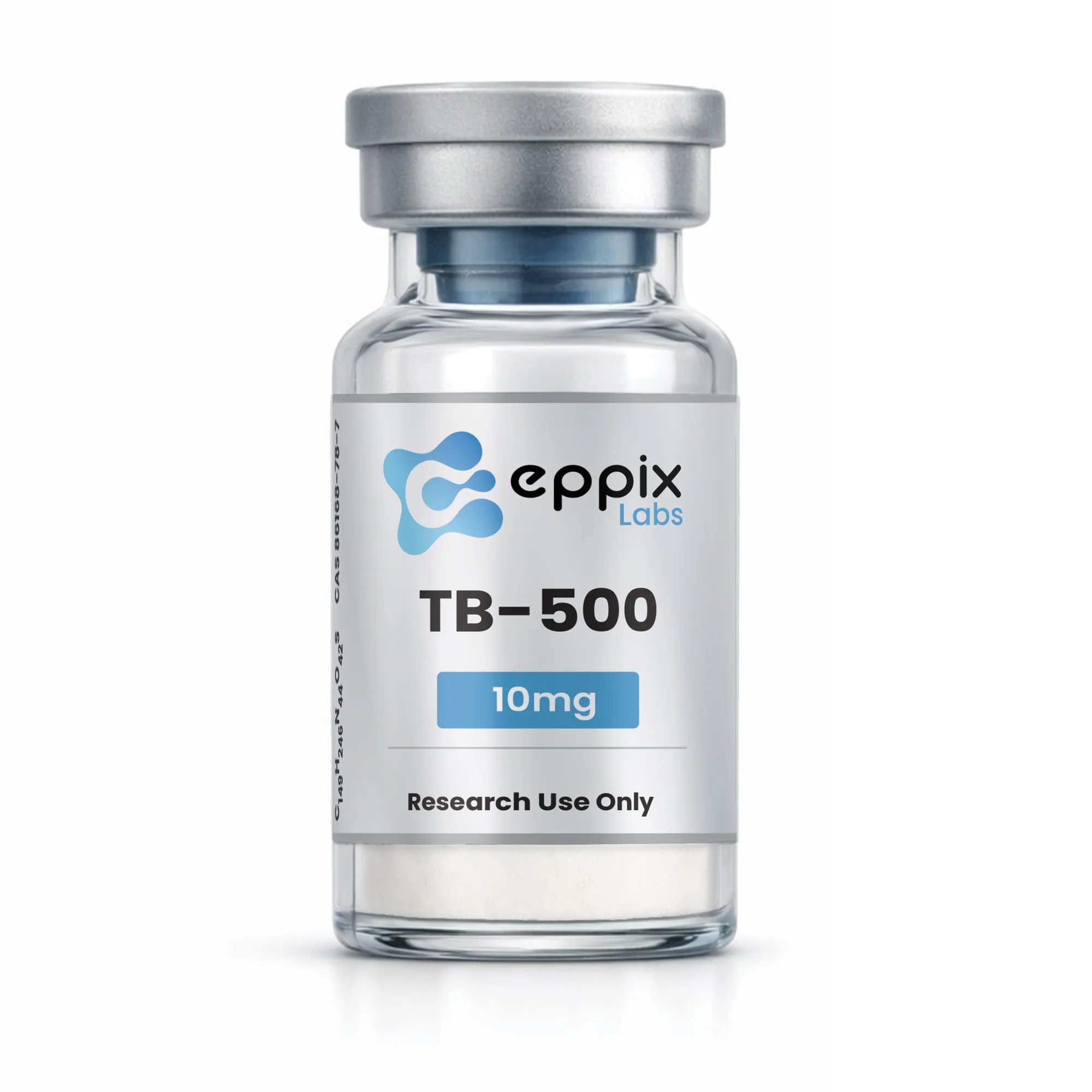
TB-500 lyophilized research material as supplied by Eppix Labs. Labelled strength and measured content appear on the certificate below.

Sequence and structure

Seven residues, all standard, with terminal modifications. The synthesis is simple and the mass is distinctive, which is exactly why an MS identity line on the certificate is worth insisting on: substitution with a cheaper short peptide is the most economically attractive form of adulteration for a product this small, and it is invisible to a purity assay alone.

Amino Acid Sequence
Amino Acid Sequence diagram
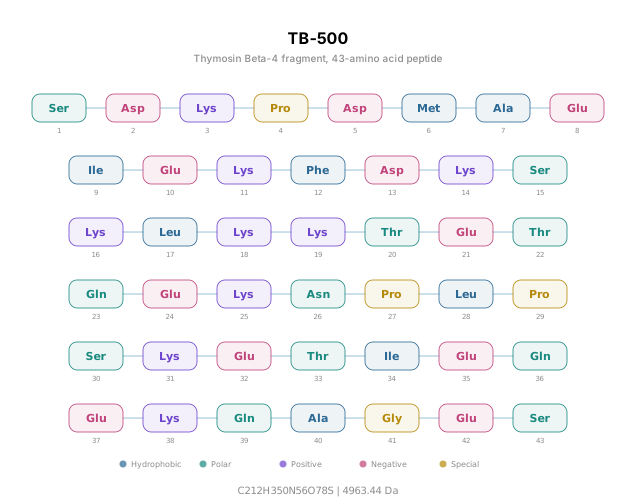
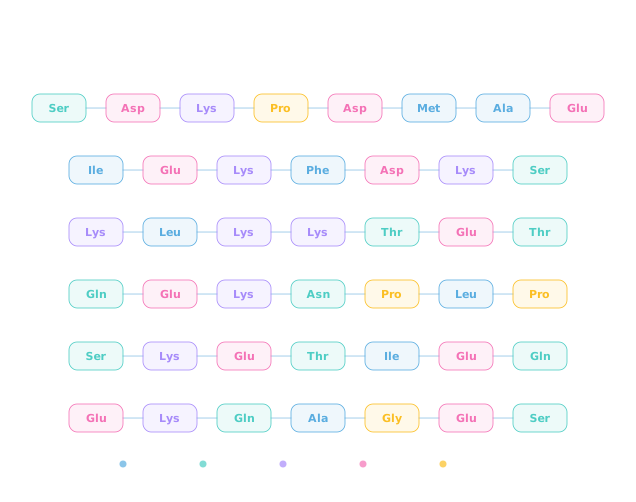
Amino-acid sequence of the TB-500 active fragment, LKKTETQ.
Chemical Structure
Chemical Structure diagram
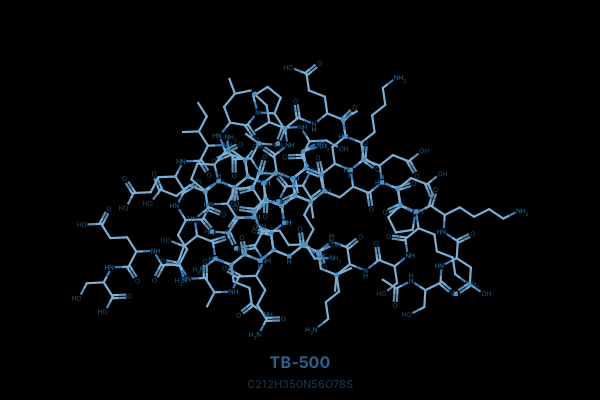
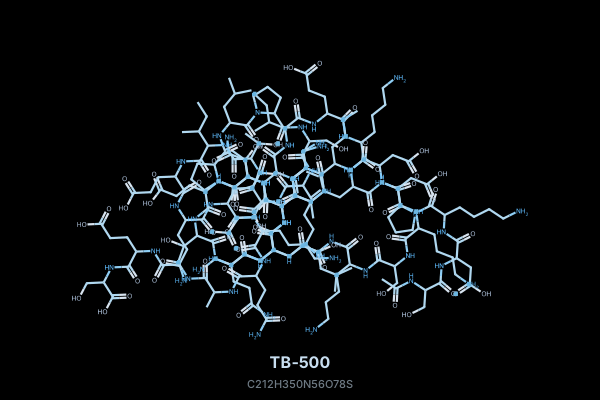
Chemical structure of the acetylated TB-500 heptapeptide.

What the published research shows

Nearly all of the substantive literature is on thymosin β4 itself rather than on the seven-residue fragment. That distinction is worth carrying through the reading:

  • ·Actin sequestration. Thymosin β4 is the principal G-actin sequestering protein in mammalian cells, and the actin-binding function is the mechanistic anchor for everything downstream.[1]
  • ·Dermal wound models. Malinda et al. (1999) reported accelerated wound healing and increased keratinocyte migration in full-thickness rat and mouse models.[2]
  • ·Corneal models. Sosne et al. (2002) reported promotion of corneal epithelial wound healing and reduction of inflammation in an experimental model.[3]
  • ·Cardiac models. Bock-Marquette et al. (2004) reported activation of integrin-linked kinase and improved cardiac cell migration and survival after coronary artery ligation in mice.[4]
  • ·Breadth of animal work. Philp and Kleinman (2010) survey the animal literature across dermal, corneal and cardiac repair models.[5]

The limit of the evidence

Thymosin β4 reached human clinical investigation in dermal and corneal indications and has no approved indication. The seven-residue TB-500 fragment sold on the research market has no human trial literature of its own at all. There is no established human dose, no human safety record for the fragment, and no jurisdiction in which it is authorized.

Reading parent-protein data as if it were fragment data is the single most common error in TB-500 marketing copy. The fragment carries the actin-binding motif; whether it reproduces the parent protein's behaviour in any given model is a question the published work has largely not asked.

Regulatory status: the July 2026 advisory vote

On 23 and 24 July 2026 the FDA's Pharmacy Compounding Advisory Committee reviewed TB-500 for inclusion on the Section 503A Bulk Drug Substances List, alongside BPC-157, KPV, TB-500, MOTS-c, Epitalon and Semax. FDA staff had recommended against inclusion for every substance under review, citing insufficient characterization, little or no human effectiveness evidence, and inadequate human safety data. The committee voted in favor anyway. The vote was 8 in favor, 6 against, 1 abstention.

What the vote does not do:

  • ·It is non-binding. The committee advises, it does not decide. No final FDA determination has been issued and none of the six peptides appears in 21 CFR 216.23.
  • ·It requires a further step. Addition to the 503A Bulks List requires formal action by the Secretary of Health and Human Services, which had not occurred as of publication.
  • ·It does not make the compound an FDA-approved drug, and it establishes nothing about efficacy.
  • ·It does not legitimize research-chemical retail. A compounding-list decision concerns licensed pharmacists preparing patient-specific prescriptions under Section 503A, which is a different channel entirely from research material sold in vials.

Verifying a TB-500 lot

Three numbers, and they are not interchangeable. Identity by mass spectrometry establishes that the material is the LKKTETQ fragment and not a cheaper substitute of similar appearance. Purity by HPLC establishes what fraction of the vial contents is that compound. Measured content establishes how much is in the vial against the labeled amount. Underfilling is the failure mode that a purity-only certificate cannot detect, and it is the one a buyer pays for directly.

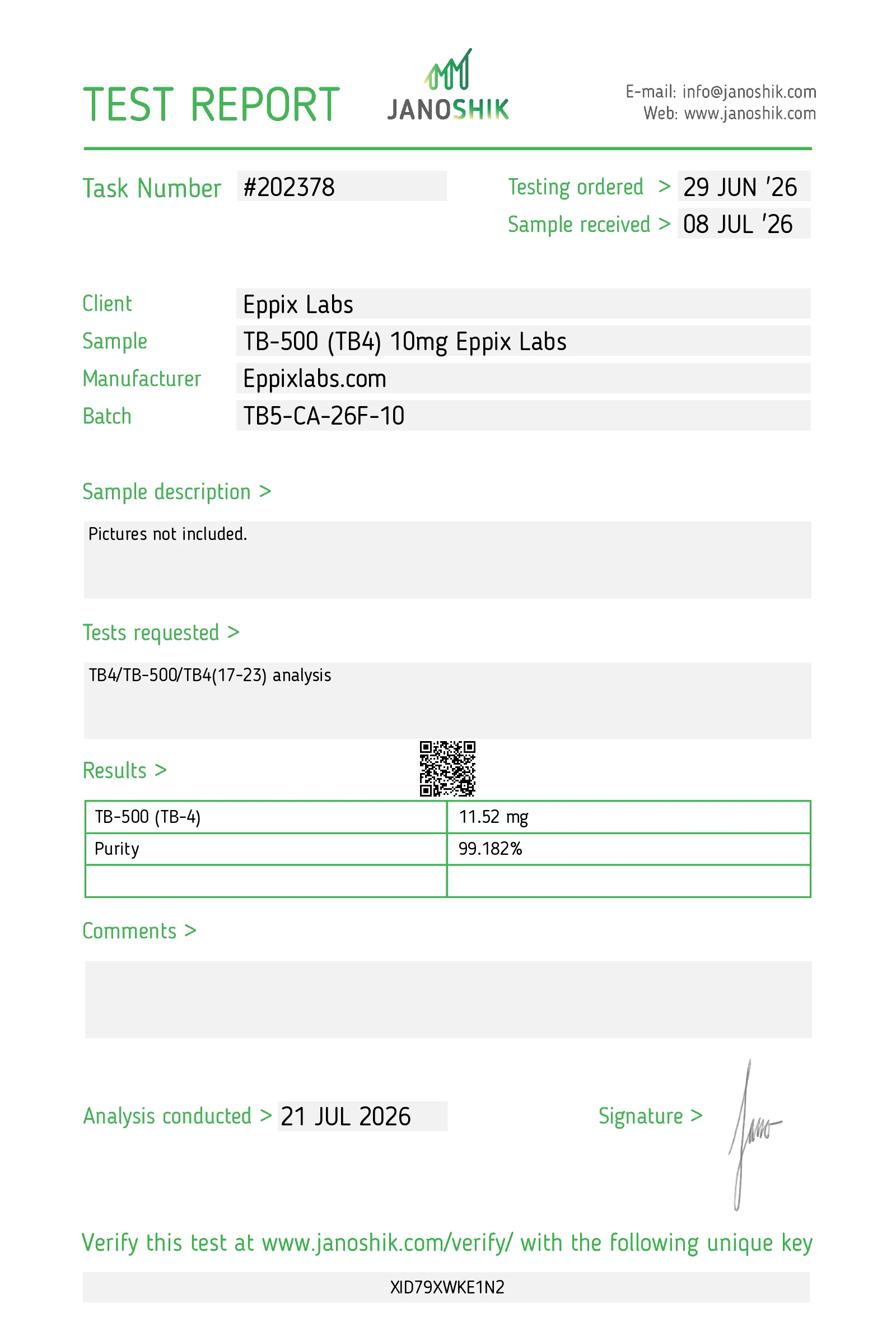
Every Eppix TB-500 lot is tested by Janoshik Analytical, with the certificate published before the lot is sold and verifiable on the laboratory's own database. The current lot is below.

Published Certificate
Certificate of analysis for TB-500 10mg, batch TB-CA-26A-01, 99.182% purity, 11.52 mg measured content
Batch
TB-CA-26A-01
Purity (HPLC)
99.182%
Measured content
11.52 mglabeled 10 mg
Laboratory
Janoshik
Published certificate of analysis for the current TB-500 lot, with batch, HPLC purity and measured content read live from the batch record.

Sourcing in the United States

Domestic fulfillment is by FedEx, typically one to two days nationwide, free over $200, with an additional discount for card or PayPal checkout and mix-and-match pricing at 5 and 10 vials.

TB-500 and BPC-157 are the two compounds most often run alongside each other in tissue-repair work. The mechanistic and evidential differences are set out in BPC-157 vs TB-500, and the BPC-157 sourcing guide is at buy BPC-157 in the US.

Frequently Asked

Is TB-500 the same thing as thymosin beta-4?

No. Thymosin β4 is a 43-residue, 4.9 kDa protein. TB-500 as sold for research is normally the acetylated seven-residue fragment Ac-LKKTETQ from its actin-binding region, about a quarter of the mass. Most published research is on the parent protein.

Is TB-500 legal in the US?

It may be sold and held as a laboratory research material. It is not approved by the FDA for human or veterinary use. This is not legal advice.

Did the FDA approve TB-500 in 2026?

No. An FDA advisory committee voted 8-6 in July 2026 to recommend it for the Section 503A compounding bulks list, against FDA staff's own recommendation. The vote is non-binding, addition to the list still requires action by the Secretary of Health and Human Services, and no final determination has been issued.

What should a TB-500 certificate show?

Batch number matching the vial, the named testing laboratory with an independent verification path, MS identity confirmation against the fragment mass near 1030 Da, HPLC purity, and measured vial content against the labeled amount.

Is TB-500 banned in sport?

TB-500 and thymosin β4 appear on the World Anti-Doping Agency Prohibited List under growth factors affecting muscle, tendon or ligament. That is a competition matter and is separate from its status as a research material; it is noted here because researchers working with athletes ask.

How is TB-500 stored?

Lyophilized: cool, dry, dark, at -20 °C for long-term storage. Reconstituted: refrigerated, used within the window your protocol defines. See the peptide storage guide.

References

  1. Goldstein, A.L., Hannappel, E., Kleinman, H.K. (2005). Thymosin β4: actin-sequestering protein moonlights to repair injured tissues. Trends Mol Med 11(9):421-429. PMID 16099219
  2. Malinda, K.M. et al. (1999). Thymosin beta4 accelerates wound healing. J Invest Dermatol 113(3):364-368. PMID 10469335
  3. Sosne, G. et al. (2002). Thymosin beta 4 promotes corneal wound healing and decreases inflammation in vivo following alkali injury. Exp Eye Res 74(2):293-299. PMID 11950239
  4. Bock-Marquette, I. et al. (2004). Thymosin beta4 activates integrin-linked kinase and promotes cardiac cell migration, survival and cardiac repair. Nature 432(7016):466-472. PMID 15565145
  5. Philp, D., Kleinman, H.K. (2010). Animal studies with thymosin beta 4, a multifunctional tissue repair and regeneration peptide. Ann N Y Acad Sci 1194:81-86. PMID 20536453
  6. US Food and Drug Administration (2026). Pharmacy Compounding Advisory Committee meeting, 23-24 July 2026: bulk drug substances nominated for inclusion on the Section 503A Bulks List. FDA Advisory Committee Calendar. Source
  7. US Food and Drug Administration (2026). FDA briefing document, Pharmacy Compounding Advisory Committee: BPC-157, KPV, TB-500, MOTS-c, Emideltide, Semax and Epitalon. Agency review recommended against inclusion for each substance. FDA. Source
  8. Office of the Federal Register (2026). 21 CFR 216.23: bulk drug substances that can be used to compound drug products under section 503A. None of the six peptides appear on the list as of publication. eCFR. Source

Research Use Only

This article summarizes published preclinical research literature. Compounds referenced are supplied by Eppix Labs strictly as research materials for laboratory investigation within the United States. They are not approved by the FDA for human or veterinary use, and nothing on this page should be interpreted as medical advice or guidance on human or animal administration.