

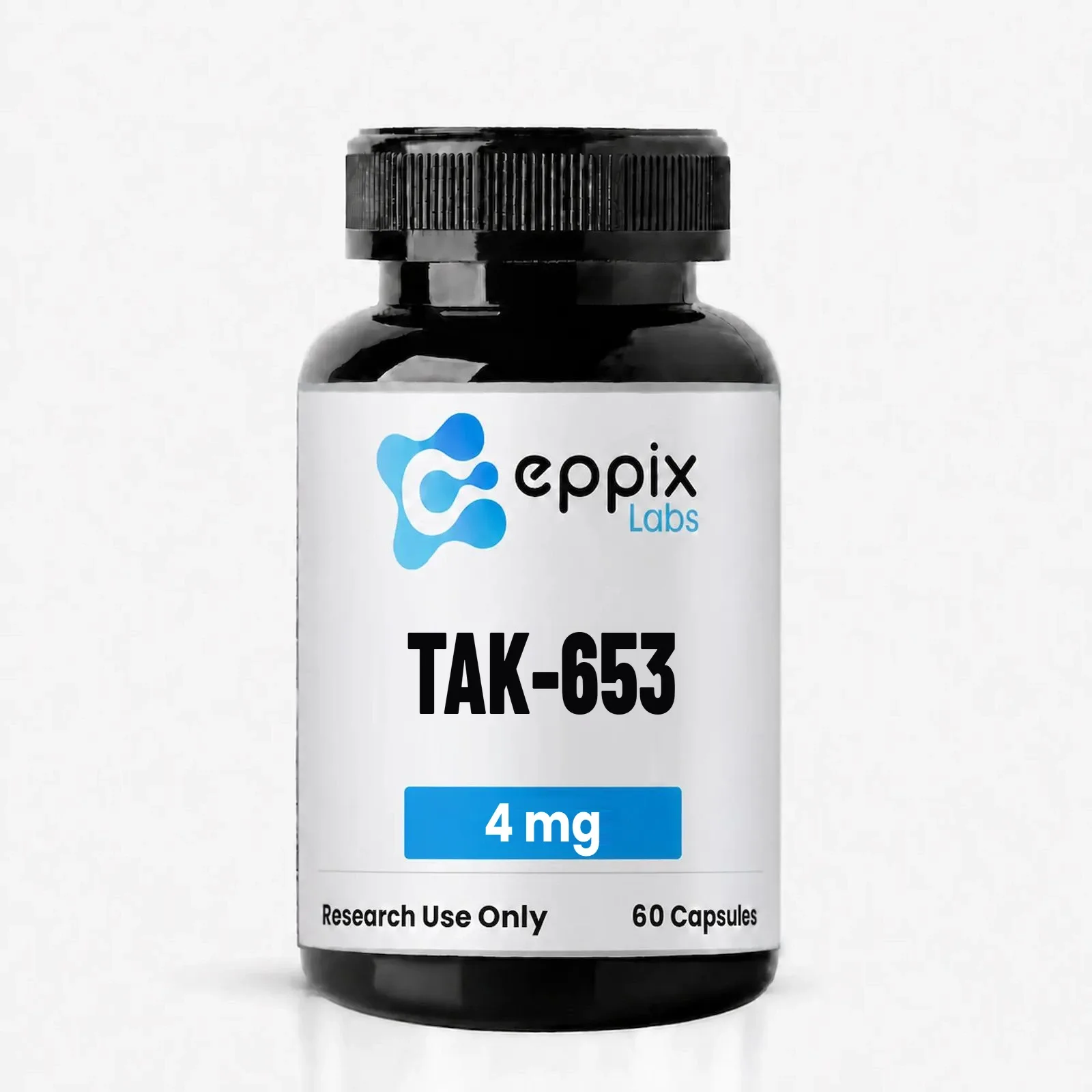
TAK-653 Capsules
AMPA Receptor Positive Allosteric Modulator
Also known as NBI-1065845
TAK-653 is a small-molecule positive allosteric modulator of the AMPA subtype of ionotropic glutamate receptor. It is supplied in capsule form for laboratory research and is characterised in the literature as having minimal intrinsic agonist activity at the receptor.
This product is intended strictly for laboratory research use within the United States. It is not approved by the FDA for the diagnosis, treatment, cure, or prevention of any disease. Not for human or veterinary use.
By purchasing, you confirm the material will be used solely for lawful research purposes in accordance with applicable U.S. federal, state, and local regulations.
TAK-653 is a small-molecule positive allosteric modulator of the AMPA subtype of ionotropic glutamate receptor. It is supplied in capsule form for laboratory research and is characterised in the literature as having minimal intrinsic agonist activity at the receptor.
Published work has examined its receptor pharmacology in vitro, its effects in rodent and non-human primate behavioural models, and cortical excitability measures in healthy human volunteers within investigational clinical studies.
Third-party tested for purity, ID, quantity.
Coming Soon
The certificate of analysis for this lot is being finalised and will be published here as soon as the lab returns it.
TAK-653 is described in the literature as an AMPA receptor potentiator whose activity is strictly dependent on the presence of glutamate, distinguishing it from earlier AMPA modulators that produce agonist-like receptor activation on their own. In vitro characterisation reported enhancement of agonist-evoked AMPA receptor currents and associated synaptic responses, with the agonist-dependence proposed as the basis for its receptor activation profile. This mechanism has been discussed alongside work on AMPA receptor involvement in the signalling cascades studied in connection with ketamine.
Research endpoints evaluated include synaptic response measures in neuronal preparations, performance in rodent cognition and behavioural despair paradigms, behavioural readouts in a chronic stress non-human primate model, and, in human volunteer studies, transcranial magnetic stimulation measures of cortical excitability used as a translational pharmacodynamic biomarker. Clinical pharmacology work under the designation NBI-1065845 has also examined drug-drug interaction characteristics with probe substrates.
TAK-653 emerged from pharmaceutical research programmes targeting glutamatergic rather than monoaminergic mechanisms in central nervous system drug development. Earlier AMPA receptor potentiators were associated with intrinsic agonistic activity, and published descriptions position TAK-653 as a compound selected for tightly glutamate-dependent receptor potentiation.
Initial characterisation papers describing its receptor pharmacology and rodent behavioural profile appeared in 2021. Human volunteer studies measuring central nervous system pharmacodynamic effects followed, and the compound was subsequently reported under the alternative designation NBI-1065845 in later clinical pharmacology work. A non-human primate chronic stress study was published in 2025.
TAK-653 appears in research frameworks concerned with glutamatergic modulation as an alternative to monoamine-targeted mechanisms. Published investigations span in vitro AMPA receptor electrophysiology and synaptic response measurement, rodent behavioural and cognition paradigms, a chronic stress non-human primate model, and human volunteer studies using transcranial magnetic stimulation as a translational marker of AMPA receptor modulation. The published record is moderate in size and concentrated in a small number of research groups.
3 of the 5 areas below are addressed directly by a paper cited on this page.
AMPA receptor allosteric modulation
Addressed on this page by Dijkstra 2022, O'Donnell 2021, Hara 2021. Each is linked to its source record in the references below, so what was measured — and in what system — can be read rather than taken on trust.
- Dijkstra, F. et al. (2022) — Central nervous system effects of TAK-653, an investigational alpha-amino-3-hydroxy-5-methyl-4-isoxazole receptor (AMPAR) positive allosteric modulator in healthy volunteers
- O'Donnell, P. et al. (2021) — Transcranial magnetic stimulation as a translational biomarker for AMPA receptor modulation
- Hara, H. et al. (2021) — TAK-653, an AMPA receptor potentiator with minimal agonistic activity, produces an antidepressant-like effect with a favorable safety profile in rats
Glutamatergic signalling models
No paper cited on this page reports on glutamatergic. This heading marks where TAK-653 Capsules is discussed in the category rather than a question the cited literature answers, and it is worth knowing which of these areas has work behind it and which does not.
Rodent behavioural despair and cognition paradigms
No paper cited on this page reports on rodent, behavioural or despair. This heading marks where TAK-653 Capsules is discussed in the category rather than a question the cited literature answers, and it is worth knowing which of these areas has work behind it and which does not.
Non-human primate chronic stress models
Addressed on this page by Li 2025. Each is linked to its source record in the references below, so what was measured — and in what system — can be read rather than taken on trust.
- Li, L. et al. (2025) — TAK-653 Reverses Core Depressive Symptoms in Chronic Stress-Induced Monkey Model
Transcranial magnetic stimulation biomarker research
Addressed on this page by O'Donnell 2021. Each is linked to its source record in the references below, so what was measured — and in what system — can be read rather than taken on trust.
- O'Donnell, P. et al. (2021) — Transcranial magnetic stimulation as a translational biomarker for AMPA receptor modulation
The references section of this page cites 6 primary papers published between 2021 and 2025 — a limited but non-trivial record. Every citation is linked to its PubMed or DOI record so it can be read rather than taken on trust, and the summaries above describe what those papers report rather than what the compound is claimed to do.
TAK-653 Capsules is frequently listed as a peptide by suppliers in this market. It is not one. The structure published on this page is the compound's actual chemistry, and research on it should be read against its own class rather than against peptide literature.
Research compounds attract claims that outrun their evidence. Below are the ones most often encountered for TAK-653 Capsules, set against what the papers cited on this page actually report. Where the record is thin or contested, that is stated rather than smoothed over.
TAK-653 Capsules is commonly described online in connection with sharper focus, better memory and improved mood. In the research literature the same compound is filed under AMPA receptor allosteric modulation, glutamatergic signalling models and rodent behavioural despair and cognition paradigms.
Of the 6 papers cited on this page, published between 2021 and 2025, 1 reports work in human participants — Dijkstra 2022. Human data for a molecule is not the same as evidence for material supplied as a research compound: published trials use pharmaceutical-grade product under medical supervision at defined doses. What is established for the material sold here is its measured purity and content per lot.
Nothing above is a statement of what this material does. It is a summary of what has been published and what has not. Eppix Labs supplies research materials only and provides no dosing, administration or protocol guidance.
Every lot of TAK-653 Capsules is independently assayed before it is released, and the certificate for the lot shipped is published rather than summarised. Where a certificate for a current lot is not yet posted, the lot has not yet been released against it.
Researchers who buy TAK-653 Capsules in the United States through Eppix Labs receive a batch-labelled vial whose certificate is published against that lot code, so the material can be matched to its analysis rather than to a generic specification.
- Storage
- Cool, dry, away from direct light
- Humidity
- Keep sealed; capsule shells are hygroscopic
- Reconstitution
- Not applicable — supplied pre-measured
- Format
- Oral capsule
TAK-653 Capsules is supplied in capsule form, which removes the reconstitution step entirely: there is no vehicle to add, no reconstitution volume to record and no post-reconstitution stability window to track. What that leaves a laboratory to control is storage — capsule shells draw moisture from the air, so the container should be kept sealed and dry rather than decanted into an open vessel.
Because the material is already at its labelled quantity per capsule, batch verification carries more weight in this format than it does for powder: there is no point at which the researcher independently confirms mass by weighing. The measured content published for each lot is the figure that answers that question.
- 1 × sealed capsule bottle (4mg per capsule / Single Bottle - Pack of 60), batch-labelled
- Batch documentation for the lot shipped, once its certificate is published
- Discreet outer packaging with no product names on the exterior
- FedEx, tracked, typically 1–3 business days domestically
- Laboratory consumables of any kind
- Dosing, administration or protocol guidance of any kind
No. Eppix Labs products are supplied exclusively for laboratory research. We do not provide dosing, administration, or usage guidance.
Each capsule contains the labeled quantity of TAK-653. Independent third-party analysis verifies purity, identity, and net content per batch.
The container holds only the capsules. Any laboratory materials required for sample preparation or experimental procedures must be sourced separately.
Duration depends entirely on research design, storage conditions, and laboratory protocol.
Strictly regulated agonist-dependent activation of AMPA-R is the key characteristic of TAK-653 for robust synaptic responses and cognitive improvement
PubMedTAK-653, an AMPA receptor potentiator with minimal agonistic activity, produces an antidepressant-like effect with a favorable safety profile in rats
PubMedCentral nervous system effects of TAK-653, an investigational alpha-amino-3-hydroxy-5-methyl-4-isoxazole receptor (AMPAR) positive allosteric modulator in healthy volunteers
PubMedTAK-653 Reverses Core Depressive Symptoms in Chronic Stress-Induced Monkey Model
PubMedRole of the AMPA receptor in antidepressant effects of ketamine and potential of AMPA receptor potentiators as a novel antidepressant
PubMedTranscranial magnetic stimulation as a translational biomarker for AMPA receptor modulation
PubMedRelated
You May Also Like
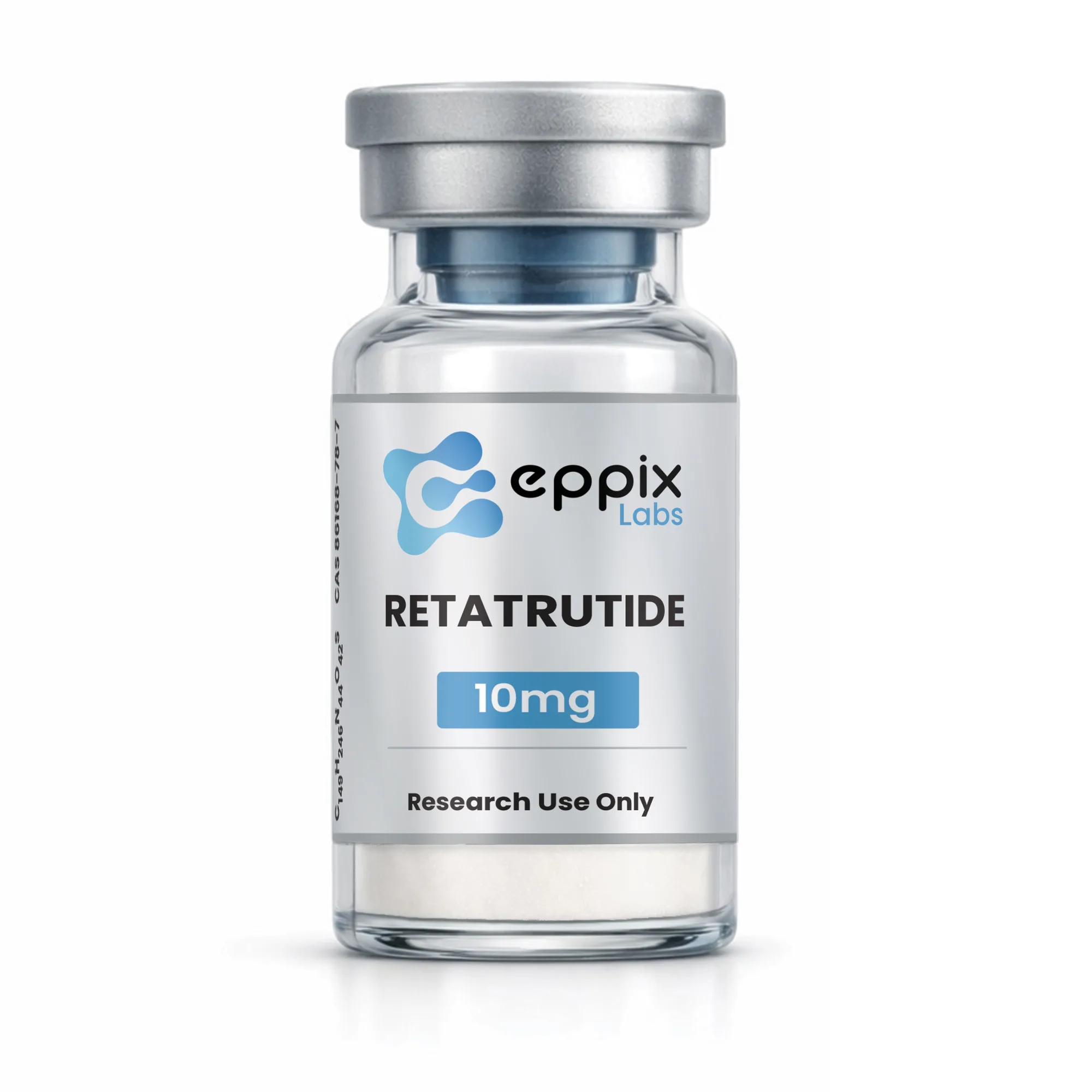
Triple Receptor Agonist Retatrutide is a synthetic peptide developed for controlled laboratory research involving multi-receptor signaling systems. It is structurally designed to interact with GLP-1, GIP, and glucagon receptor pathways within experimental environments.
From$79.99
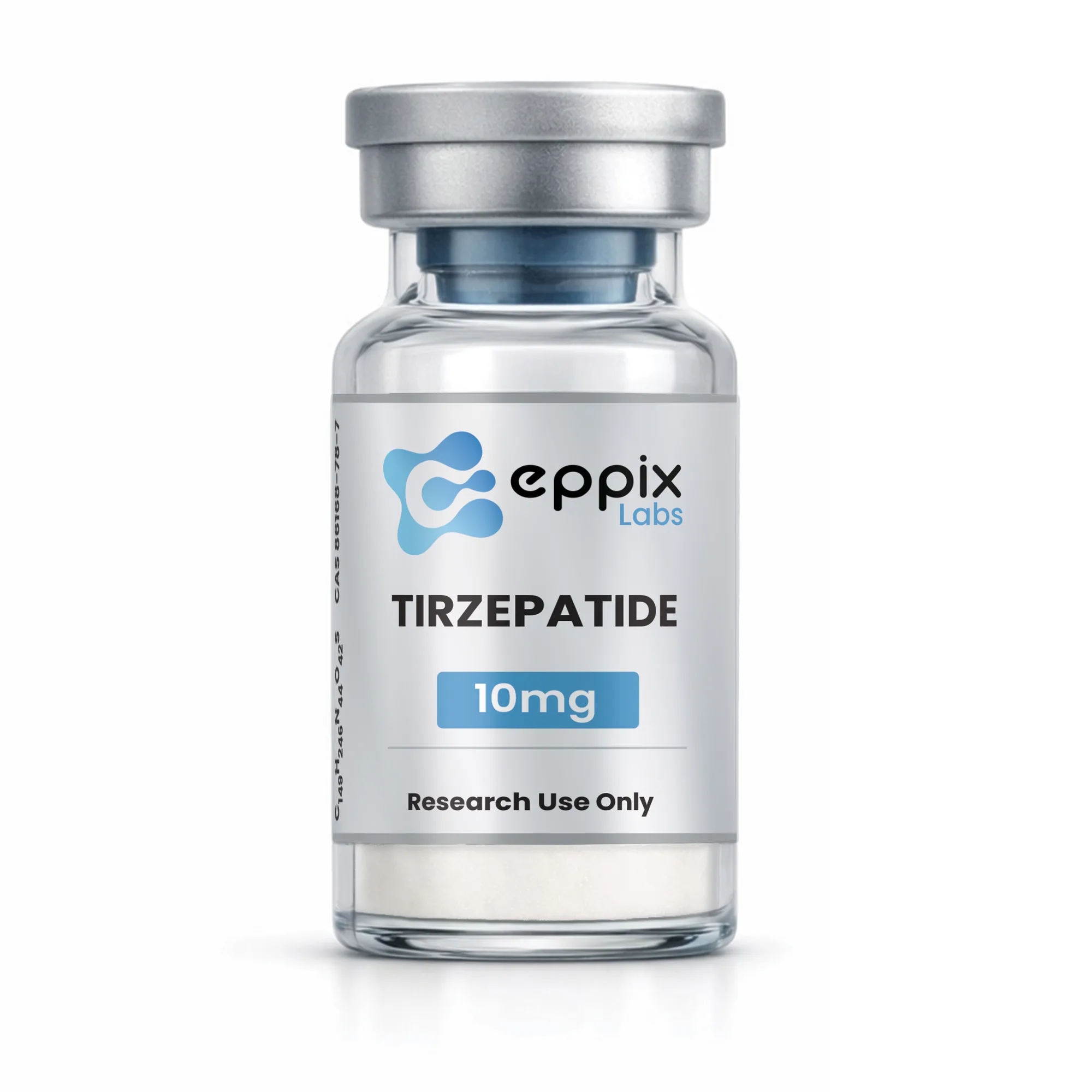
Dual GLP-1 / GIP Research Peptide Tirzepatide is a synthetic peptide developed for controlled laboratory research involving dual incretin receptor signaling systems. It is structurally designed to interact with GLP-1 and GIP receptor pathways within experimental environments.
From$39.99
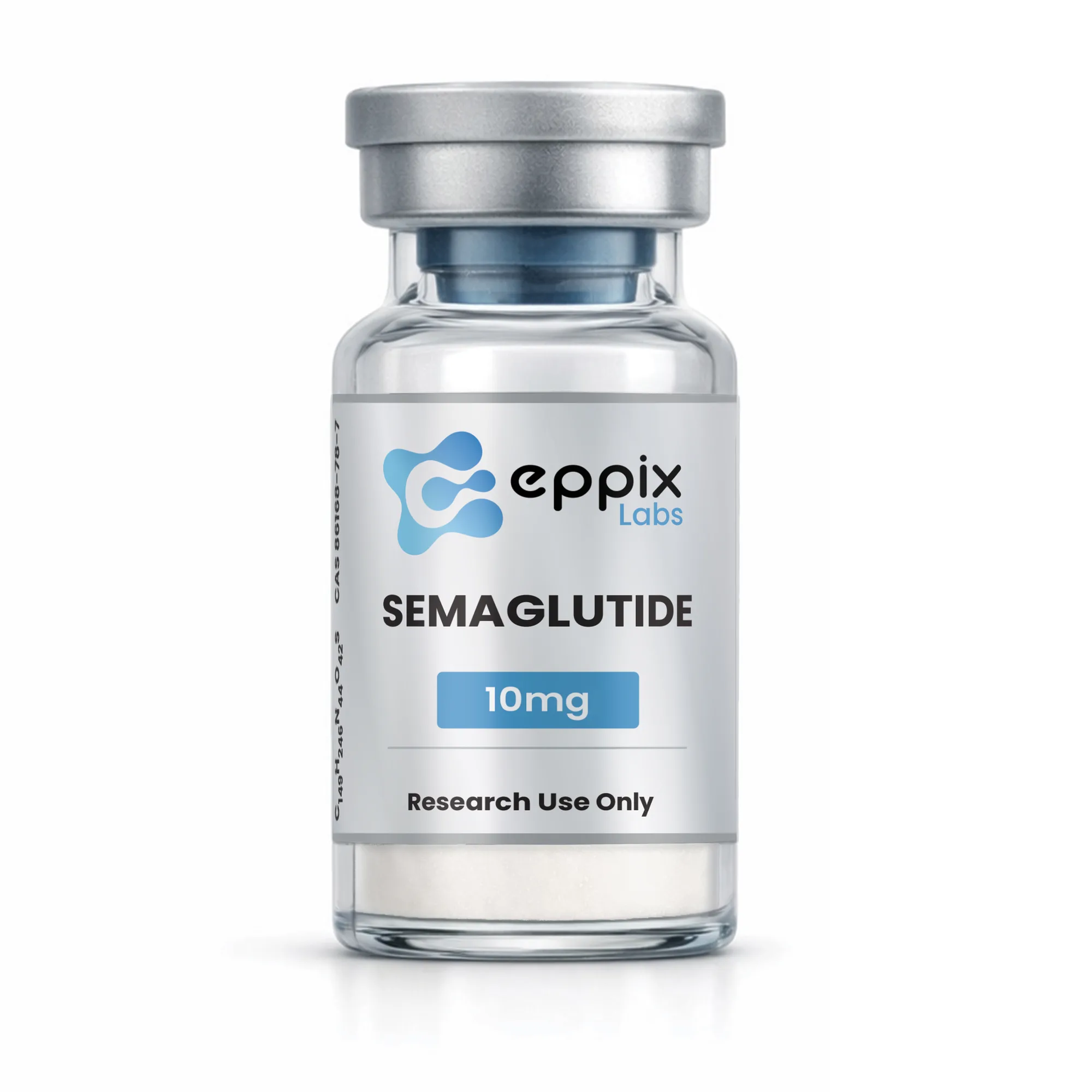
GLP-1 Receptor Agonist Research Peptide Semaglutide is a synthetic analogue of glucagon-like peptide-1 (GLP-1), a naturally occurring incretin hormone involved in glucose-dependent signaling. It is developed for controlled laboratory investigation within regulated experimental environments.
From$59.99
Amylin Receptor Research Peptide Cagrilintide is a synthetic peptide developed for controlled laboratory research involving amylin receptor signaling systems. It is structurally designed to interact with amylin-associated pathways within experimental environments.
From$99.99