Origins and Development
The incretin effect (the observation that oral glucose provokes a larger insulin response than an equivalent intravenous load) is attributed principally to two gut hormones, GIP and GLP-1. Pharmacological development through the 2000s and 2010s concentrated on GLP-1 receptor agonists, while GIP receptor agonism remained comparatively under-explored. Tirzepatide emerged from a research programme at Eli Lilly that asked whether a single molecule engaging both receptors would behave differently from either single-receptor agonist.
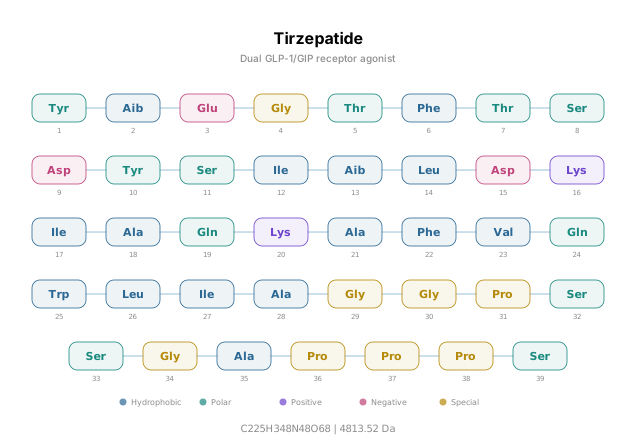
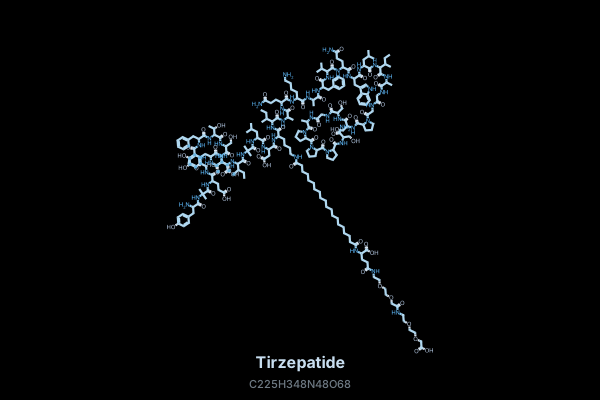
The foundational characterization paper, Coskun et al. (2018), described LY3298176 from in-vitro receptor pharmacology through rodent models to early clinical proof of concept (PMID 30473097). Its design decision is the notable one: rather than modifying GLP-1 to pick up GIP activity, the molecule is built on the native human GIP sequence and modified until it also activates GLP-1R. That choice shapes every downstream pharmacology finding.