FedEx Delivery1–3 day delivery across the U.S.Free on orders over $200

Sourcing Guide

Sermorelin in the US: GHRH(1-29), and the Approval That Was Withdrawn

The shortest fully active GHRH fragment, once an approved diagnostic and paediatric agent, now a research material again

·Compiled by Eppix Labs

Sermorelin has a history most research peptides do not: it was an approved medicine, marketed as a diagnostic agent for growth hormone deficiency and for paediatric use, and its approval lapsed for commercial rather than safety reasons. That history gives it an unusually solid pharmacological characterization and creates a specific confusion, because a withdrawn approval is not the same as an active one.

This guide covers the molecule, what the published work established, and how to verify a lot. Sermorelin is supplied for laboratory research use only.

Chemical Identity

Name
Sermorelin (GHRH(1-29) amide)
Also known as
Sermorelin, GRF(1-29), Geref (withdrawn product)
Molecular formula
C₁₄₉H₂₄₆N₄₄O₄₂S
Molecular weight
3357.9 g/mol
CAS number
86168-78-7
Salt forms
Acetate

What sermorelin is

Sermorelin is the first 29 residues of human growth-hormone-releasing hormone, amidated at the C-terminus. That fragment was established early in the GHRH literature as the shortest sequence retaining full biological activity at the GHRH receptor, which is why every subsequent GHRH analog in the catalog is built on it or on the full 44-residue sequence.

The parent hormone was characterized by Guillemin and colleagues in 1982, isolated from a pancreatic tumour that had caused acromegaly, which remains one of the cleaner discovery stories in endocrinology.[3] Sermorelin acts on pituitary somatotrophs to stimulate endogenous GH release, leaving the pituitary's own feedback regulation in place.
Research Material
General Image
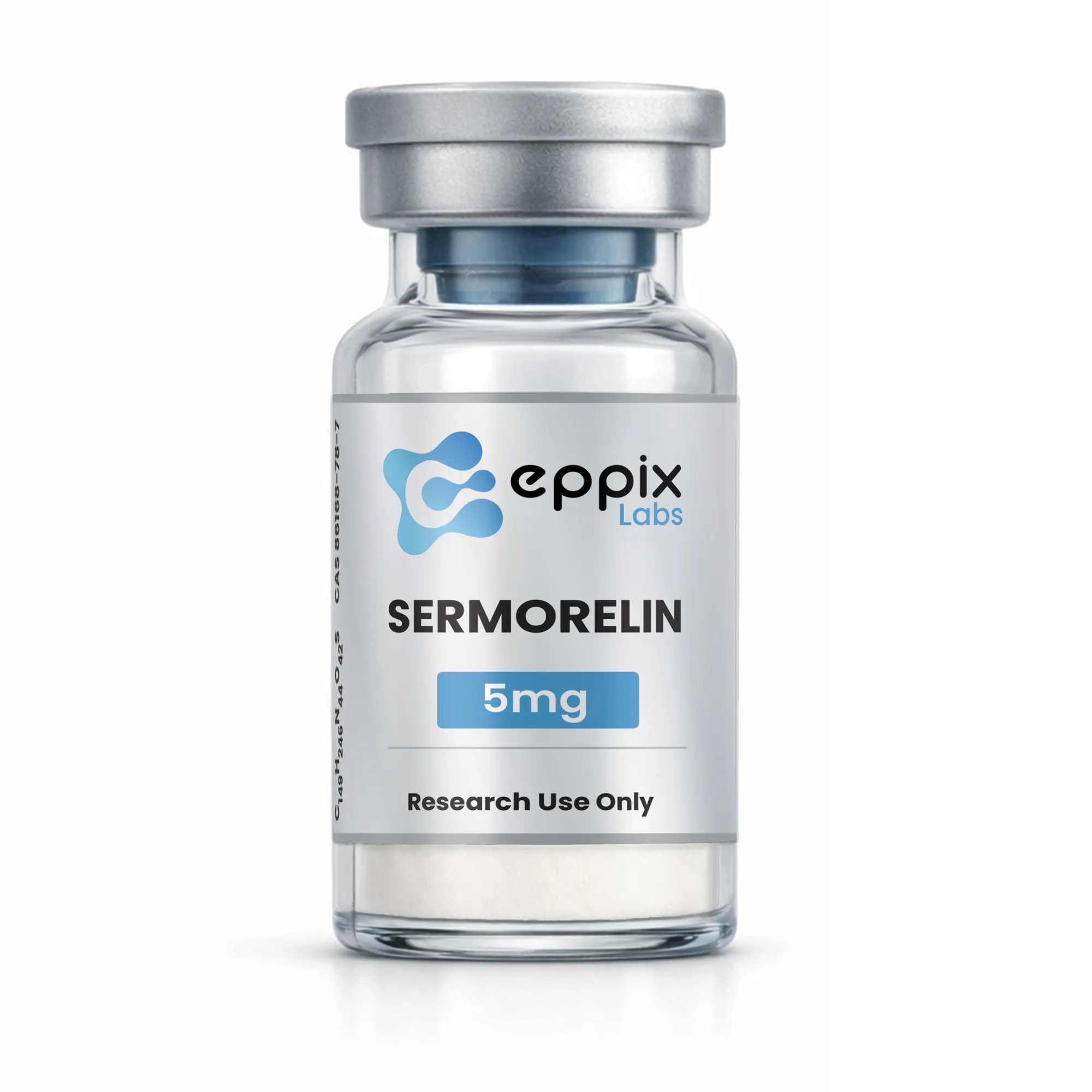
Sermorelin lyophilized research material as supplied by Eppix Labs. Labelled and measured content are stated on the certificate below.

Sequence and structure

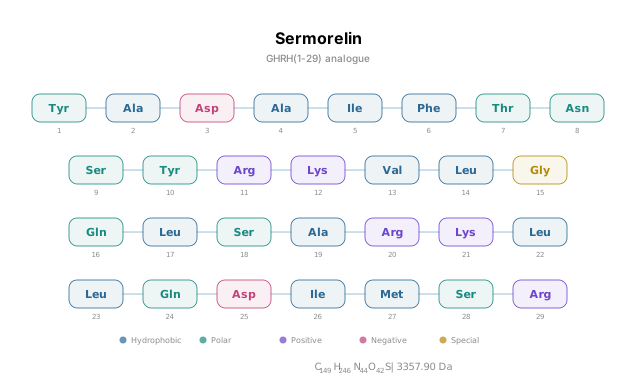
Twenty-nine residues, around 3358 Da, C-terminally amidated, with no acylation and no non-natural residues. The absence of a stabilizing modification is the defining practical difference between sermorelin and tesamorelin: sermorelin is cleaved rapidly by DPP-4 at the N-terminus, giving a half-life measured in minutes.

The amidation is a quality attribute worth checking. A free-acid C-terminus differs by 1 Da from the amide and has reduced activity, and the difference is resolvable by mass spectrometry and invisible on a purity trace.

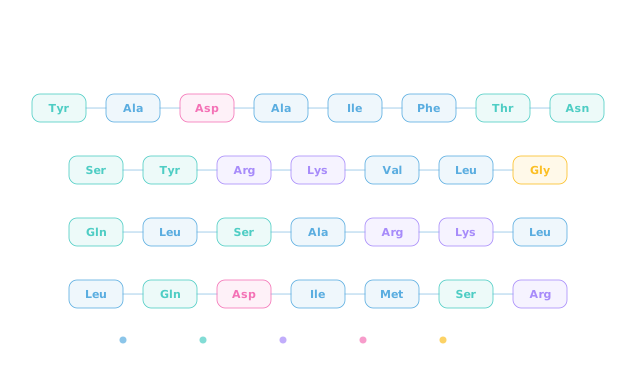
Amino Acid Sequence
Amino Acid Sequence diagram
Amino-acid sequence of sermorelin, GHRH(1-29).
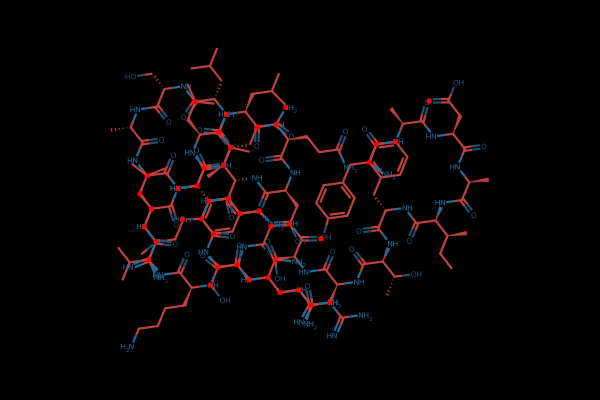
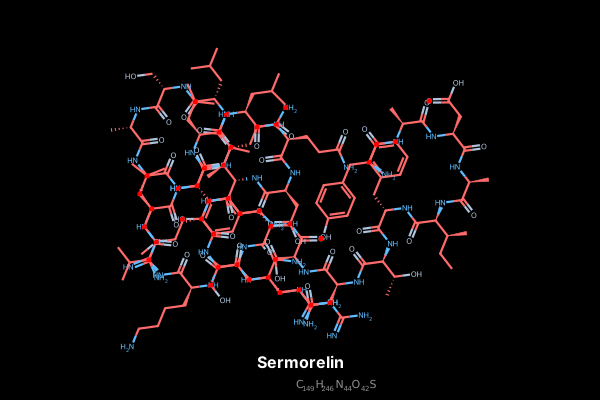
Chemical Structure
Chemical Structure diagram
Chemical structure of sermorelin.

What the published research shows

A well-characterized compound with a review literature rather than a trial pipeline:

  • ·Discovery of the parent hormone. Guillemin et al., Science 1982: isolation and characterization of growth hormone-releasing factor from a human pancreatic tumour causing acromegaly.[3]
  • ·Clinical review, paediatric use. Prakash and Goa (1999) review sermorelin's use in diagnosis and treatment of children with idiopathic growth hormone deficiency, which is the indication its approval covered.[1]
  • ·Adult-onset context. Walker (2006) discusses sermorelin in adult-onset growth hormone insufficiency and the pharmacological argument for stimulating endogenous secretion rather than replacing GH.[2]

The limit of the evidence, and the withdrawn approval

Sermorelin's marketing authorization was discontinued, and the compound is not currently an approved product in the US. A lapsed approval is a commercial fact, not a safety endorsement and not a current authorization. Material bought as a research chemical is not the discontinued product and does not inherit its regulatory status.

Beyond the paediatric diagnostic and treatment context its approval covered, sermorelin has no established indication, no current approval anywhere, and no modern randomized evidence base. the FDA has authorized nothing containing it today.

Verifying a sermorelin lot

Identity by mass spectrometry against the expected mass near 3358 Da, HPLC purity, and measured content against the labeled amount. Ask specifically whether the identity report is consistent with the C-terminal amide rather than the free acid; on a 29-residue peptide the 1 Da difference is well within the resolving power of the instruments used and is worth confirming.

Every Eppix sermorelin lot is tested by Janoshik Analytical, published before sale and verifiable on the laboratory's own database.

Published Certificate
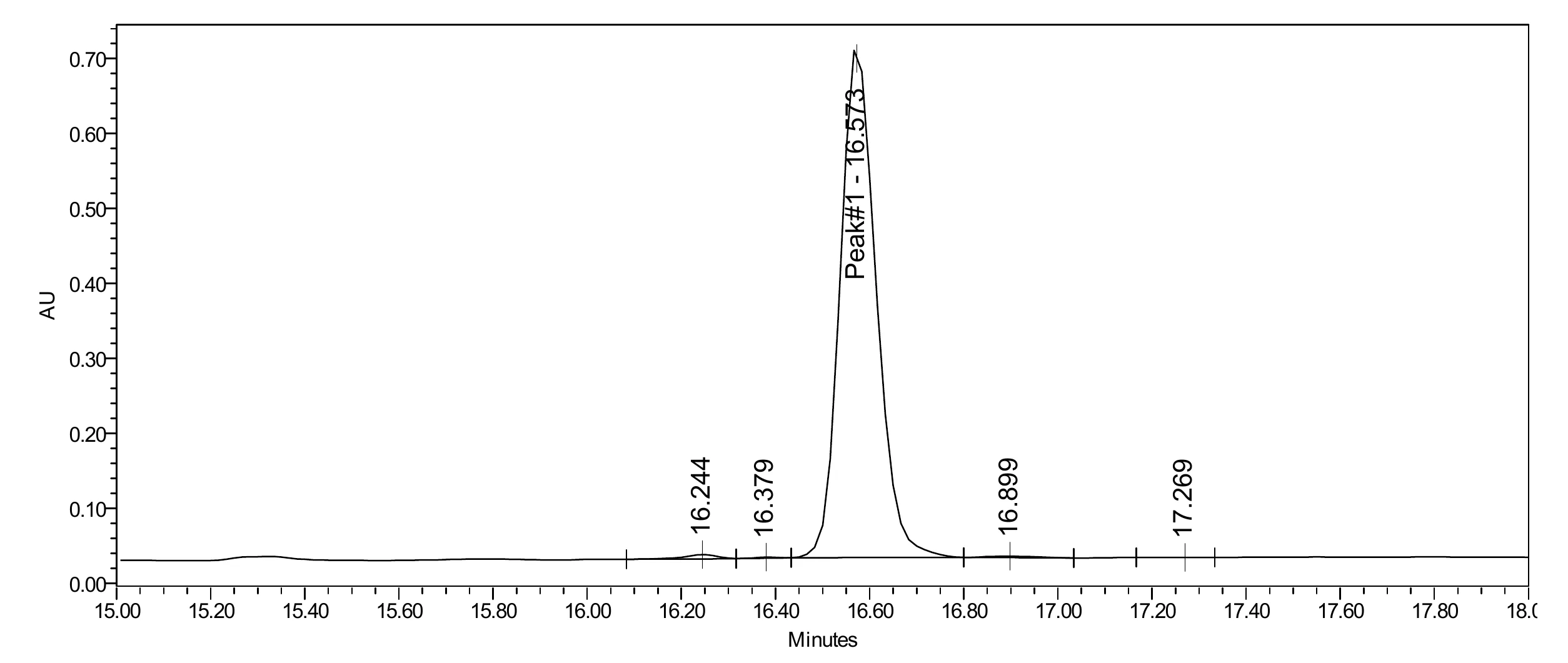
Certificate of analysis for Sermorelin 5mg, batch SERM-CA-26D-01
Batch
SERM-CA-26D-01
Purity (HPLC)
Not reported
Measured content
Not reported
Laboratory
Not reported
Published certificate for the current sermorelin lot, read live from the batch record.

Frequently Asked

Was sermorelin ever an approved medicine?

Yes. It was marketed as a diagnostic agent for growth hormone deficiency and for paediatric use, and that approval was later discontinued. A withdrawn approval is not a current authorization, and research-grade material is not the discontinued product.

How does sermorelin differ from tesamorelin?

Sermorelin is GHRH(1-29) with no stabilizing modification and a half-life of minutes. Tesamorelin is the full GHRH(1-44) sequence with an N-terminal acyl group blocking DPP-4 cleavage, giving a much longer duration of action.

How does sermorelin differ from CJC-1295 no-DAC?

CJC-1295 without DAC, properly mod GRF 1-29, is the same 29-residue fragment with four amino-acid substitutions that resist enzymatic degradation. Sermorelin is the unmodified sequence.

Is sermorelin legal in the US?

It may be sold and held as a laboratory research material. It is not currently approved by the FDA for human or veterinary use. This is not legal advice.

What should a sermorelin certificate show?

Batch number matching the vial, the named testing laboratory with an independent verification path, MS identity against the expected mass near 3358 Da and consistent with the C-terminal amide, HPLC purity, and measured content against the labeled amount.

How is sermorelin stored?

Lyophilized: cool, dry, dark, at -20 °C for long-term storage. Reconstituted: refrigerated, used within the window your protocol defines.

References

  1. Prakash, A., Goa, K.L. (1999). Sermorelin: a review of its use in the diagnosis and treatment of children with idiopathic growth hormone deficiency. BioDrugs 12(2):139-157. PMID 18031173
  2. Walker, R.F. (2006). Sermorelin: a better approach to management of adult-onset growth hormone insufficiency? Clin Interv Aging 1(4):307-308. PMID 18046908
  3. Guillemin, R. et al. (1982). Growth hormone-releasing factor from a human pancreatic tumor that caused acromegaly. Science 218(4572):585-587. PMID 6812220

Research Use Only

This article summarizes published preclinical research literature. Compounds referenced are supplied by Eppix Labs strictly as research materials for laboratory investigation within the United States. They are not approved by the FDA for human or veterinary use, and nothing on this page should be interpreted as medical advice or guidance on human or animal administration.