FedEx Delivery1–3 day delivery across the U.S.Free on orders over $200

Sourcing Guide

GHK-Cu in the US: The Copper Peptide, and Why the Copper Is the Hard Part

A tripeptide-copper complex with a fifty-year literature, and a quality question most certificates do not answer

·Compiled by Eppix Labs

GHK-Cu is one of the oldest compounds in the research-peptide catalog. Pickart and Thaler described the parent tripeptide in human serum in 1973, and the copper complex has been studied more or less continuously since.[4] That long history has produced a real literature and, separately, a great deal of cosmetic-industry marketing copy that borrows its authority.

The sourcing question here is different from every other compound on this site, because GHK-Cu is not a peptide: it is a peptide bound to a copper ion, and the ratio between the two is a quality attribute that most certificates simply do not report. GHK-Cu is supplied for laboratory research use only.

Chemical Identity

Name
GHK-Cu (glycyl-L-histidyl-L-lysine copper(II))
Also known as
GHK-Cu, Copper peptide, Cu-GHK, Copper tripeptide-1
Molecular formula
C₁₄H₂₂N₆O₄·Cu
Molecular weight
340.9 g/mol (complex); 340.4 g/mol (free GHK peptide)
CAS number
89030-95-5
Sequence (1-letter)
GHK
Sequence (3-letter)
Gly-His-Lys
Salt forms
Copper(II) complex · Acetate (free peptide)

What GHK-Cu is

GHK is a tripeptide, glycyl-L-histidyl-L-lysine, present in human plasma at concentrations that decline with age. GHK-Cu is that tripeptide in a 1:1 complex with copper(II), which the histidine imidazole and the terminal amine coordinate with high affinity. The complexed form is the biologically studied one; the free peptide and the complex are not interchangeable.[2]

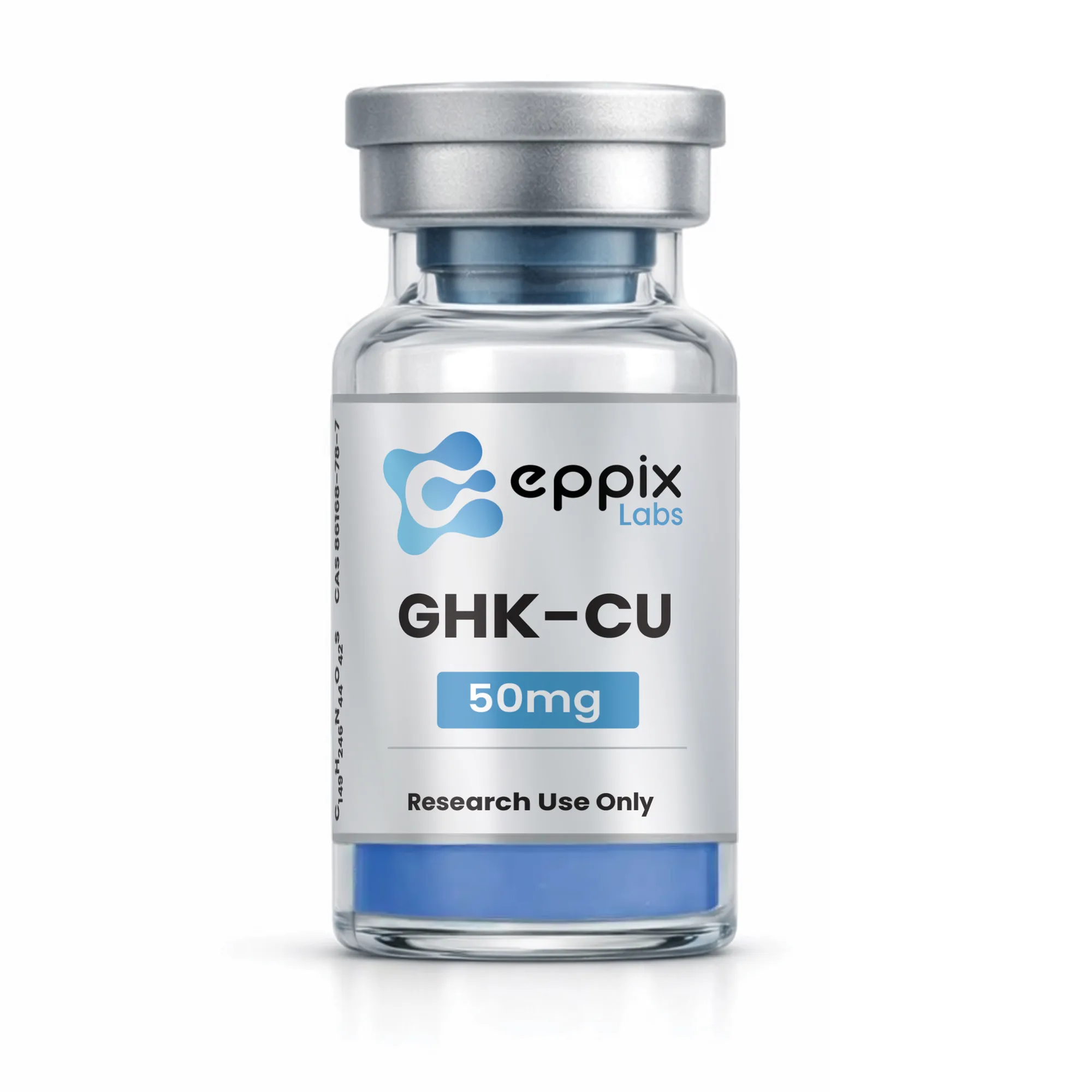
The visual tell is straightforward: correctly complexed GHK-Cu is a deep blue, and the intensity of that blue is a rough proxy for copper loading. Material that arrives pale, patchy or white has a copper problem regardless of what its purity certificate says about the peptide.
Research Material
General Image
GHK-Cu lyophilized research material as supplied by Eppix Labs. Labelled and measured content are stated on the certificate below.

Sequence and structure

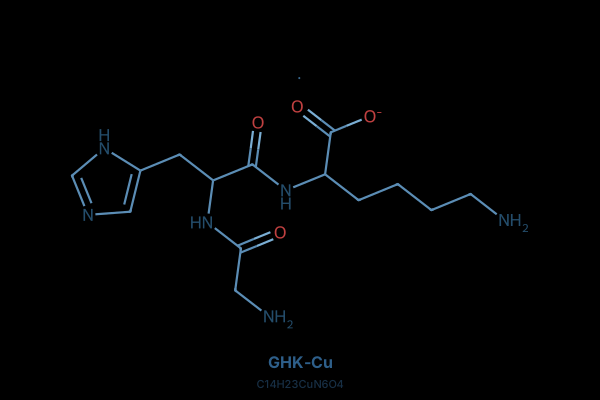
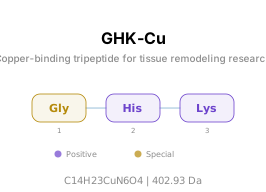
Three residues and one metal center. The peptide half is trivial to synthesize; the complexation step is where suppliers differ, and it is not visible in an HPLC purity figure for the peptide. This is the clearest example in the catalog of a compound where a 99% purity certificate can be entirely accurate and still tell you very little about what you are getting.

Amino Acid Sequence
Amino Acid Sequence diagram
Amino-acid sequence of GHK, Gly-His-Lys.
Chemical Structure
Chemical Structure diagram
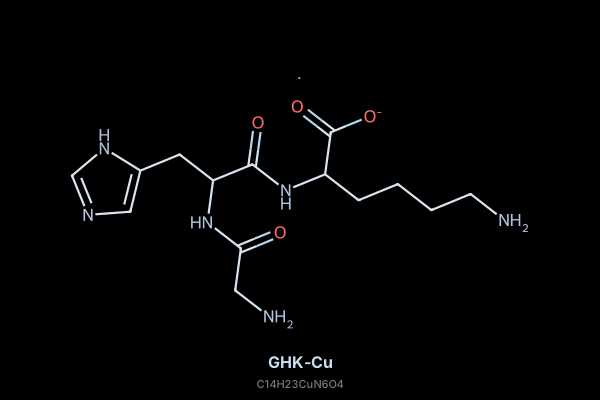
Chemical structure of the GHK-Cu tripeptide-copper(II) complex.

What the published research shows

The literature runs from the early 1970s to the present:

  • ·Discovery. Pickart and Thaler (1973) identified the tripeptide in human serum as a factor prolonging survival of normal liver cells in culture.[4]
  • ·Collagen synthesis. Maquart et al. (1988) reported stimulation of collagen synthesis in fibroblast culture by the tripeptide-copper complex, which remains the mechanistic anchor of the dermal literature.[3]
  • ·Gene expression. Pickart et al. (2015) reviewed the transcriptomic work, reporting effects on expression of large numbers of human genes across wound-repair, antioxidant and remodelling pathways.[2]
  • ·Breadth review. Pickart and Margolina (2018) summarize the regenerative and protective actions reported across skin, lung and wound models in the light of the gene-expression data.[1]

The limit of the evidence

GHK-Cu has a large in-vitro and topical-cosmetic literature and no randomized clinical evidence base for any medical indication. It has been used in cosmetic formulations for decades, which is a regulatory category with a far lower evidential bar than a medicine, and that history is frequently presented as if it were clinical validation. It is not.

A substantial fraction of the published corpus comes from one long-running research program, which is a reason to read the primary papers rather than the summaries. There is no established human dose and no approved medical indication in any jurisdiction.

Regulatory status in the United States

GHK-Cu is not approved by the FDA for human or veterinary use as a medicine. Copper peptides appear in cosmetic products under an entirely separate regulatory regime, and that regime does not extend to research material sold in vials. GHK-Cu was not among the six peptides considered by the US FDA advisory committee in July 2026. Eppix supplies it as a laboratory research material only.

Verifying a GHK-Cu lot

The standard three checks apply: MS identity against the expected mass, HPLC purity for the peptide, and measured content against the labeled amount. Add one more that is specific to this compound: ask what the number refers to. A certificate reporting content of the free GHK peptide and one reporting content of the GHK-Cu complex differ by the mass of the copper, and a supplier that has not made clear which it is quoting has left you unable to compare its vial against anyone else's.

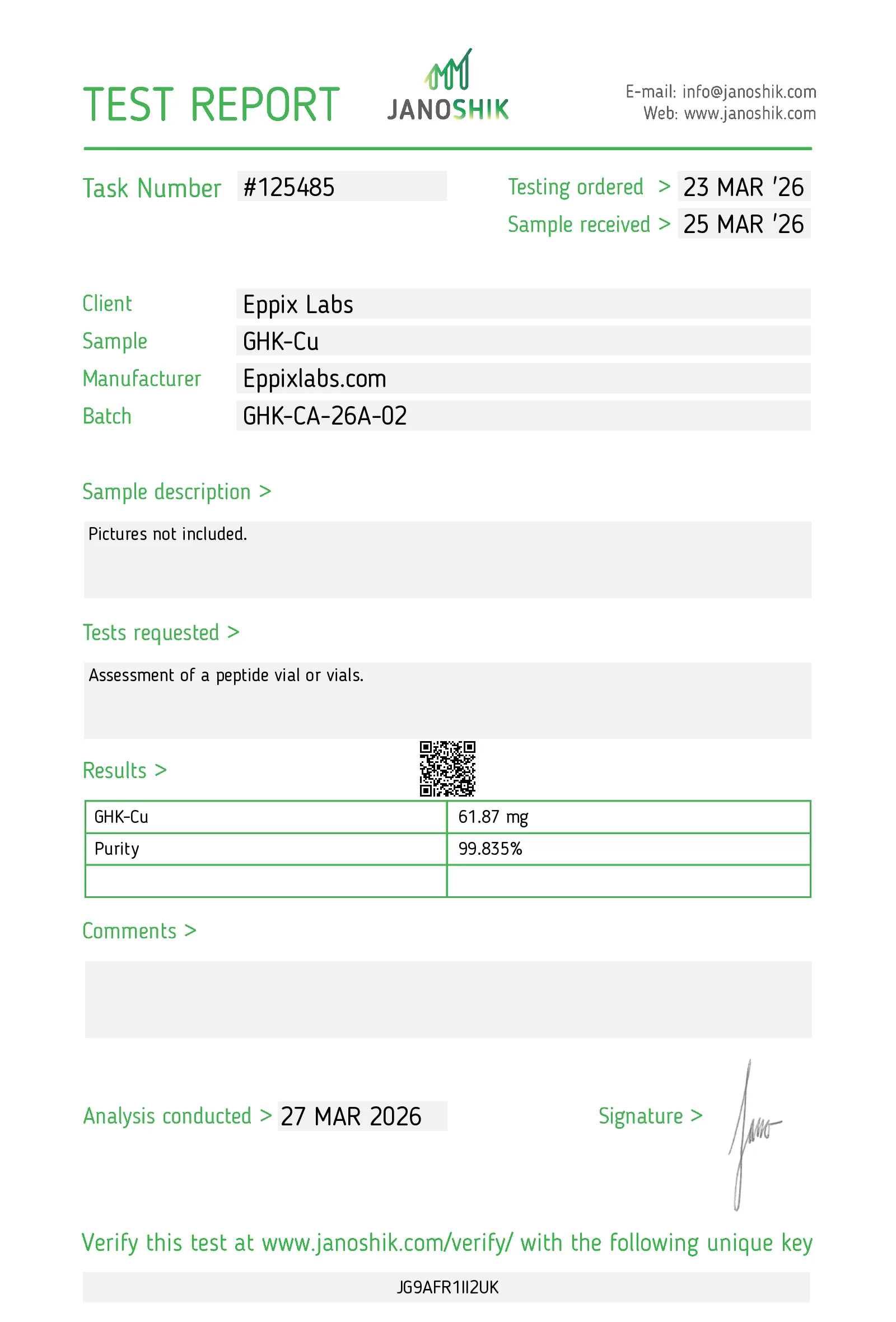
Every Eppix GHK-Cu lot is tested by Janoshik Analytical, published before sale and verifiable on the laboratory's own database. Multiple strengths are stocked; the buttons under the certificate switch between them.

Published Certificate
Certificate of analysis for GHK-Cu 50mg, batch GHK-CA-26A-02

Select strength

Batch
GHK-CA-26A-02
Purity (HPLC)
Not reported
Measured content
Not reported
Laboratory
Not reported
Published certificate for the current GHK-Cu lot, read live from the batch record.

Frequently Asked

What is the difference between GHK and GHK-Cu?

GHK is the free tripeptide. GHK-Cu is that peptide in a 1:1 complex with copper(II). Almost all of the studied biology is on the complex, and the two are not interchangeable. The complex is deep blue; the free peptide is not.

Is GHK-Cu legal in the US?

It may be sold and held as a laboratory research material. It is not approved by the FDA for human or veterinary use as a medicine. Copper peptides in cosmetic products sit under a separate regime that does not cover research vials. This is not legal advice.

Why does the colour of GHK-Cu matter?

Correctly complexed GHK-Cu is deep blue, from the copper(II) coordination. Pale, patchy or white material indicates incomplete complexation, which an HPLC purity figure for the peptide will not reveal.

Does a purity certificate confirm the copper content?

Not by itself. HPLC purity is a statement about the peptide. Copper stoichiometry is a separate question, and a buyer should at minimum establish whether a quoted content figure refers to the free peptide or to the complex.

Are there human clinical trials of GHK-Cu?

No randomized clinical evidence base for a medical indication. The literature is in-vitro, animal and topical-cosmetic. Decades of cosmetic use is a regulatory history, not a clinical one.

How is GHK-Cu stored?

Lyophilized: cool, dry, dark, at -20 °C for long-term storage. Reconstituted: refrigerated, protected from light, per your protocol. Copper complexes are more light-sensitive than plain peptides.

References

  1. Pickart, L., Margolina, A. (2018). Regenerative and protective actions of the GHK-Cu peptide in the light of the new gene data. Int J Mol Sci 19(7):1987. PMID 29986520
  2. Pickart, L., Vasquez-Soltero, J.M., Margolina, A. (2015). GHK peptide as a natural modulator of multiple cellular pathways in skin regeneration. Biomed Res Int 2015:648108. PMID 26236730
  3. Maquart, F.X. et al. (1988). Stimulation of collagen synthesis in fibroblast cultures by the tripeptide-copper complex glycyl-L-histidyl-L-lysine-Cu2+. FEBS Lett 238(2):343-346. PMID 3169264
  4. Pickart, L., Thaler, M.M. (1973). Tripeptide in human serum which prolongs survival of normal liver cells and stimulates growth in neoplastic liver. Nat New Biol 243(124):85-87. PMID 4349963

Research Use Only

This article summarizes published preclinical research literature. Compounds referenced are supplied by Eppix Labs strictly as research materials for laboratory investigation within the United States. They are not approved by the FDA for human or veterinary use, and nothing on this page should be interpreted as medical advice or guidance on human or animal administration.