

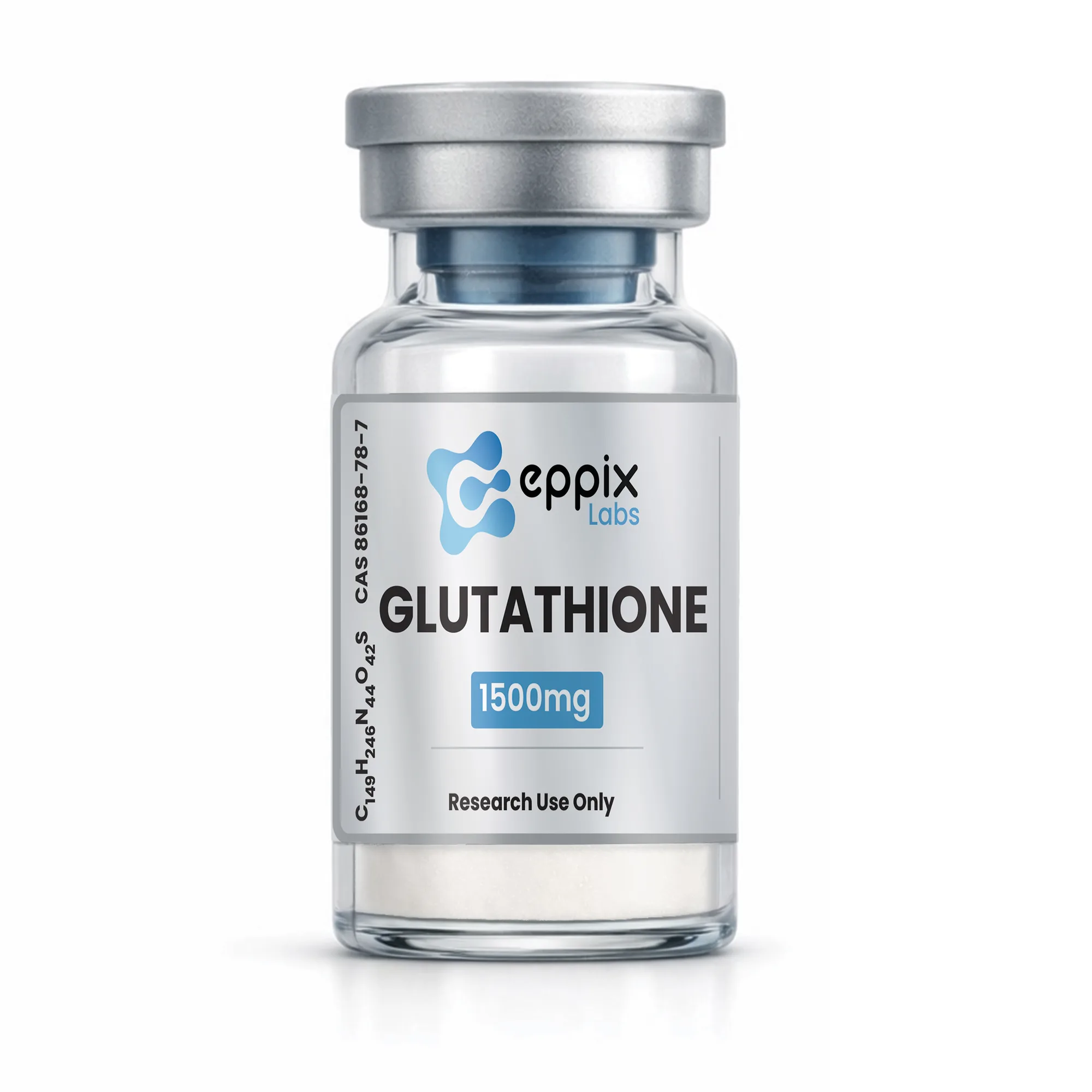


Glutathione 1500 mg
Glutathione USA — 1500 mg Lyophilized Vials
Endogenous Tripeptide Antioxidant
Also known as γ-L-glutamyl-L-cysteinylglycine (GSH)
Glutathione is an endogenous tripeptide (γ-Glu-Cys-Gly) studied in research as a principal cellular antioxidant and redox regulator.
Mix & Match
1 vial — no vial discount yet.
Add 2 more vials for 5% off.
After that, 10% at 5 vials, 20% at 10 vials.
This product is intended strictly for laboratory research use within the United States. It is not approved by the FDA for the diagnosis, treatment, cure, or prevention of any disease. Not for human or veterinary use.
By purchasing, you confirm the material will be used solely for lawful research purposes in accordance with applicable U.S. federal, state, and local regulations.
Glutathione is an endogenous tripeptide (γ-Glu-Cys-Gly) studied in research as a principal cellular antioxidant and redox regulator.
Experimental models examine its role in oxidative-stress defense and detoxification pathways under controlled laboratory conditions.
Third-party tested for purity, ID, quantity.
Coming Soon
The certificate of analysis for the 1500mg lot is being finalised and will be published here as soon as the lab returns it.
Glutathione is the most abundant intracellular thiol antioxidant, central to redox homeostasis, detoxification, and protection against oxidative stress. Research has examined its antioxidant activity, depletion under stress, and effects of supplementation in model systems.
Studies span hepatic, high-altitude/hypoxic, and inflammatory research frameworks under structured conditions.
Glutathione has been studied for over a century as a core component of cellular antioxidant defense.
Contemporary research continues to examine its metabolism, depletion, and supplementation across diverse stress models.
Research into glutathione focuses on redox homeostasis and oxidative-stress defense. Frameworks evaluate antioxidant capacity, detoxification, and supplementation endpoints under controlled in vitro and preclinical conditions.
2 of the 4 areas below are addressed directly by a paper cited on this page.
Cellular redox-homeostasis models
No paper cited on this page reports on cellular, redox or homeostasis. This heading marks where Glutathione is discussed in the category rather than a question the cited literature answers, and it is worth knowing which of these areas has work behind it and which does not.
Oxidative-stress defense research
Addressed on this page by Vats 2008. Each is linked to its source record in the references below, so what was measured — and in what system — can be read rather than taken on trust.
- Vats, P. et al. (2008) — Glutathione metabolism under high-altitude stress and effect of antioxidant supplementation
Detoxification-pathway studies
No paper cited on this page reports on detoxification. This heading marks where Glutathione is discussed in the category rather than a question the cited literature answers, and it is worth knowing which of these areas has work behind it and which does not.
Antioxidant supplementation frameworks
Addressed on this page by Liu 2020, Vats 2008, Hsiao 2024. Each is linked to its source record in the references below, so what was measured — and in what system — can be read rather than taken on trust.
- Liu, JD. et al. (2020) — Dietary glutathione supplementation enhances antioxidant activity and protects against lipopolysaccharide-induced acute hepatopancreatic injury and cell apoptosis in Chinese mitten crab, Eriocheir sinensis
- Vats, P. et al. (2008) — Glutathione metabolism under high-altitude stress and effect of antioxidant supplementation
- Hsiao, YF. et al. (2024) — Glutathione and Selenium Supplementation Attenuates Liver Injury in Diethylnitrosamine-Induced Hepatocarcinogenic Mice by Enhancing Glutathione-Related Antioxidant Capacities
The references section of this page cites 3 primary papers published between 2008 and 2024 — a thin record. Every citation is linked to its PubMed or DOI record so it can be read rather than taken on trust, and the summaries above describe what those papers report rather than what the compound is claimed to do.
Glutathione is frequently listed as a peptide by suppliers in this market. It is not one. The structure published on this page is the compound's actual chemistry, and research on it should be read against its own class rather than against peptide literature.
Research compounds attract claims that outrun their evidence. Below are the ones most often encountered for Glutathione, set against what the papers cited on this page actually report. Where the record is thin or contested, that is stated rather than smoothed over.
Glutathione is also referred to as GSH, and technically as γ-L-glutamyl-L-cysteinylglycine (GSH).
Glutathione is commonly described online in connection with reduced inflammation and relief from gut or skin conditions. In the research literature the same compound is filed under cellular redox-homeostasis models, oxidative-stress defense research and detoxification-pathway studies.
The 3 papers cited on this page, published between 2008 and 2024 (1 in animal models) describe laboratory and animal work. None reports a controlled trial in humans. Findings in cell culture or in a rodent model describe what happened in that system; they do not establish that the same occurs in humans, and this compound is not approved for human use.
Nothing above is a statement of what this material does. It is a summary of what has been published and what has not. Eppix Labs supplies research materials only and provides no dosing, administration or protocol guidance.
Every lot of Glutathione is independently assayed before it is released, and the certificate for the lot shipped is published rather than summarised. Where a certificate for a current lot is not yet posted, the lot has not yet been released against it.
Researchers who buy Glutathione in the United States through Eppix Labs receive a batch-labelled vial whose certificate is published against that lot code, so the material can be matched to its analysis rather than to a generic specification.
- Lyophilized storage
- −20 °C long-term; stable at room temperature in transit
- After reconstitution
- 2–8 °C
- Light
- Protect from UV and direct light
- Freeze-thaw
- Avoid repeated cycles
- Vehicle
- Solvent selection depends on the compound; consult the published literature
- Format
- Lyophilized powder
Glutathione is supplied as lyophilized powder. It is not a peptide, and solvent behaviour follows from its own chemistry rather than from the aqueous-vehicle conventions that apply to peptide material — the published literature for this compound is the reference for solvent selection, not a general peptide protocol.
Dry storage below freezing and protection from light are the general controls. As with any lyophilized material, the powder frequently sits as a thin film at the base of the vial and is easy to mistake for an empty vial before inspection.
Vials may appear empty on arrival. Lyophilized material collects at the base of the vial and is often not visible until the vial is inspected under direct light.
- 1 × sealed glass vial in the strength selected (1500mg / Single Vial, 1500mg / 5-Pack, 1500mg / 10-Pack available), batch-labelled
- Batch documentation for the lot shipped, once its certificate is published
- Discreet outer packaging with no product names on the exterior
- FedEx, tracked, typically 1–3 business days domestically
- Bacteriostatic water or any other reconstitution vehicle
- Syringes, needles or filters
- Dosing, administration or protocol guidance of any kind
Reconstitution materials are sourced separately. The reconstitution calculator on this site works out concentrations for a given volume, but it is an arithmetic tool for laboratory record-keeping and not a protocol.
No. Eppix Labs products are supplied exclusively for laboratory research. We do not provide dosing, administration, or usage guidance.
Each unit contains the labeled quantity of glutathione. Independent third-party analysis verifies purity, identity, and net content per batch.
The unit contains only the research compound. Any laboratory materials required for reconstitution or experimental procedures must be sourced separately.
Duration depends entirely on research design, storage conditions, and laboratory protocol.
Dietary glutathione supplementation enhances antioxidant activity and protects against lipopolysaccharide-induced acute hepatopancreatic injury and cell apoptosis in Chinese mitten crab, Eriocheir sinensis
PubMedGlutathione metabolism under high-altitude stress and effect of antioxidant supplementation
PubMedGlutathione and Selenium Supplementation Attenuates Liver Injury in Diethylnitrosamine-Induced Hepatocarcinogenic Mice by Enhancing Glutathione-Related Antioxidant Capacities
PubMedRelated
You May Also Like
Cartilage-Derived Peptide Research Compound Cartalax is a synthetic peptide complex derived from cartilage-associated protein fractions and is developed for controlled laboratory research involving connective tissue signaling systems.
From$49.99
p53-Penetratin Chimeric Peptide PNC-27 is a 32-residue chimeric peptide joining a p53-derived segment to the penetratin cell-penetrating domain, studied in oncology research for selective membrane interaction.
From$189.00
Senolytic Research Peptide FOXO4-DRI is a 46-residue D-retro-inverso peptide studied in research as a senolytic agent that targets the interaction between FOXO4 and p53.
From$149.99
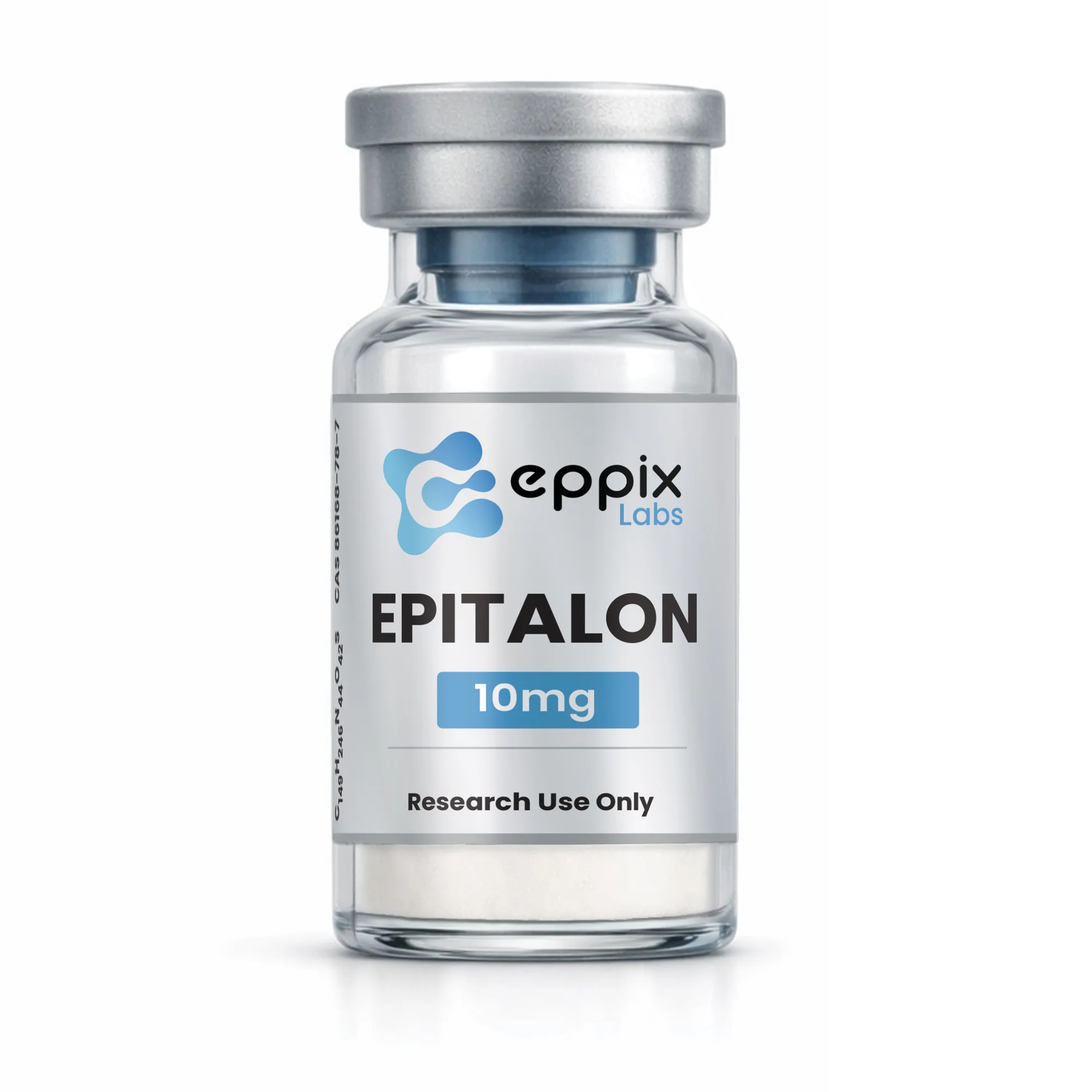
Synthetic Tetrapeptide Research Compound Epitalon, also known in scientific literature as Epithalon, is a synthetic tetrapeptide composed of alanine–glutamic acid–aspartic acid–glycine (Ala-Glu-Asp-Gly). It is developed for controlled laboratory research involving peptide-mediated regulatory systems.
From$29.99