FedEx Delivery1–3 day delivery across the U.S.Free on orders over $200

Sourcing Guide

Thymosin Alpha-1 in the US: The Immune Peptide With Real Approvals Elsewhere

Approved in dozens of countries, never approved in North America, and sold here as a research material

·Compiled by Eppix Labs

Thymosin alpha-1 is the compound in this catalog with the strongest regulatory footprint outside North America. Marketed as thymalfasin, it holds approvals in dozens of countries for hepatitis B and C and as an immune adjuvant, and it has a substantial peer-reviewed literature to go with them. It has never been approved in the United States.

That combination, real approvals elsewhere and none here, produces a specific kind of confusion in the research market. This guide separates what is established from what does not transfer. Thymosin alpha-1 is supplied for laboratory research use only.

Chemical Identity

Name
Thymosin alpha-1 (Tα1)
Also known as
Thymosin α1, Tα1, Thymalfasin, Zadaxin (approved product elsewhere)
Molecular formula
C₁₂₉H₂₁₅N₃₃O₅₅
Molecular weight
3108.3 g/mol
CAS number
62304-98-7
Salt forms
Acetate

What thymosin alpha-1 is

Thymosin alpha-1 is a 28-residue, N-terminally acetylated peptide originally isolated from thymosin fraction 5, a thymic tissue extract. It is the cleaved product of prothymosin alpha, and it is one of the better-characterized endogenous immunomodulatory peptides.

Mechanistically the published work centres on toll-like receptor signaling, particularly TLR9 and TLR2 on dendritic cells, and on the resulting effects on T-cell maturation and differentiation. Romani et al. (2006) reported activation of dendritic-cell tryptophan catabolism, establishing a regulatory environment balancing inflammation and tolerance, which remains the most-cited mechanistic result.[2]
Research Material
General Image
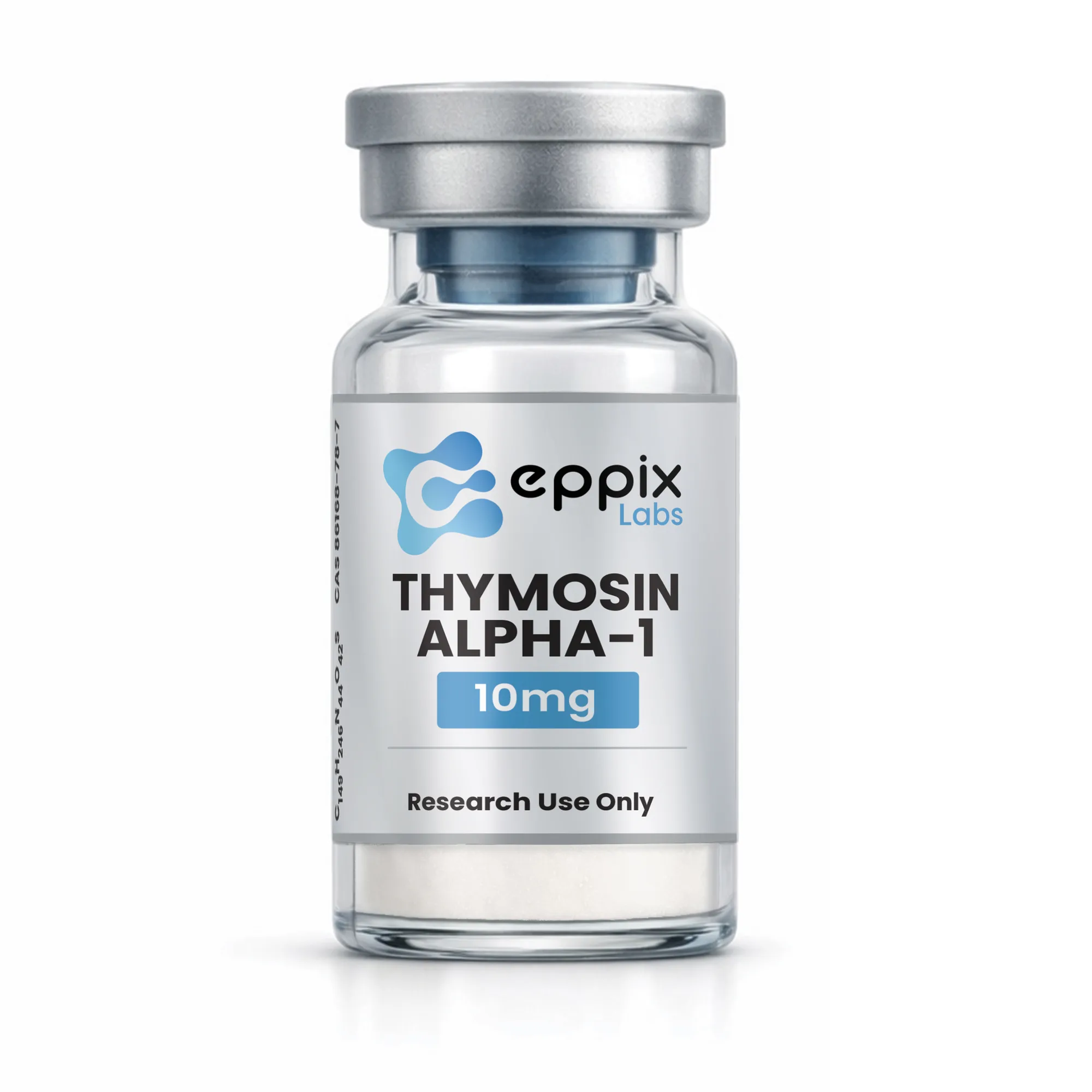
Thymosin alpha-1 lyophilized research material as supplied by Eppix Labs. Labelled and measured content are stated on the certificate below.

Sequence and structure

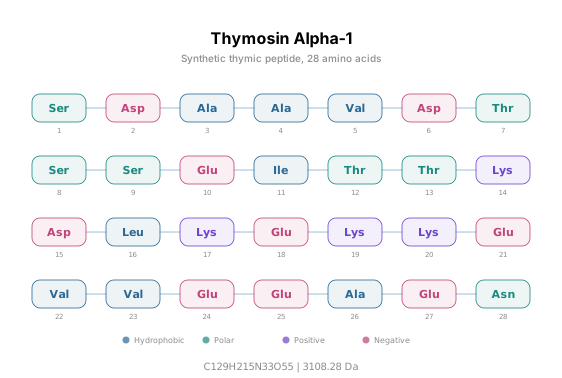
Twenty-eight residues, around 3108 Da, N-terminally acetylated. The acetylation is required for activity and is a genuine quality attribute: unacetylated material differs by 42 Da and is a different compound in functional terms. A mass-spectrometry identity line resolves it; a purity percentage does not.

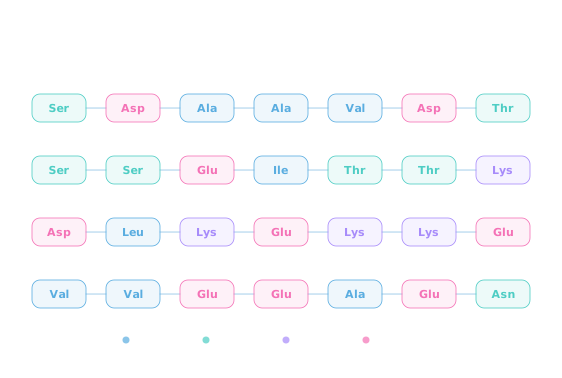
Amino Acid Sequence
Amino Acid Sequence diagram
Amino-acid sequence of thymosin alpha-1.
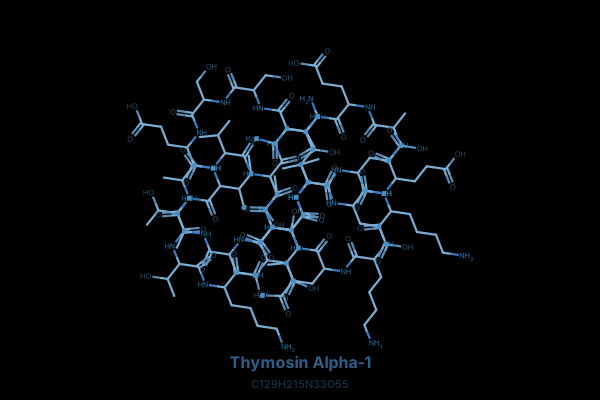
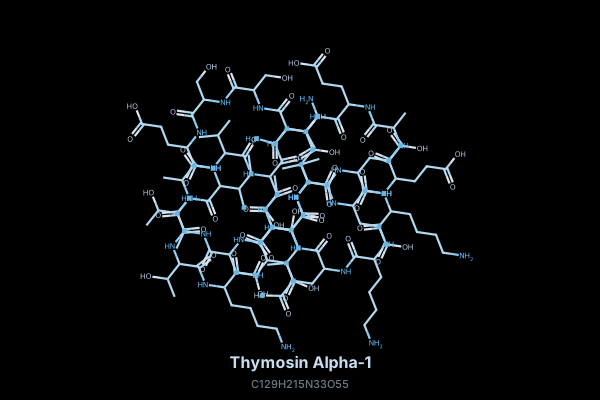
Chemical Structure
Chemical Structure diagram
Chemical structure of thymosin alpha-1.

What the published research shows

Unusually for this catalog, there is both mechanistic and clinical literature:

  • ·Mechanism. Romani et al., Blood 2006: activation of dendritic-cell tryptophan catabolism through indoleamine 2,3-dioxygenase, establishing a tolerogenic regulatory environment.[2]
  • ·Clinical breadth. Garaci et al. (2007) review the compound from laboratory characterization through its clinical applications, principally in chronic hepatitis and as a vaccine adjuvant.[1] Goldstein and Goldstein (2009) cover the emerging clinical applications and the regulatory position across markets.[4]
  • ·Severe viral infection. Liu et al., Clinical Infectious Diseases 2020: a retrospective study in severe COVID-19 reporting reduced mortality associated with thymosin alpha-1 treatment, with restoration of lymphocyte counts and reversal of T-cell exhaustion markers.[3] Retrospective design, and it should be read as such.

The limit of the evidence

Thymosin alpha-1 is approved in a number of countries as thymalfasin. It has never received marketing authorization in the US or the United States, and approval in another jurisdiction confers no status here. A research-grade vial is not the approved product regardless of where that product is licensed.

The clinical literature is uneven in quality. Some of it is randomized and some, including the widely cited COVID-19 work, is retrospective and subject to the confounding that design invites. the FDA has authorized nothing containing thymosin alpha-1, and Eppix supplies it as a research material only.

Verifying a thymosin alpha-1 lot

Identity by mass spectrometry against the expected mass near 3108 Da, HPLC purity, and measured content against the labeled amount. The specific check for this compound is the N-terminal acetylation: confirm the identity report is consistent with the acetylated species rather than 42 Da lighter.

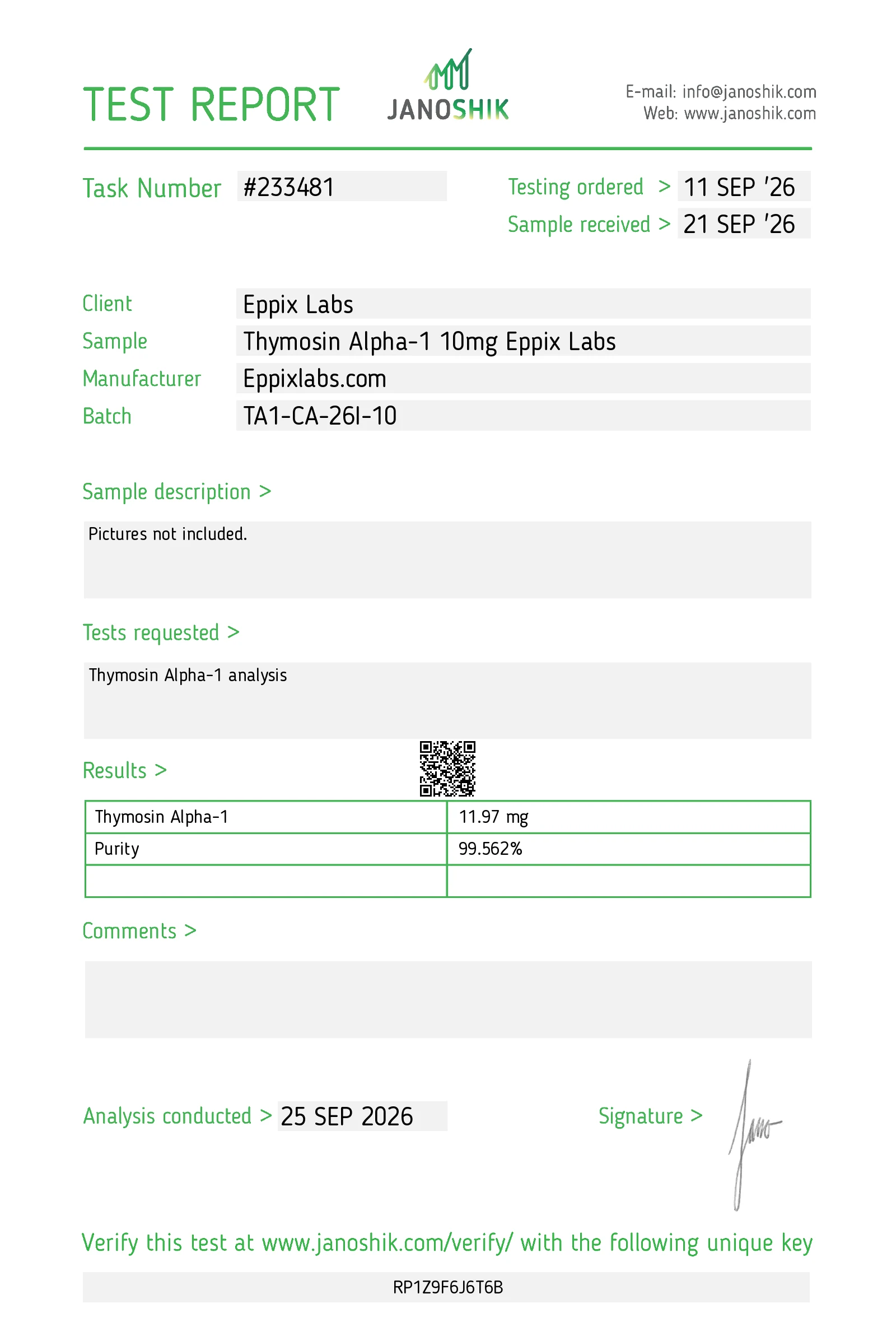
Every Eppix thymosin alpha-1 lot is tested by Janoshik Analytical, published before sale and verifiable on the laboratory's own database.

Published Certificate
Certificate of analysis for Thymosin Alpha-1 10mg, batch TA1-CA-26A-01, 99.699% purity, 11.64 mg measured content
Batch
TA1-CA-26A-01
Purity (HPLC)
99.699%
Measured content
11.64 mglabeled 10 mg
Laboratory
Janoshik
Published certificate for the current thymosin alpha-1 lot, read live from the batch record.

Frequently Asked

Is thymosin alpha-1 approved in the US?

No. It is approved in a number of other countries as thymalfasin, principally for chronic hepatitis B and C and as an immune adjuvant. It has never been approved in the United States, and approval elsewhere confers no status here.

Is thymosin alpha-1 related to TB-500?

Only by naming. Thymosin alpha-1 and thymosin beta-4 both come from thymosin fraction 5, a thymic extract, but they are unrelated molecules with different sequences and different biology. TB-500 is a fragment of thymosin beta-4.

Is thymosin alpha-1 legal in the US?

It may be sold and held as a laboratory research material. It is not approved by the FDA for human or veterinary use. This is not legal advice.

What is the quality attribute specific to this peptide?

N-terminal acetylation, which is required for activity. Unacetylated material differs by 42 Da and is functionally a different compound. An MS identity line catches it; a purity percentage does not.

How strong is the COVID-19 evidence?

The most-cited study is retrospective, not randomized, and should be read with the confounding that design invites. It is one part of a mixed clinical literature rather than a settled result.

How is thymosin alpha-1 stored?

Lyophilized: cool, dry, dark, at -20 °C for long-term storage. Reconstituted: refrigerated, used within the window your protocol defines.

References

  1. Garaci, E. et al. (2007). Thymosin alpha 1: from bench to bedside. Ann N Y Acad Sci 1112:225-234. PMID 17600290
  2. Romani, L. et al. (2006). Thymosin alpha1 activates dendritic cell tryptophan catabolism and establishes a regulatory environment for balance of inflammation and tolerance. Blood 108(7):2265-2274. PMID 16741252
  3. Liu, Y. et al. (2020). Thymosin alpha 1 reduces the mortality of severe coronavirus disease 2019 by restoration of lymphocytopenia and reversion of exhausted T cells. Clin Infect Dis 71(16):2150-2157. PMID 32442287
  4. Goldstein, A.L., Goldstein, A.L. (2009). From lab to bedside: emerging clinical applications of thymosin alpha 1. Expert Opin Biol Ther 9(5):593-608. PMID 19392576

Research Use Only

This article summarizes published preclinical research literature. Compounds referenced are supplied by Eppix Labs strictly as research materials for laboratory investigation within the United States. They are not approved by the FDA for human or veterinary use, and nothing on this page should be interpreted as medical advice or guidance on human or animal administration.