

Selank10mg
- Batch
- SLNK-CA-26F-10
- Tested by
- Janoshik
- Tested on
- 2026-07-13
- Added
- 2026-08-04
Selank 10 mg
Selank USA — 10 mg Lyophilized Vials
Synthetic Heptapeptide Research Compound
Selank is a synthetic peptide studied in laboratory settings for its interaction with neuroregulatory pathways involved in stress and cognitive signaling. Research often focuses on its influence on neurotransmitter systems, receptor activity, and overall modulation of central nervous system communication in controlled experimental models.
Mix & Match
1 vial — no vial discount yet.
Add 2 more vials for 5% off.
After that, 10% at 5 vials, 20% at 10 vials.
This product is intended strictly for laboratory research use within the United States. It is not approved by the FDA for the diagnosis, treatment, cure, or prevention of any disease. Not for human or veterinary use.
By purchasing, you confirm the material will be used solely for lawful research purposes in accordance with applicable U.S. federal, state, and local regulations.
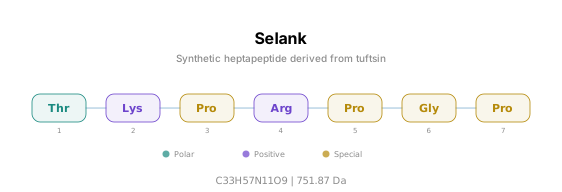
Selank is a synthetic heptapeptide derived from the endogenous tetrapeptide tuftsin with structural modifications for enhanced stability in experimental systems. It is developed for controlled laboratory research involving neuropeptide signaling pathways.
In scientific literature, Selank is studied in models examining neurotransmitter-associated signaling frameworks, receptor-mediated regulatory systems, and central nervous system pathway interaction under in vitro and preclinical research conditions.
Third-party tested for purity, identity, quantity.
Selank is a modified peptide analogue evaluated in research focused on neuropeptide signaling and central regulatory pathway interaction. Experimental studies examine its interaction within neurotransmitter-associated frameworks and receptor-mediated signaling systems under controlled laboratory conditions.
Research publications have explored its signaling profile and pathway-level regulatory characteristics within structured experimental environments.
Selank was developed through investigations into synthetic analogues of tuftsin designed to enhance stability and signaling properties. Research expanded into neuropeptide interaction models and central signaling system frameworks within laboratory environments.
Subsequent studies documented its regulatory pathway interaction and peptide signaling behavior in experimental research systems.
Laboratory investigations into Selank have focused on neuropeptide signaling models and receptor-mediated pathway interaction systems. Research frameworks evaluate peptide stability, central regulatory dynamics, and neurotransmitter-associated signaling mechanisms under controlled in vitro and preclinical conditions.
1 of the 4 areas below are addressed directly by a paper cited on this page.
Neuropeptide signaling pathway models
No paper cited on this page reports on neuropeptide. This heading marks where Selank is discussed in the category rather than a question the cited literature answers, and it is worth knowing which of these areas has work behind it and which does not.
Tuftsin-derived peptide research frameworks
Addressed on this page by Konstantinopolsky 2022, Kolik 2019, Vanhee 2020. The work appeared in Drug Test Anal. Each is linked to its source record in the references below, so what was measured — and in what system — can be read rather than taken on trust.
- Konstantinopolsky, M.A. et al. (2022) — Selank, a Peptide Analog of Tuftsin, Attenuates Aversive Signs of Morphine Withdrawal in Rats.
- Kolik, L.G. et al. (2019) — Selank, Peptide Analogue of Tuftsin, Protects Against Ethanol-Induced Memory Impairment by Regulating BDNF Content in the Hippocampus and Prefrontal Cortex in Rats.
- Vanhee, C. et al. (2020) — The occurrence of putative cognitive enhancing research peptides in seized pharmaceutical preparations: An incentive for controlling agencies to prepare for future encounters of the third kind. Drug Test Anal 12(1):63–73.
Central nervous system pathway investigations
No paper cited on this page reports on central or nervous. This heading marks where Selank is discussed in the category rather than a question the cited literature answers, and it is worth knowing which of these areas has work behind it and which does not.
Receptor-mediated regulatory mechanism studies
No paper cited on this page reports on receptor or mediated. This heading marks where Selank is discussed in the category rather than a question the cited literature answers, and it is worth knowing which of these areas has work behind it and which does not.
The references section of this page cites 4 primary papers published between 2019 and 2022 — a limited but non-trivial record. Every citation is linked to its PubMed or DOI record so it can be read rather than taken on trust, and the summaries above describe what those papers report rather than what the compound is claimed to do.
Research compounds attract claims that outrun their evidence. Below are the ones most often encountered for Selank, set against what the papers cited on this page actually report. Where the record is thin or contested, that is stated rather than smoothed over.
Selank is also referred to as selank.
Selank is commonly described online in connection with sharper focus, better memory and improved mood. In the research literature the same compound is filed under neuropeptide signaling pathway models, tuftsin-derived peptide research frameworks and central nervous system pathway investigations.
The 4 papers cited on this page, published between 2019 and 2022 (2 in animal models) describe laboratory and animal work. None reports a controlled trial in humans. Findings in cell culture or in a rodent model describe what happened in that system; they do not establish that the same occurs in humans, and this compound is not approved for human use.
Nothing above is a statement of what this material does. It is a summary of what has been published and what has not. Eppix Labs supplies research materials only and provides no dosing, administration or protocol guidance.
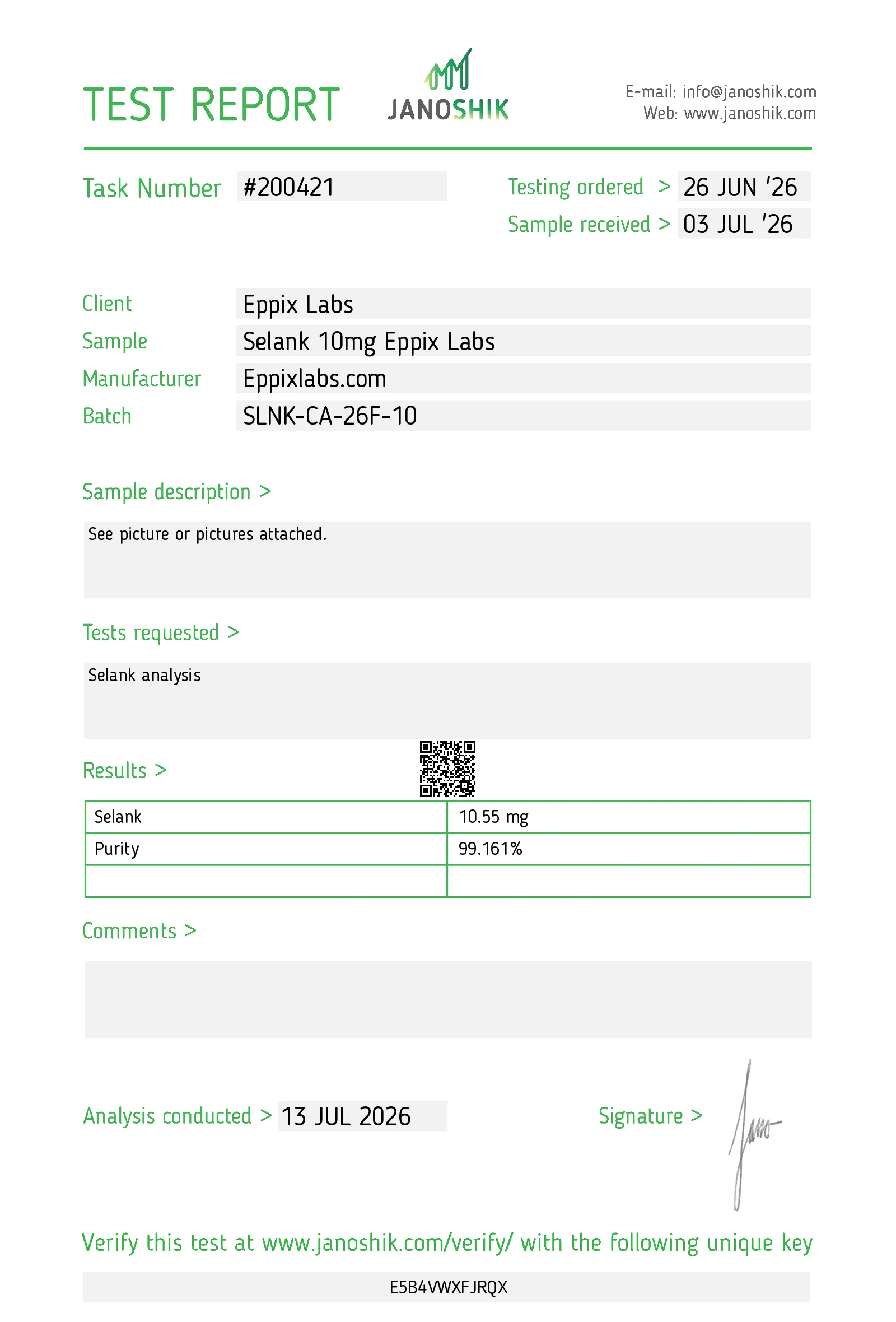
Verification for Selank is per lot, not per product. The current 10mg lot SLNK-CA-26F-10 returned 99.161% purity, 10.55 mg measured, 105.5% of the labelled 10 mg, assayed by Janoshik. Those figures are the laboratory's, published in full rather than reduced to a badge.
Purity is half the number. It states what fraction of the material in the vial is Selank; it says nothing about how much material is in the vial, and a short-filled vial can return a purity result that is entirely accurate. The figure that answers the second question is measured mass against expected content — for Selank, this lot measured 105.5% of its labelled 10 mg. Both numbers are published for every lot, whichever way they fall.
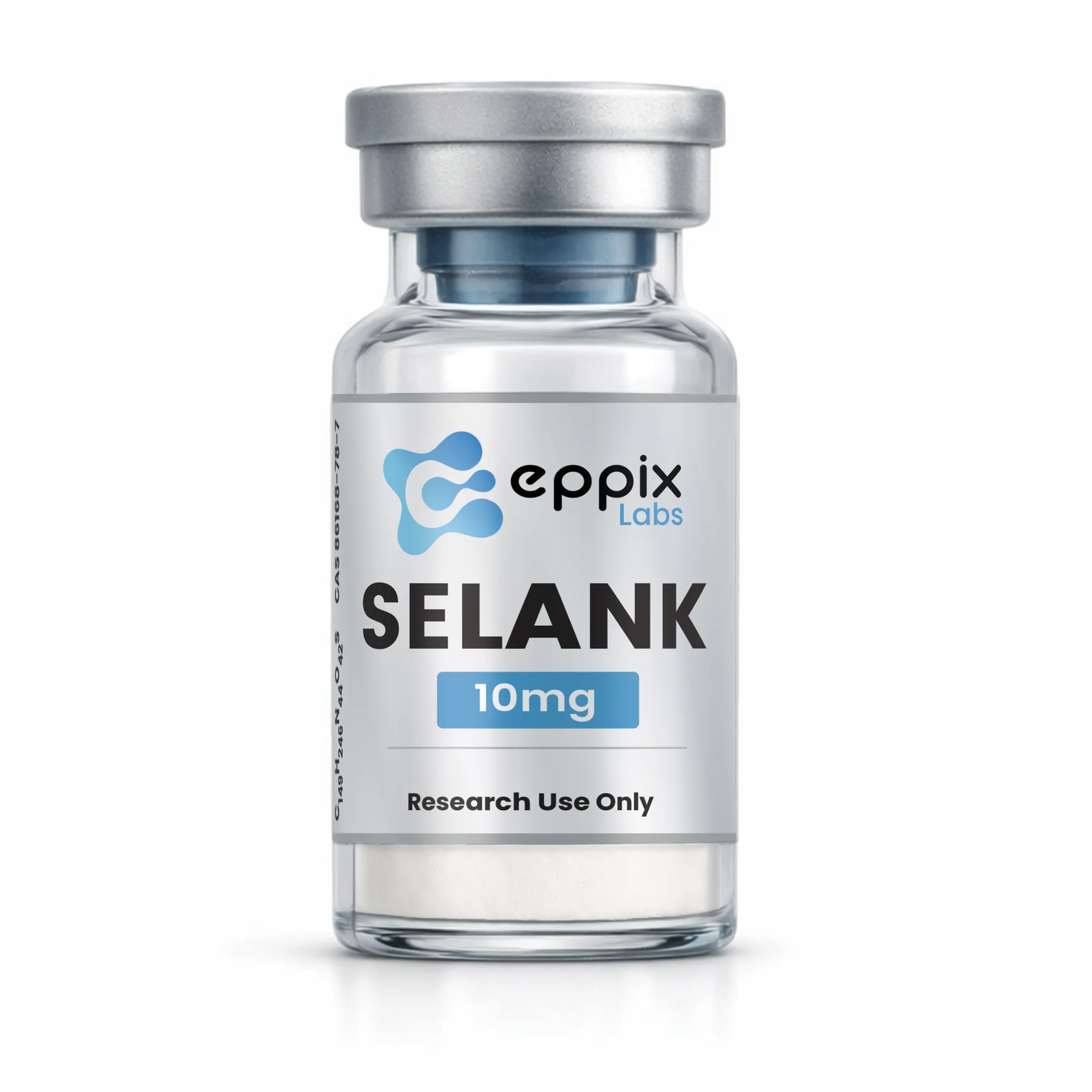
The lot code printed on the vial matches the code on the certificate for Selank. Matching the two is what confirms the unit in hand came from the batch that was tested — a certificate not tied to a lot code proves nothing about any particular unit.
Researchers who buy Selank in the United States through Eppix Labs receive the lot described by the certificate above: the code printed on the vial label is the code on the certificate, and both are searchable on the batch verification page.
- Lyophilized storage
- −20 °C long-term; stable at room temperature in transit
- After reconstitution
- 2–8 °C
- Light
- Protect from UV and direct light
- Freeze-thaw
- Avoid repeated cycles
- Vehicle
- Bacteriostatic water in most published protocols
- Format
- Lyophilized powder
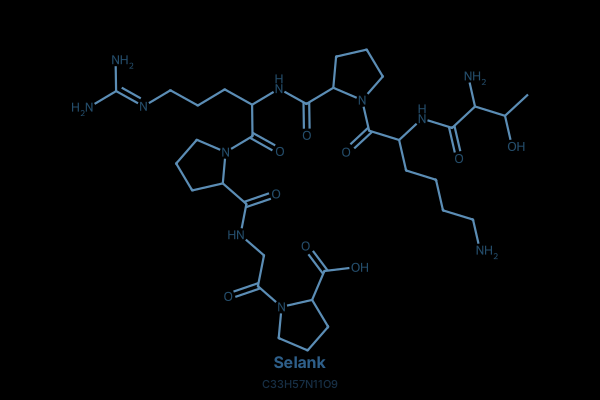
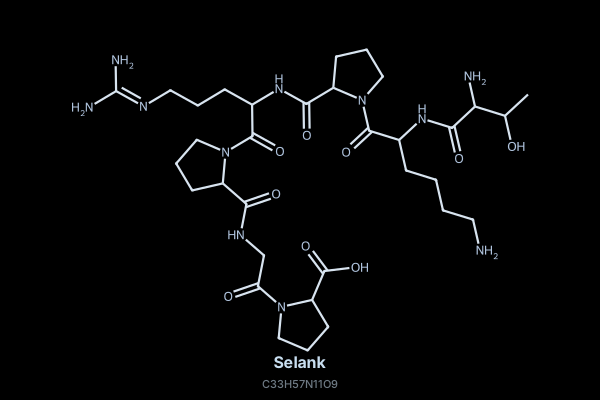
Selank is supplied as lyophilized powder. In the dry state the material is comparatively stable, which is why it ships at ambient temperature without a cold chain; once reconstituted it is a peptide in solution and the handling constraints tighten considerably. At 7 residues it is short enough to be produced by solid-phase synthesis, and the published sequence on this page is what an identity assay is checked against.
Repeated freeze-thaw cycling is the handling error most likely to degrade material of this class, because each cycle concentrates solutes at the ice boundary. Where a protocol calls for the same vial across multiple sessions, the published literature generally describes aliquoting after reconstitution rather than re-freezing the whole volume.
Vials may appear empty on arrival. Lyophilized material collects at the base of the vial and is often not visible until the vial is inspected under direct light.
- 1 × sealed glass vial in the strength selected (10mg / Single Vial, 10mg / 5-Pack, 10mg / 10-Pack available), batch-labelled
- The batch-linked Certificate of Analysis for the exact lot shipped
- Discreet outer packaging with no product names on the exterior
- FedEx, tracked, typically 1–3 business days domestically
- Bacteriostatic water or any other reconstitution vehicle
- Syringes, needles or filters
- Dosing, administration or protocol guidance of any kind
Reconstitution materials are sourced separately. The reconstitution calculator on this site works out concentrations for a given volume, but it is an arithmetic tool for laboratory record-keeping and not a protocol.
No. Eppix Labs products are supplied exclusively for laboratory research. We do not provide dosing, administration, or usage guidance.
Each vial contains 10mg of lyophilized Selank. Independent third-party testing verifies purity, identity, and net content per batch.
The vial contains only the peptide preparation. Any laboratory materials required for experimental procedures must be sourced separately.
Duration depends entirely on research protocol, storage conditions, and laboratory application.
Selank, a Peptide Analog of Tuftsin, Attenuates Aversive Signs of Morphine Withdrawal in Rats.
PubMedThe Influence of Selank on the Level of Cytokines Under the Conditions of "Social" Stress. Curr Rev Clin Exp Pharmacol 16(2):169–173.
PubMedSelank, Peptide Analogue of Tuftsin, Protects Against Ethanol-Induced Memory Impairment by Regulating BDNF Content in the Hippocampus and Prefrontal Cortex in Rats.
PubMedThe occurrence of putative cognitive enhancing research peptides in seized pharmaceutical preparations: An incentive for controlling agencies to prepare for future encounters of the third kind. Drug Test Anal 12(1):63–73.
PubMedRelated
You May Also Like
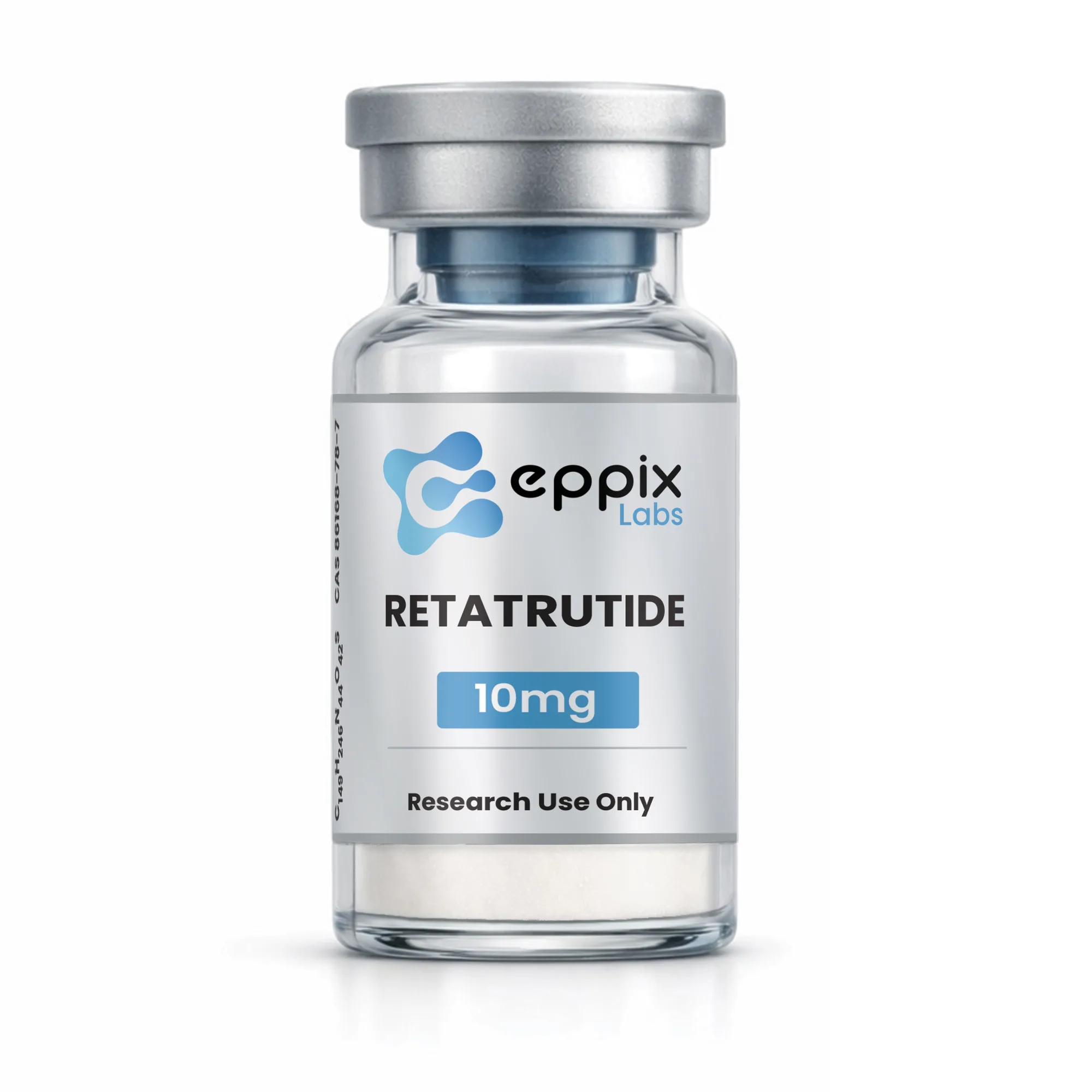
Triple Receptor Agonist Retatrutide is a synthetic peptide developed for controlled laboratory research involving multi-receptor signaling systems. It is structurally designed to interact with GLP-1, GIP, and glucagon receptor pathways within experimental environments.
From$79.99
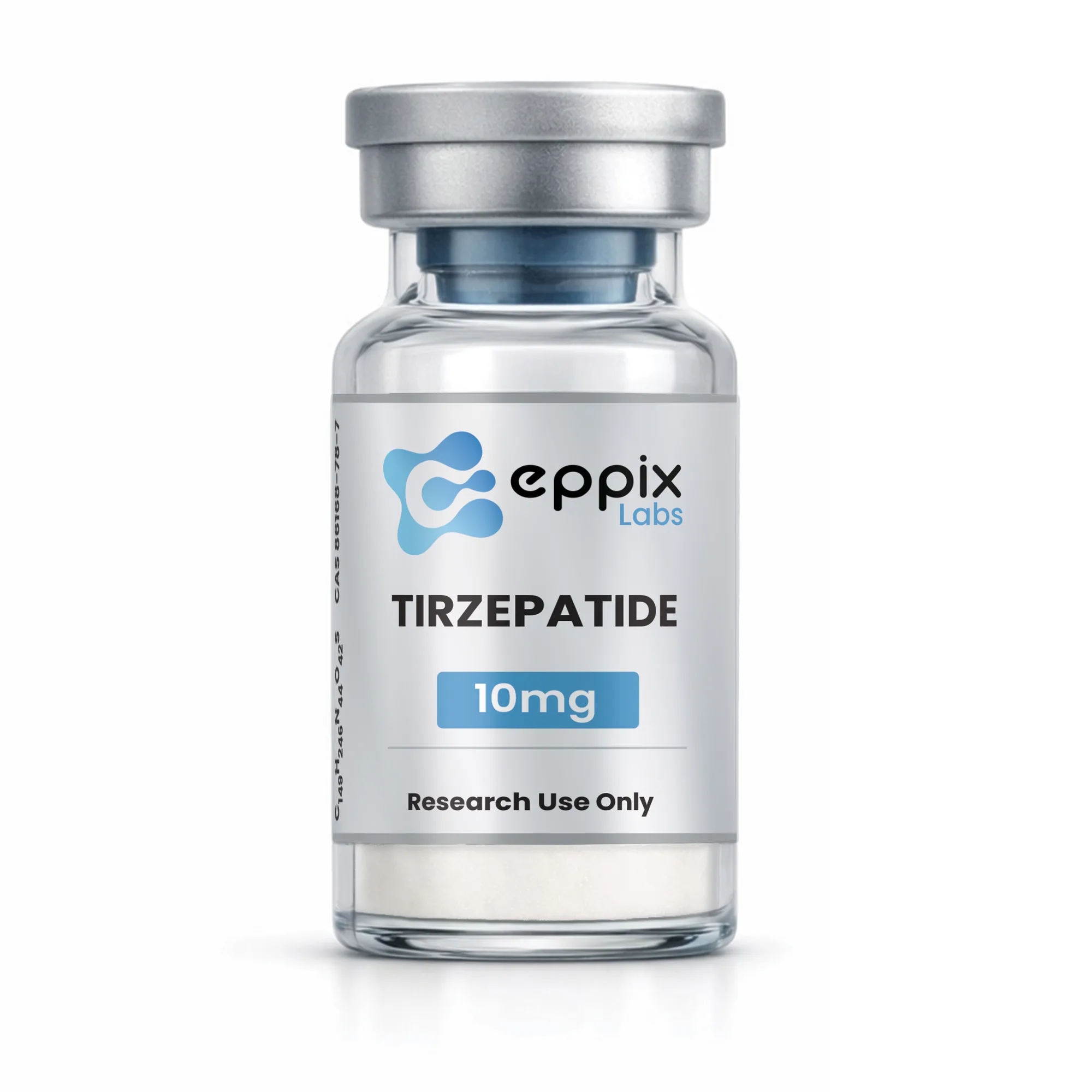
Dual GLP-1 / GIP Research Peptide Tirzepatide is a synthetic peptide developed for controlled laboratory research involving dual incretin receptor signaling systems. It is structurally designed to interact with GLP-1 and GIP receptor pathways within experimental environments.
From$39.99
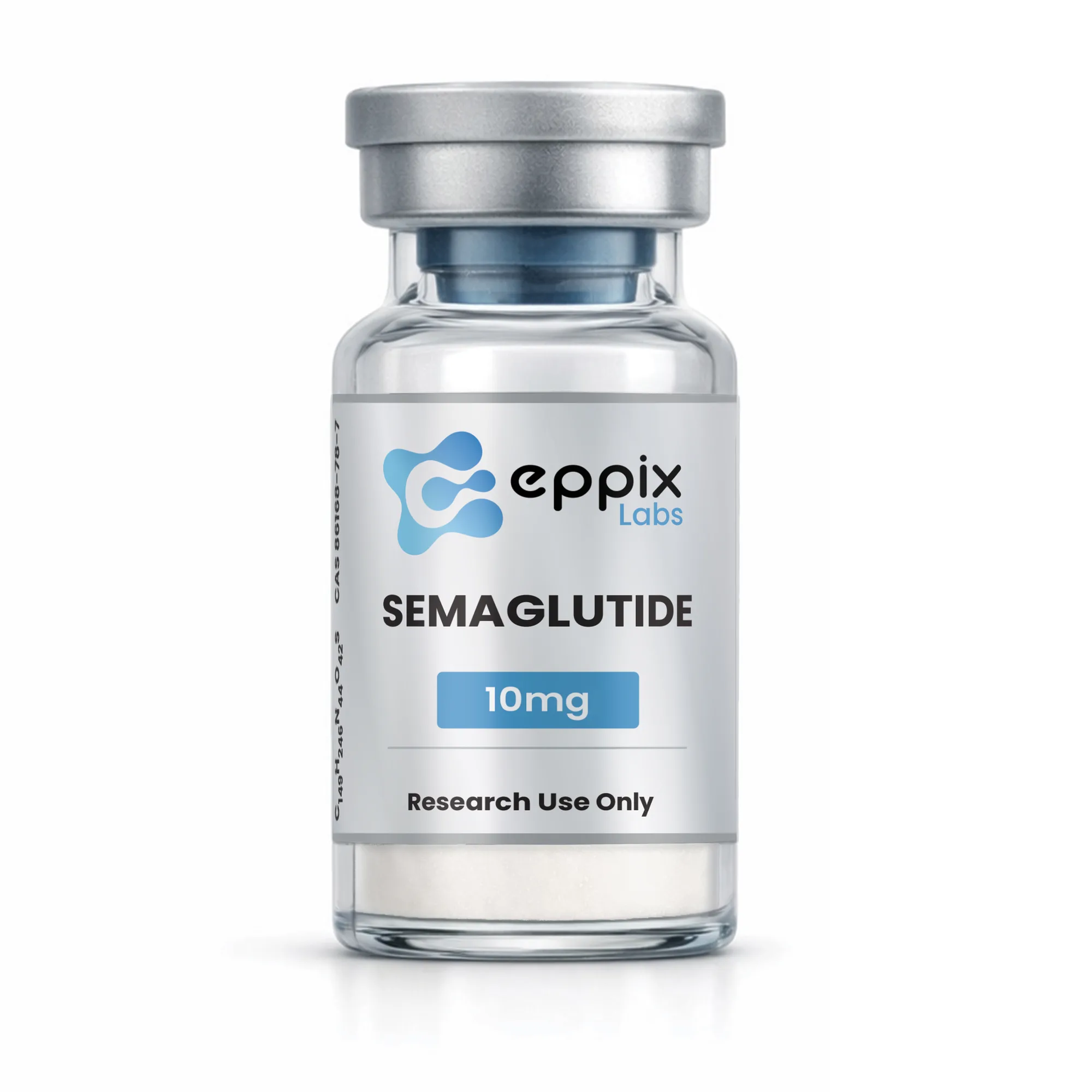
GLP-1 Receptor Agonist Research Peptide Semaglutide is a synthetic analogue of glucagon-like peptide-1 (GLP-1), a naturally occurring incretin hormone involved in glucose-dependent signaling. It is developed for controlled laboratory investigation within regulated experimental environments.
From$59.99
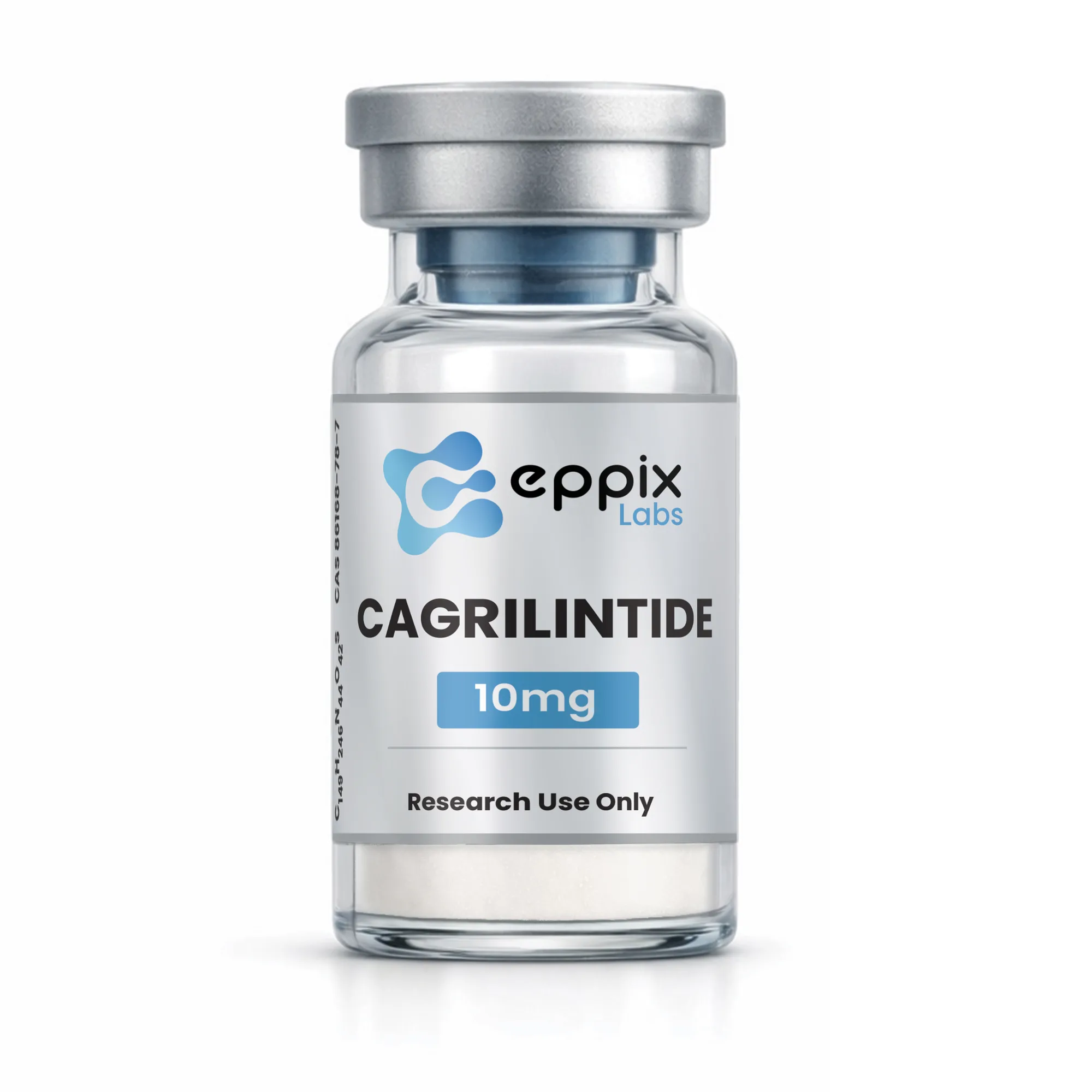
Amylin Receptor Research Peptide Cagrilintide is a synthetic peptide developed for controlled laboratory research involving amylin receptor signaling systems. It is structurally designed to interact with amylin-associated pathways within experimental environments.
From$99.99