

KPV Capsules
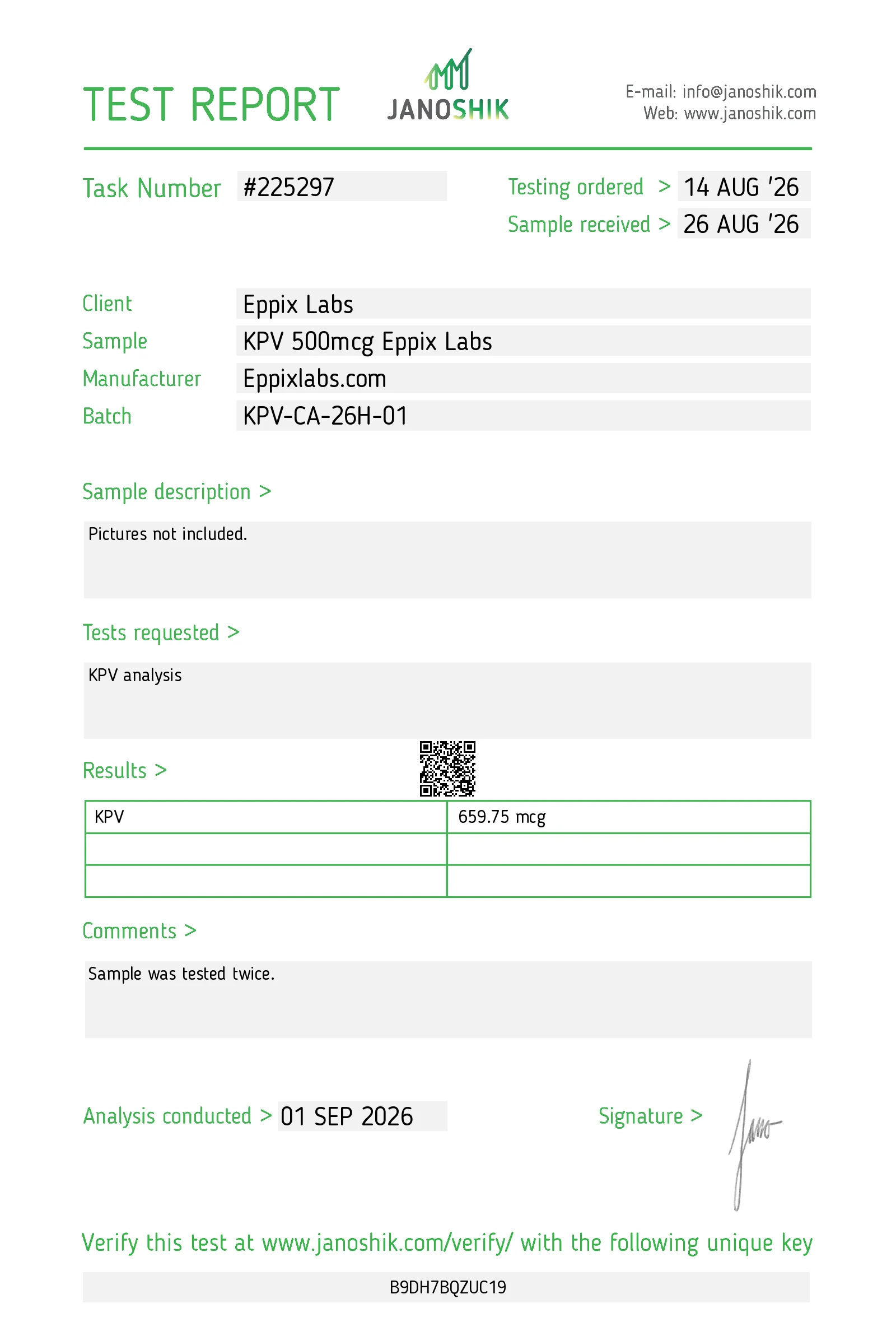
- Batch
- KPV-CA-26H-01
- Tested by
- Janoshik
- Tested on
- 2026-09-01
- Added
- 2026-10-03
KPV Capsules
KPV Capsules USA — Capsules
Tripeptide Research Compound
KPV Capsules are a solid-dose research format designed for studying KPV’s activity in controlled laboratory and model-system settings. Investigations typically examine its effects on inflammatory pathways and cellular response mechanisms when delivered in a standardized capsule form for experimental comparison.
This product is intended strictly for laboratory research use within the United States. It is not approved by the FDA for the diagnosis, treatment, cure, or prevention of any disease. Not for human or veterinary use.
By purchasing, you confirm the material will be used solely for lawful research purposes in accordance with applicable U.S. federal, state, and local regulations.
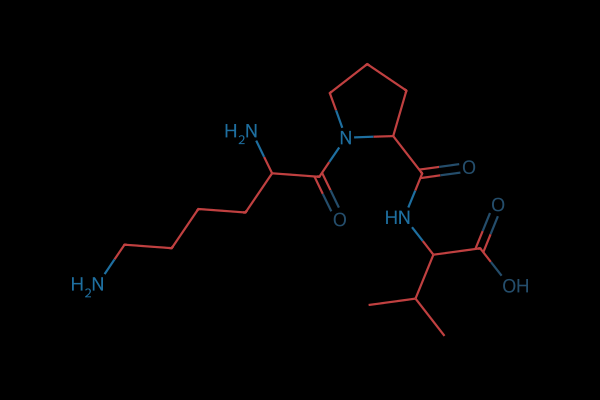
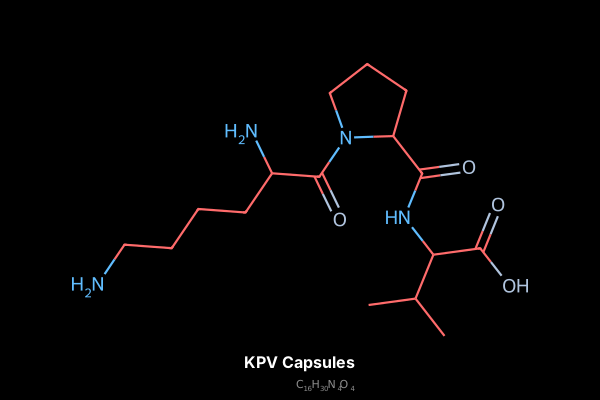
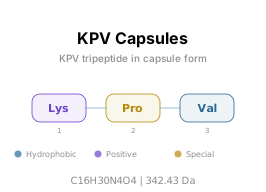
KPV is a synthetic tripeptide composed of lysine–proline–valine and is derived from the C-terminal fragment of alpha-melanocyte–stimulating hormone (α-MSH). It is developed for controlled laboratory research involving peptide-mediated signaling systems.
In scientific literature, KPV is studied in experimental models examining inflammatory pathway regulation, cytokine-associated signaling frameworks, and epithelial barrier research under in vitro and preclinical conditions.
KPV is evaluated in research focused on peptide-mediated inflammatory signaling and immune pathway interaction models. Experimental studies examine its interaction within cytokine-associated regulatory frameworks and epithelial barrier research systems under controlled laboratory environments.
Research publications have explored its role in inflammatory pathway modulation and peptide signaling characteristics within structured experimental conditions.
KPV emerged from investigations into biologically active fragments of α-MSH and related melanocortin peptides. Laboratory research expanded into studies examining its signaling behavior and interaction with inflammatory regulatory systems.
Subsequent experimental models explored its pathway-level activity in immune signaling and epithelial framework research contexts.
Laboratory investigations into KPV have focused on inflammatory signaling models and peptide-mediated regulatory systems. Research frameworks evaluate cytokine interaction dynamics, epithelial barrier signaling pathways, and immune-associated regulatory mechanisms under controlled in vitro and preclinical conditions.
1 of the 4 areas below are addressed directly by a paper cited on this page.
Inflammatory signaling pathway models
No paper cited on this page reports on inflammatory. This heading marks where KPV Capsules is discussed in the category rather than a question the cited literature answers, and it is worth knowing which of these areas has work behind it and which does not.
Cytokine-associated regulatory studies
No paper cited on this page reports on cytokine or associated. This heading marks where KPV Capsules is discussed in the category rather than a question the cited literature answers, and it is worth knowing which of these areas has work behind it and which does not.
Epithelial barrier research frameworks
No paper cited on this page reports on epithelial or barrier. This heading marks where KPV Capsules is discussed in the category rather than a question the cited literature answers, and it is worth knowing which of these areas has work behind it and which does not.
Peptide-mediated immune signaling investigations
Addressed on this page by Dalmasso 2008, Xiao 2017. Each is linked to its source record in the references below, so what was measured — and in what system — can be read rather than taken on trust.
- Dalmasso, G. et al. (2008) — PepT1-mediated tripeptide KPV uptake reduces intestinal inflammation.
- Xiao, B. et al. (2017) — Orally targeted delivery of tripeptide KPV via hyaluronic acid-functionalized nanoparticles efficiently alleviates ulcerative colitis.
The references section of this page cites 3 primary papers published between 2008 and 2017 — a thin record. Every citation is linked to its PubMed or DOI record so it can be read rather than taken on trust, and the summaries above describe what those papers report rather than what the compound is claimed to do.
Research compounds attract claims that outrun their evidence. Below are the ones most often encountered for KPV Capsules, set against what the papers cited on this page actually report. Where the record is thin or contested, that is stated rather than smoothed over.
KPV Capsules is also referred to as KPV.
KPV Capsules is commonly described online in connection with stronger immune function and resistance to infection. In the research literature the same compound is filed under inflammatory signaling pathway models, cytokine-associated regulatory studies and epithelial barrier research frameworks.
The 3 papers cited on this page, published between 2008 and 2017 (1 in animal models) describe laboratory and animal work. None reports a controlled trial in humans. Findings in cell culture or in a rodent model describe what happened in that system; they do not establish that the same occurs in humans, and this compound is not approved for human use.
Nothing above is a statement of what this material does. It is a summary of what has been published and what has not. Eppix Labs supplies research materials only and provides no dosing, administration or protocol guidance.
Each strength of KPV Capsules carries its own lot code and its own certificate — KPV-CA-26H-01, KPV-CA-26H-01 are separate tests, not one result applied across the range. The code printed on the bottle you receive is the one to match, and matching it is what ties the material in hand to a test that was actually run on it.
Researchers who buy KPV Capsules in the United States through Eppix Labs receive the lot described by the certificate above: the code printed on the vial label is the code on the certificate, and both are searchable on the batch verification page.
- Storage
- Cool, dry, away from direct light
- Humidity
- Keep sealed; capsule shells are hygroscopic
- Reconstitution
- Not applicable — supplied pre-measured
- Format
- Oral capsule
KPV Capsules is supplied in capsule form, which removes the reconstitution step entirely: there is no vehicle to add, no reconstitution volume to record and no post-reconstitution stability window to track. What that leaves a laboratory to control is storage — capsule shells draw moisture from the air, so the container should be kept sealed and dry rather than decanted into an open vessel.
Because the material is already at its labelled quantity per capsule, batch verification carries more weight in this format than it does for powder: there is no point at which the researcher independently confirms mass by weighing. The measured content published for each lot is the figure that answers that question.
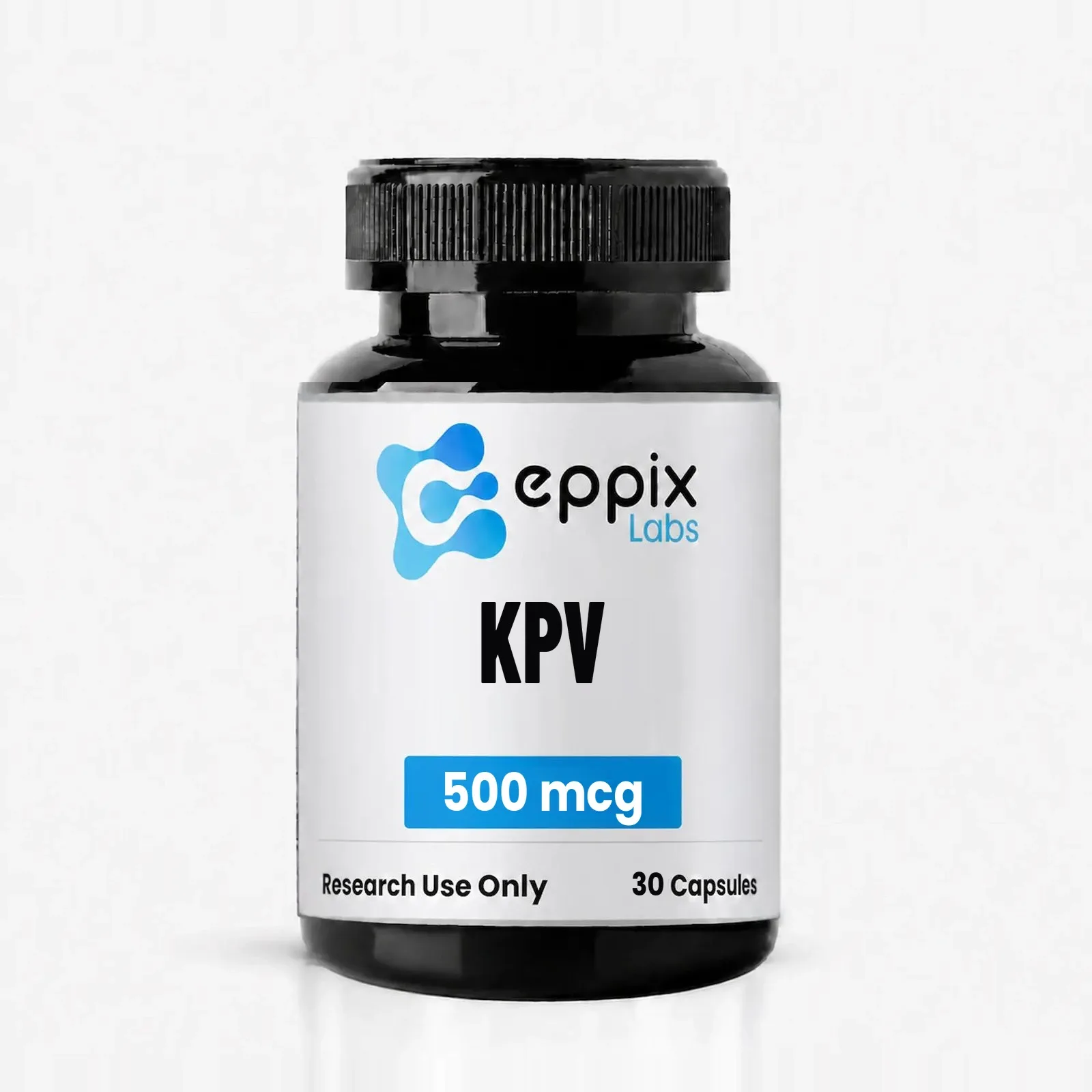
- 1 × sealed capsule bottle (500 mcg per capsule / Single Bottle - Pack of 30), batch-labelled
- The batch-linked Certificate of Analysis for the exact lot shipped
- Discreet outer packaging with no product names on the exterior
- FedEx, tracked, typically 1–3 business days domestically
- Laboratory consumables of any kind
- Dosing, administration or protocol guidance of any kind
No. Eppix Labs products are supplied exclusively for laboratory research. We do not provide dosing, administration, or usage guidance.
Each capsule contains the labeled quantity of KPV. Independent third-party testing verifies purity, identity, and batch specifications prior to release.
The product is supplied in capsule form for laboratory research purposes. No additional materials are included.
Duration depends entirely on research protocol, storage conditions, and laboratory application.
Orally targeted delivery of tripeptide KPV via hyaluronic acid-functionalized nanoparticles efficiently alleviates ulcerative colitis.
PubMedDrug-loaded nanoparticles targeted to the colon with polysaccharide hydrogel reduce colitis in a mouse model.
PubMedPepT1-mediated tripeptide KPV uptake reduces intestinal inflammation.
PubMedRelated
You May Also Like
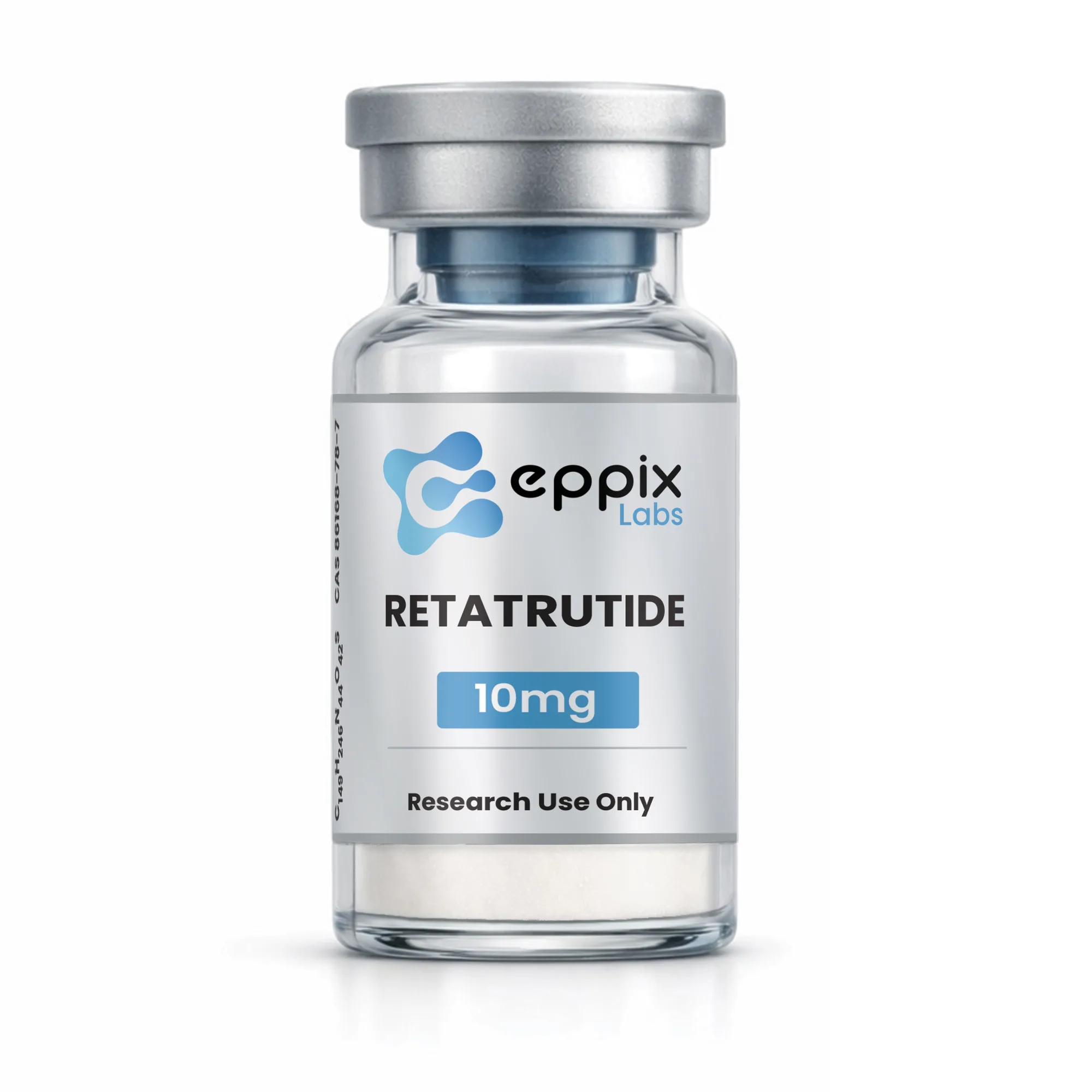
Triple Receptor Agonist Retatrutide is a synthetic peptide developed for controlled laboratory research involving multi-receptor signaling systems. It is structurally designed to interact with GLP-1, GIP, and glucagon receptor pathways within experimental environments.
From$79.99
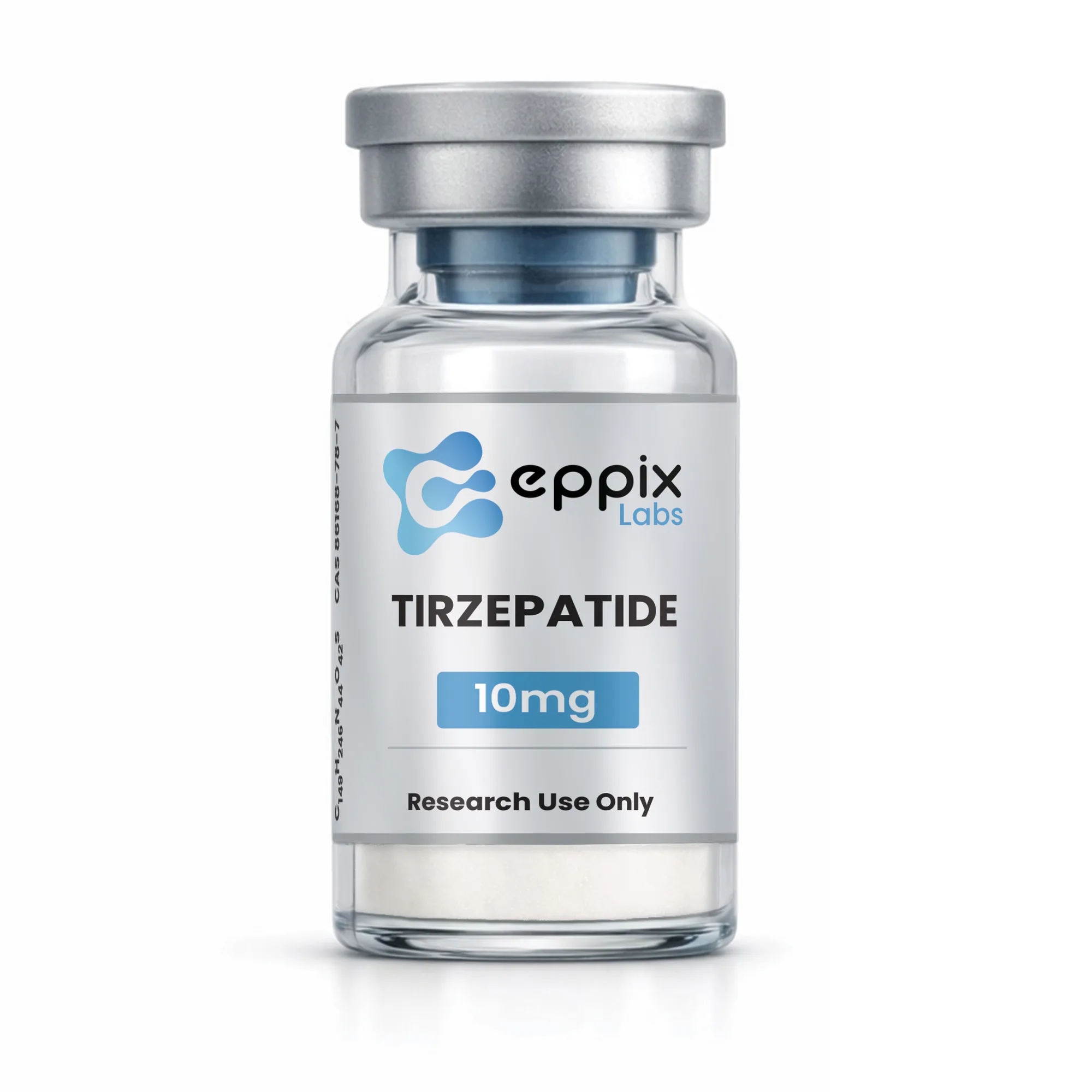
Dual GLP-1 / GIP Research Peptide Tirzepatide is a synthetic peptide developed for controlled laboratory research involving dual incretin receptor signaling systems. It is structurally designed to interact with GLP-1 and GIP receptor pathways within experimental environments.
From$39.99
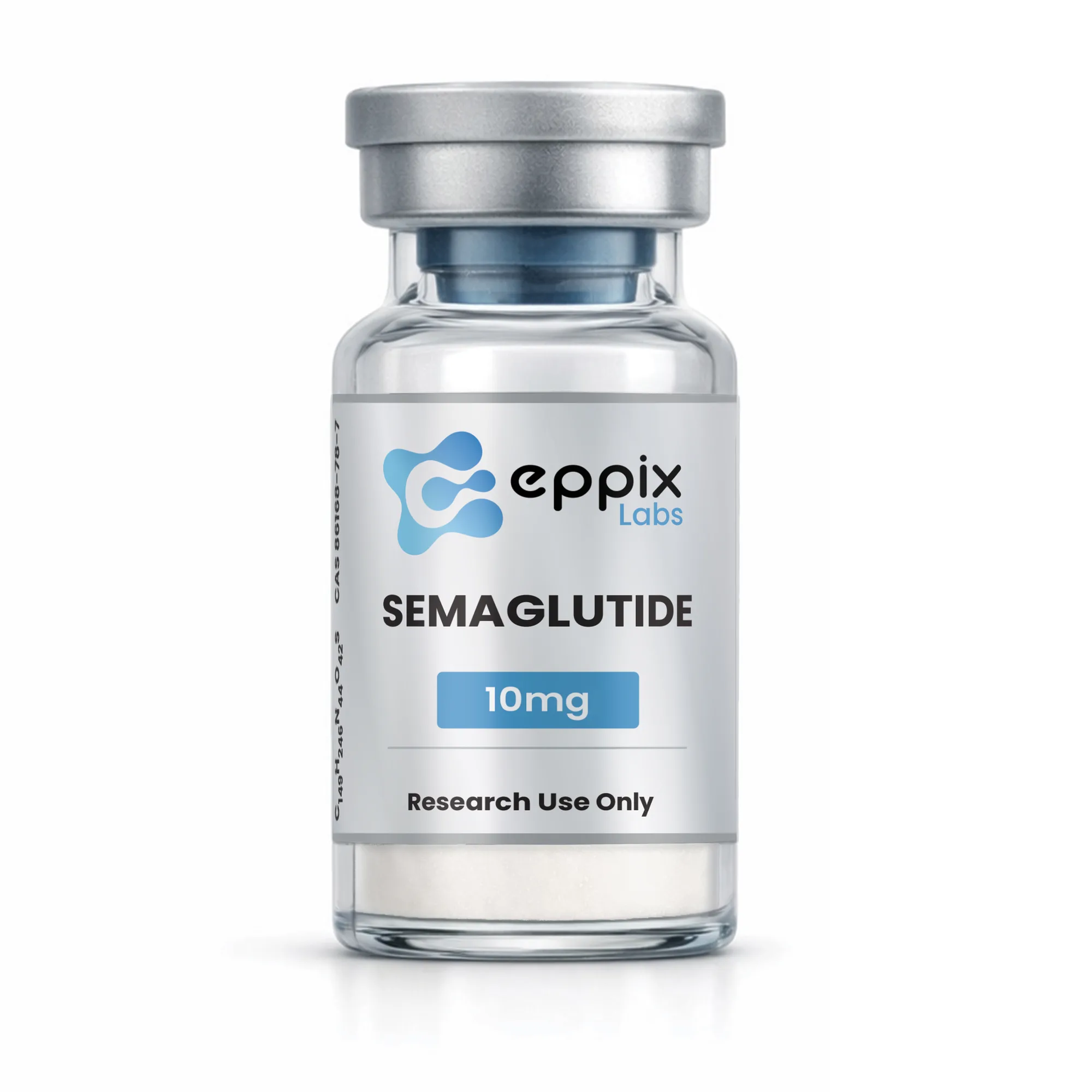
GLP-1 Receptor Agonist Research Peptide Semaglutide is a synthetic analogue of glucagon-like peptide-1 (GLP-1), a naturally occurring incretin hormone involved in glucose-dependent signaling. It is developed for controlled laboratory investigation within regulated experimental environments.
From$59.99
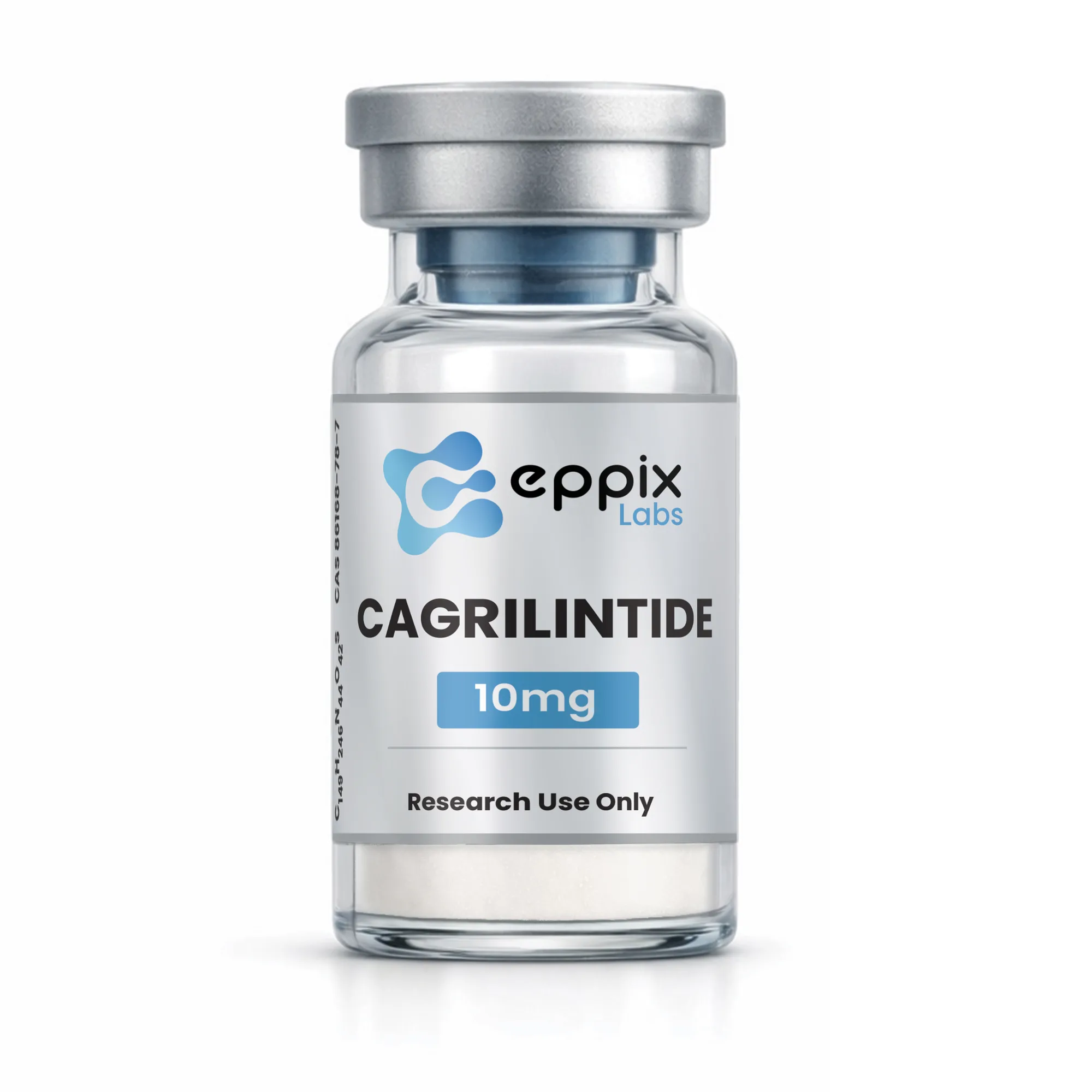
Amylin Receptor Research Peptide Cagrilintide is a synthetic peptide developed for controlled laboratory research involving amylin receptor signaling systems. It is structurally designed to interact with amylin-associated pathways within experimental environments.
From$99.99