✦Canada Post Xpress1–2 day delivery across CanadaFree on orders over $200
Your cart is empty
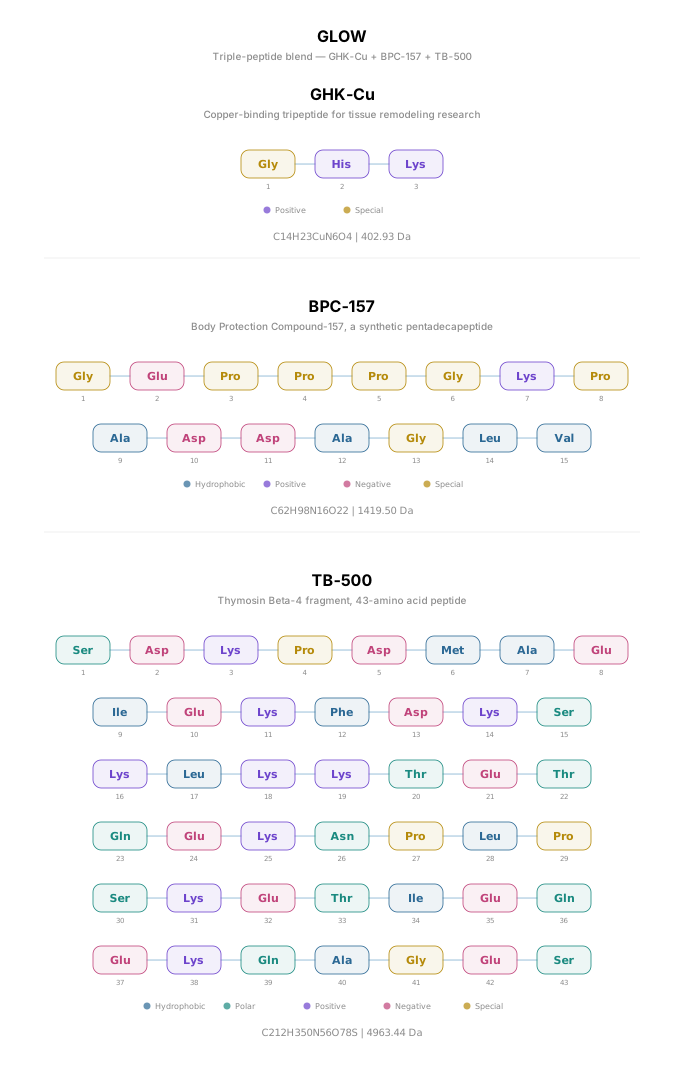
Multi-Peptide Research Blend
GLOW is a multi-compound research blend typically explored for its combined effects on skin-related pathways, cellular turnover, and overall tissue quality in laboratory models. Studies often examine how its components interact to influence collagen activity, oxidative balance, and visible surface-level characteristics within controlled experimental settings.
This product is intended strictly for laboratory research use within Canada. It is not approved by Health Canada for the diagnosis, treatment, cure, or prevention of any disease. Not for human or veterinary use.
By purchasing, you confirm the material will be used solely for lawful research purposes in accordance with applicable Canadian regulations.
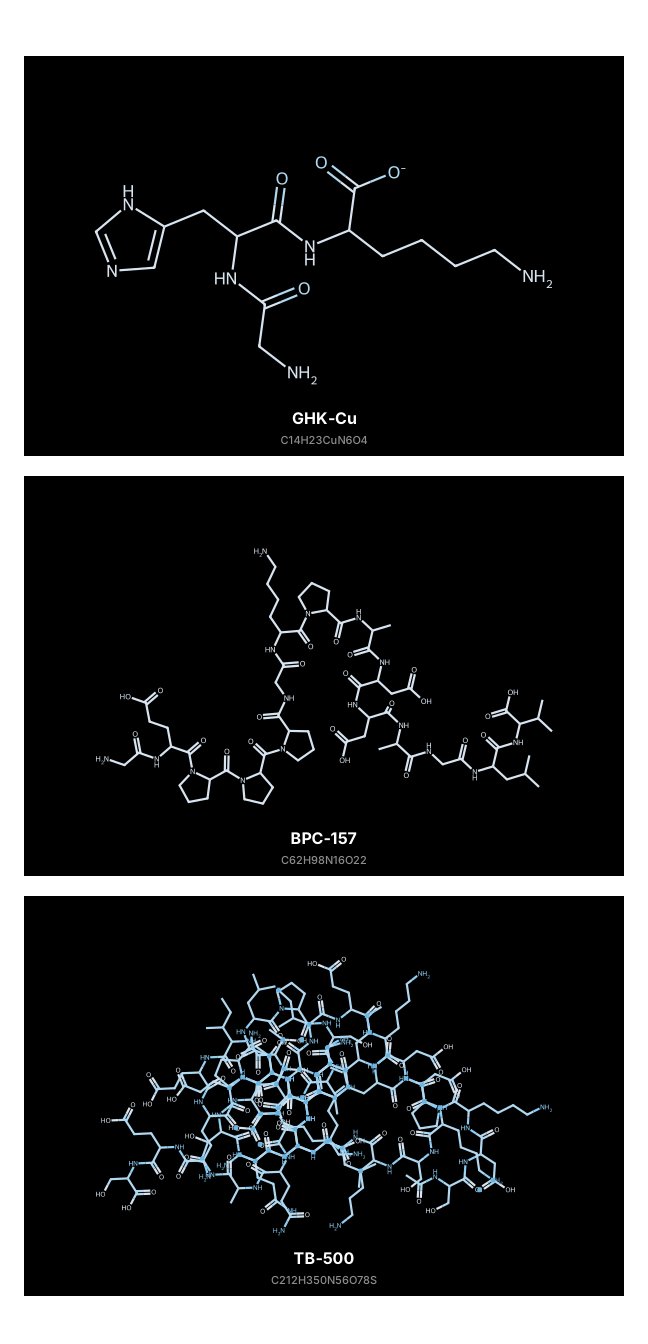
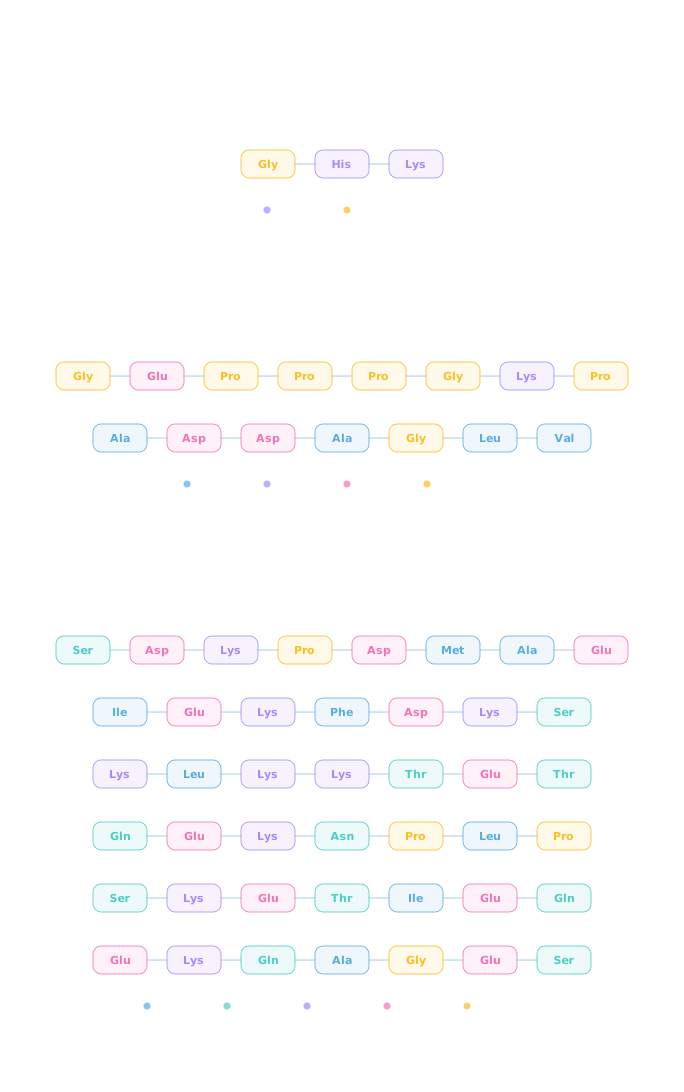
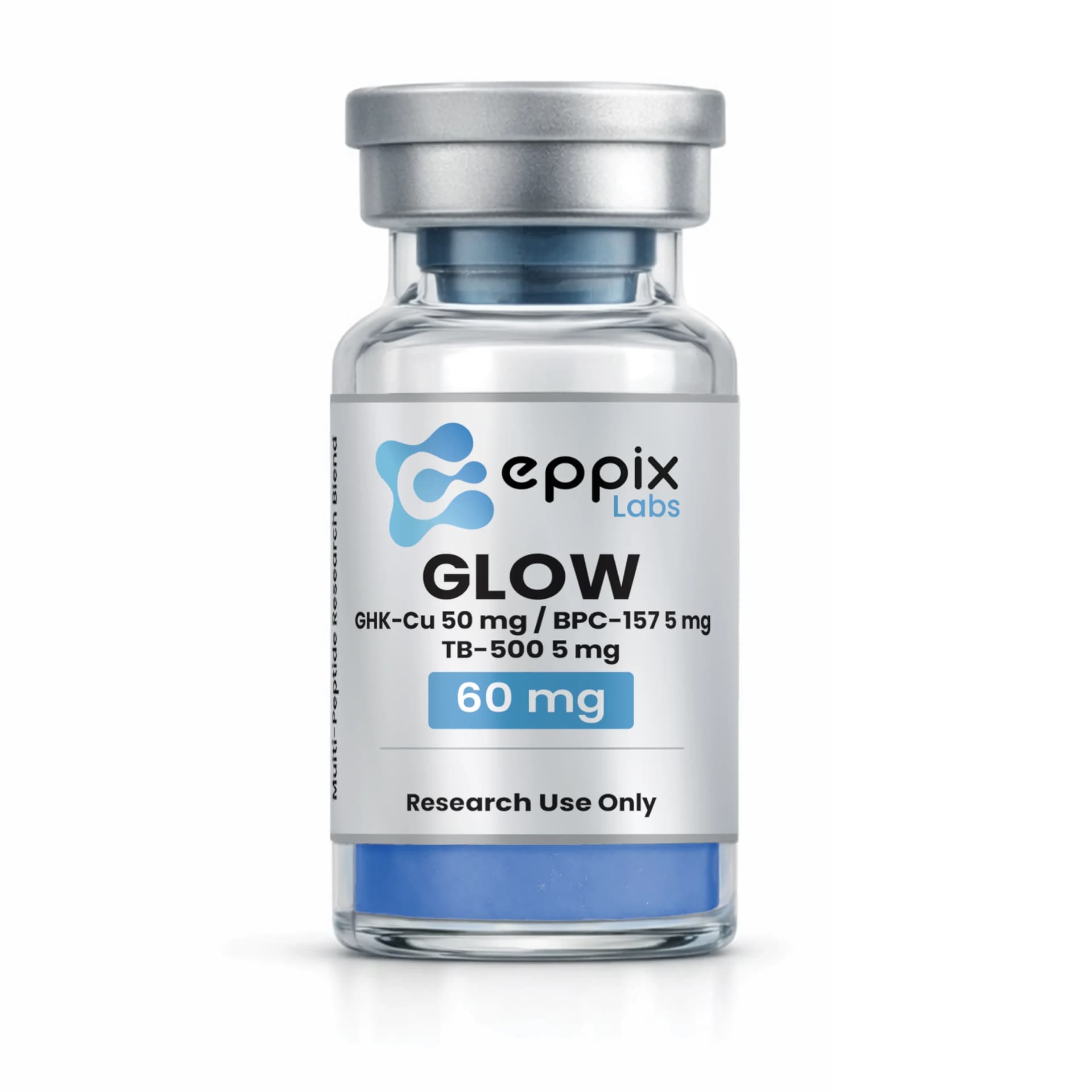
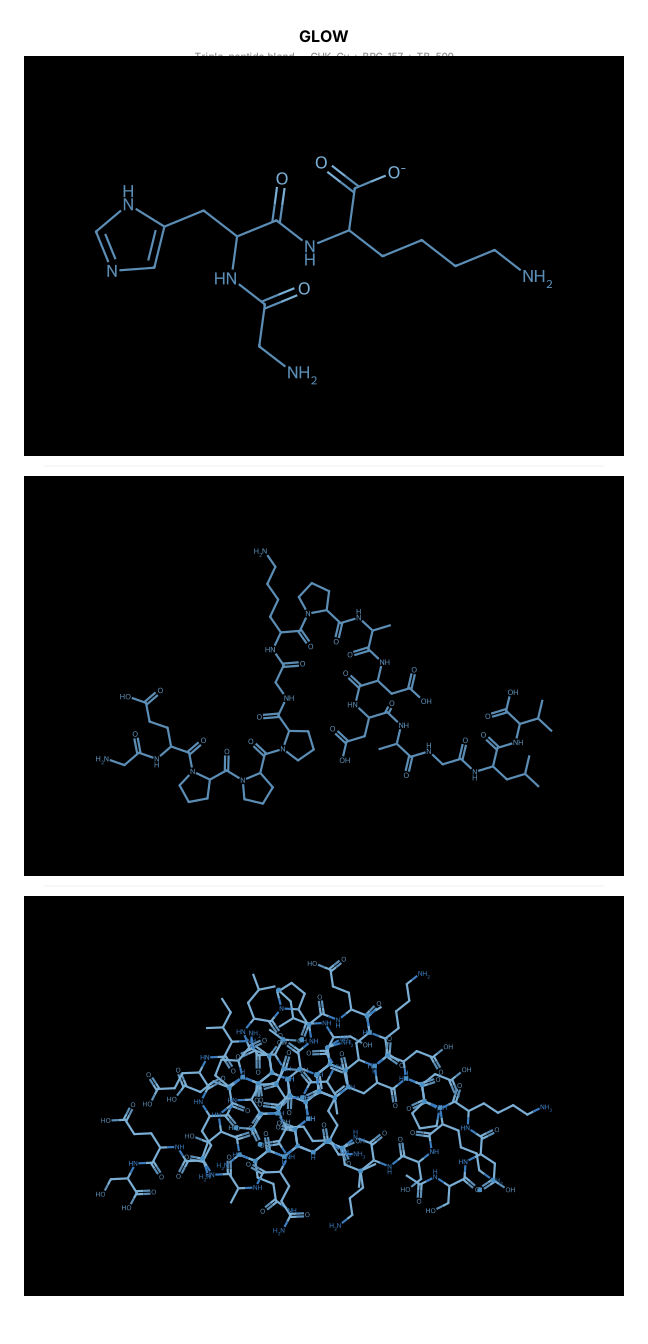
GLOW is a multi-peptide research blend formulated for controlled laboratory investigation. It integrates GHK-Cu, BPC-157, and TB-500 into a single experimental compound.
In scientific literature, the individual components of GLOW have been studied in models examining extracellular matrix signaling, angiogenic pathways, and cytoskeletal response systems under in vitro and preclinical research conditions.
Third-party tested for purity, identity, quantity.
GLOW integrates peptides that have been independently examined in structural and signaling research frameworks. GHK-Cu has been studied in extracellular matrix and peptide–metal interaction models, BPC-157 in angiogenic pathway systems, and TB-500 in cytoskeletal and cellular migration research.
Within laboratory environments, the combined formulation is evaluated in experimental systems exploring coordinated peptide interaction across structural and extracellular matrix signaling pathways.
The peptides included in GLOW have been studied across several decades of laboratory research. GHK-Cu was identified in the 1970s, BPC-157 emerged from gastric peptide investigations in the 1990s, and TB-500 developed from thymosin beta-4 research.
GLOW represents a research-based integration of these peptides into a unified formulation for controlled experimental evaluation.
Laboratory investigations involving the individual components of GLOW have explored extracellular matrix signaling, angiogenic pathway models, and cytoskeletal interaction frameworks. Research environments examine multi-peptide pathway dynamics under controlled in vitro and preclinical conditions.
No. Eppix Labs products are supplied exclusively for laboratory research. We do not provide dosing, administration, or usage guidance.
Each vial contains 60mg of the GLOW peptide blend. Independent third-party testing verifies purity, identity, and batch composition prior to release.
The vial contains only the lyophilized peptide blend. Any laboratory materials required for experimental procedures must be sourced separately.
Duration depends entirely on research protocol, storage conditions, and laboratory application.
The human tri-peptide GHK and tissue remodeling. J Biomater Sci Polym Ed 19(8):969–988.
PubMedA new gastric juice peptide, BPC. An overview of the stomach-stress-organoprotection hypothesis and beneficial effects of BPC. J Physiol Paris 87(5):313–327.
PubMedThymosin β4: a multi-functional regenerative peptide. Basic properties and clinical applications. Expert Opin Biol Ther 12(1):37–51.
PubMedThymosin beta4 accelerates wound healing. J Invest Dermatol 113(3):364–368.
PubMedRelated
Studied in metabolic research for its effects on glucose regulation, appetite signaling, and energy balance.
From$180.00
Dual incretin receptor agonist studied for glucose regulation, metabolic signaling, and weight pathway research
From$10.00
Immune-modulating peptide studied for T-cell signaling and immune system regulatory pathway research
From$70.00
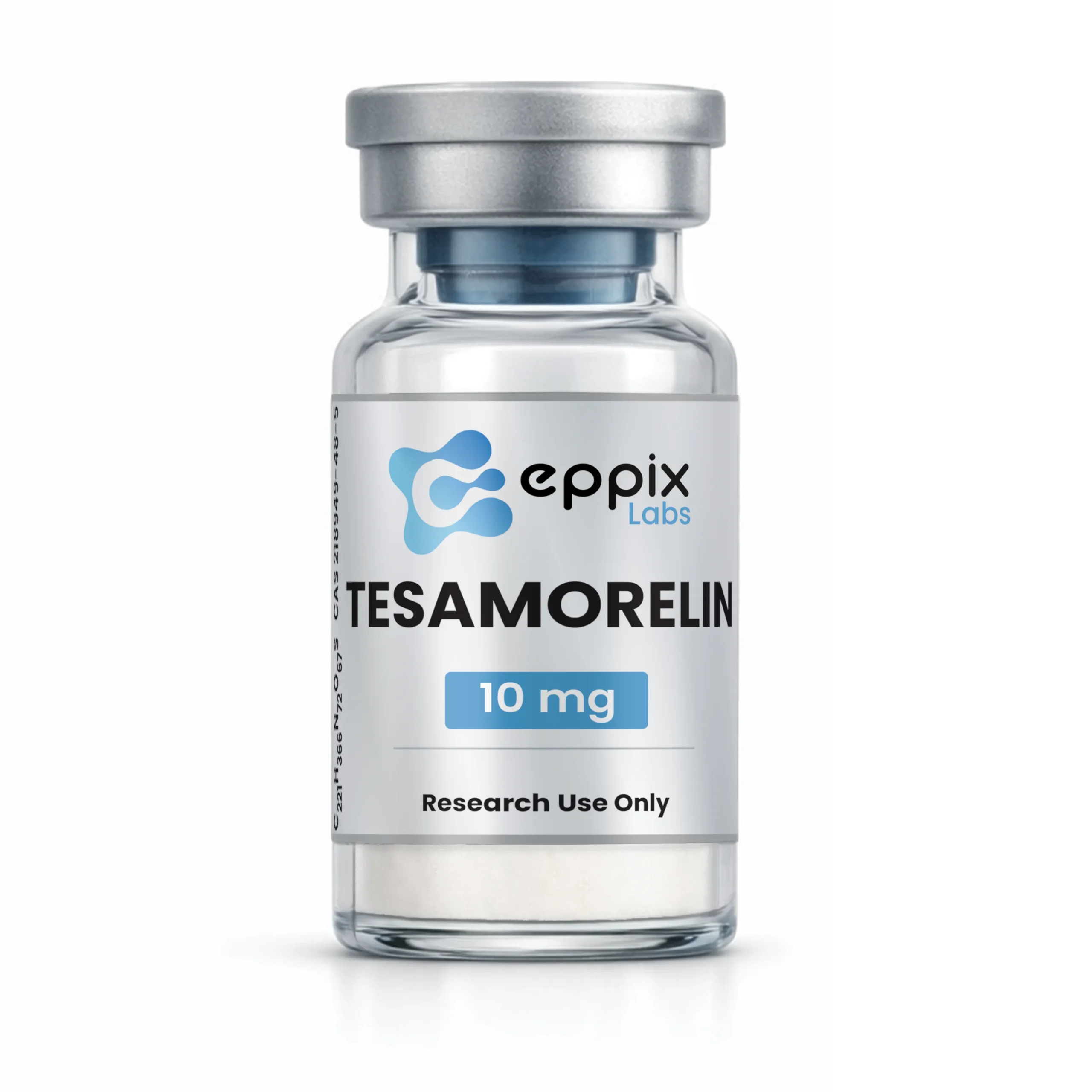
GHRH analog studied for growth hormone regulation and metabolic pathway signaling research
From$95.00