Canada Post Xpress1–2 day delivery across CanadaFree on orders over $200

Compound Overview

BPC-157: A Research Literature Overview

Body Protection Compound — published preclinical research summary

·Compiled by Eppix Labs

BPC-157 — also known as Pentadecapeptide BPC 157 or Body Protection Compound-157 — is a synthetic 15-amino-acid peptide derived from a partial sequence of BPC ("Body Protection Compound"), a protein originally isolated from human gastric juice. First characterized in the early 1990s by the research group led by Predrag Sikiric at the University of Zagreb, BPC-157 has since become one of the most extensively studied peptides in preclinical research literature, with published investigations spanning gastrointestinal, musculoskeletal, vascular, and dermal experimental models.

This article summarizes the published research literature on BPC-157 as an educational reference for researchers evaluating it as a study material. It does not describe human or veterinary use, dosing, or administration. All commercially supplied BPC-157, including the Eppix Labs BPC-157 offering, is intended strictly for in-vitro laboratory research within Canada.

Chemical Identity

Name
Pentadecapeptide BPC 157
Also known as
BPC-157, Body Protection Compound-157, PL-14736
Molecular formula
C₆₂H₉₈N₁₆O₂₂
Molecular weight
1419.5 g/mol
CAS number
137525-51-0
PubChem CID
9941957
Sequence (1-letter)
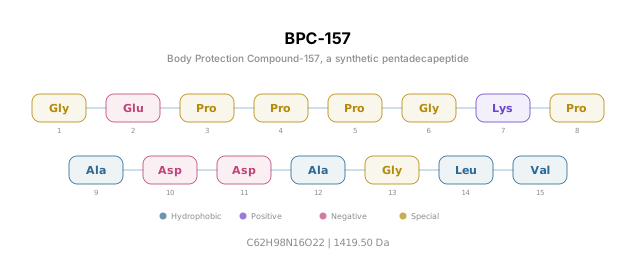
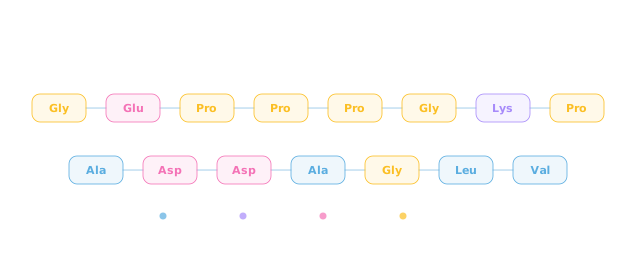
GEPPPGKPADDAGLV
Sequence (3-letter)
Gly-Glu-Pro-Pro-Pro-Gly-Lys-Pro-Ala-Asp-Asp-Ala-Gly-Leu-Val
Salt forms
Acetate (most common in research supply) · Arginate

Origins and Discovery

BPC, the parent peptide, is a ~40-residue protein found in human gastric juice that was identified during research into endogenous gastroprotective compounds at the University of Zagreb in the late 1980s and early 1990s. BPC-157 represents a synthetic, stable 15-residue fragment of this parent sequence selected for its biological activity in early experimental models.

The original characterization of BPC-157 is associated with Predrag Sikiric and collaborators, whose research group has published widely on its activity in preclinical experimental models. Subsequent investigations by independent research groups have expanded the body of published literature beyond gastrointestinal models into musculoskeletal, vascular, and dermal contexts.
Amino Acid Sequence
Amino Acid Sequence diagram
Amino-acid sequence of BPC-157 (GEPPPGKPADDAGLV), read N- to C-terminus.
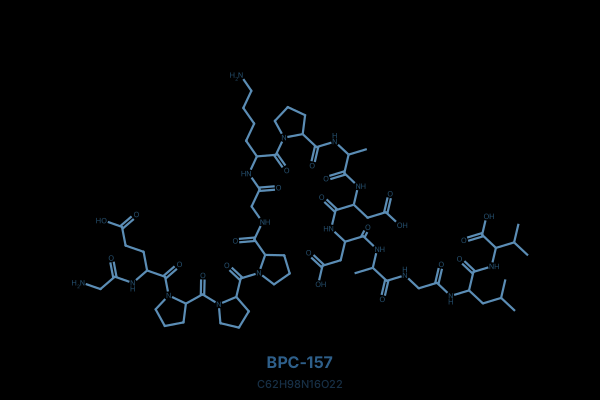
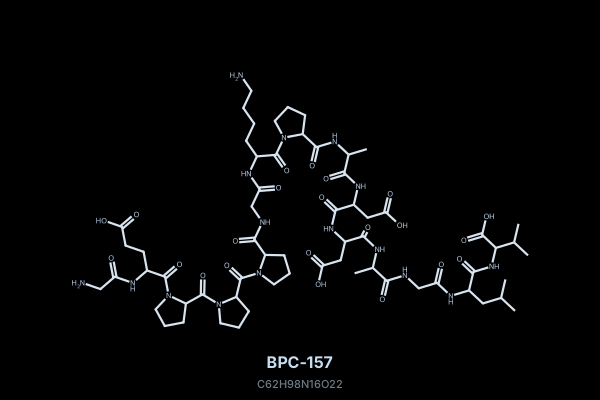
Chemical Structure
Chemical Structure diagram
Chemical structure of the BPC-157 pentadecapeptide (C₆₂H₉₈N₁₆O₂₂).

Mechanisms Under Investigation

Published peer-reviewed literature has examined BPC-157 in connection with several molecular pathways. The following summarizes investigative directions documented in published studies and does not constitute a claim of human or clinical effect:

  • ·Angiogenic signaling. Huang et al. (2015) reported activity in alkali-burn wound healing models, including in-vitro evidence of cell proliferation, migration, and angiogenesis (PMID 25995620).
  • ·Nitric oxide pathway / eNOS modulation. Hsieh et al. (2020) characterized modulatory effects on vasomotor tone via the Src–Caveolin-1–eNOS pathway in experimental vascular models (PMID 33051481).
  • ·Tendon and collagen-related processes. Staresinic et al. (2003) and Chang et al. (2011) reported observations in transected Achilles tendon models and tendon outgrowth, cell survival, and migration assays (PMIDs 14554208 and 21030672).
  • ·Gastric cytoprotection. Sikirić et al. (1993) introduced the BPC family of peptides in the context of the stomach stress-organoprotection hypothesis, an early framework for endogenous gastroprotective compounds (PMID 8298609).

Research Models Where BPC-157 Has Been Studied

Across the published literature, BPC-157 has been investigated in:

  • ·Tendon and ligament repair models (rat Achilles transection, tendocyte assays)
  • ·Gastrointestinal mucosal integrity models
  • ·Cutaneous and alkali-burn wound healing models
  • ·Vascular models examining angiogenesis and nitric oxide signaling
  • ·Systemic inflammation and cytoprotection models

Stability and Laboratory Handling

BPC-157 is typically supplied as a lyophilized (freeze-dried) powder in sealed vials. Standard laboratory handling considerations from the published literature include:

  • ·Storage of lyophilized material: typically at −20 °C for long-term stability.
  • ·Reconstitution: typically with bacteriostatic water (BAC water) prior to use in experimental procedures.
  • ·Reconstituted storage: at 2–8 °C following reconstitution, used within timeframes defined by the laboratory's experimental protocol.

Verification and Purity Considerations

A research-grade BPC-157 supply should be accompanied by a batch-specific Certificate of Analysis (COA) issued by an independent analytical laboratory. The minimum content to look for on a credible COA includes:

  • ·Identity confirmation by mass spectrometry, matching the BPC-157 molecular mass (≈1419.5 Da)
  • ·Purity percentage measured by HPLC, typically reported as area percent
  • ·Endotoxin screening (LAL assay) for sterile-research applicability
  • ·Batch reference number linking the analyzed sample to the supplied vial
  • ·Issuing laboratory identity with verifiable contact or portal record

Regulatory Status in Canada

BPC-157 is not approved by Health Canada for human or veterinary use, and no marketing authorization exists for clinical applications. It is supplied and held by laboratories strictly as a research material for in-vitro experimental procedures. Eppix Labs does not provide, and does not endorse, any guidance on human administration or therapeutic application of BPC-157. All material is sold within Canada subject to a written research-use confirmation at the time of purchase.

Frequently Asked

What does "BPC" stand for?

"Body Protection Compound." BPC-157 is a synthetic 15-amino-acid fragment of a larger ~40-residue protein originally identified in human gastric juice.

What is the molecular formula of BPC-157?

C₆₂H₉₈N₁₆O₂₂. Its molecular weight is approximately 1419.5 g/mol, and its registered CAS number is 137525-51-0.

Who first characterized BPC-157?

The research group of Predrag Sikiric at the University of Zagreb, beginning in the early 1990s, is credited with the original characterization of BPC and the synthesis and study of the BPC-157 fragment in preclinical experimental models.

Is BPC-157 approved by Health Canada?

No. BPC-157 is not approved by Health Canada for human or veterinary use. It is supplied solely as a research material for in-vitro laboratory investigation.

What is the difference between BPC-157 acetate and BPC-157 arginate?

The two refer to different salt forms of the same active peptide sequence. The acetate salt is the form most commonly distributed for laboratory research. Salt form can influence solubility and physical handling characteristics but does not change the underlying amino acid sequence of the peptide.

References

  1. Sikirić, P. et al. (1993). A new gastric juice peptide, BPC. An overview of the stomach-stress-organoprotection hypothesis and beneficial effects of BPC. J Physiol Paris 87(5):313–327. PMID 8298609
  2. Staresinic, M. et al. (2003). Gastric pentadecapeptide BPC 157 accelerates healing of transected rat Achilles tendon and in vitro stimulates tendocytes growth. J Orthop Res 21(6):976–983. PMID 14554208
  3. Chang, C.H. et al. (2011). The promoting effect of pentadecapeptide BPC 157 on tendon healing involves tendon outgrowth, cell survival, and cell migration. J Appl Physiol (1985) 110(3):774–780. PMID 21030672
  4. Huang, T. et al. (2015). Body protective compound-157 enhances alkali-burn wound healing in vivo and promotes proliferation, migration, and angiogenesis in vitro. Drug Des Devel Ther 9:2485–2499. PMID 25995620
  5. Hsieh, M.J. et al. (2020). Modulatory effects of BPC 157 on vasomotor tone and the activation of Src-Caveolin-1-endothelial nitric oxide synthase pathway. Sci Rep 10(1):17078. PMID 33051481

Research Use Only

This article summarizes published preclinical research literature. Compounds referenced are supplied by Eppix Labs strictly as research materials for laboratory investigation within Canada. They are not approved by Health Canada for human or veterinary use, and nothing on this page should be interpreted as medical advice or guidance on human or animal administration.